Are you a believer in Bigfoot?
I definitely didn’t consider myself one. Honestly, I thought the whole thing was kind of silly. Bigfoot seemed like one of those legends that was fun to joke about but not something anyone should take too seriously.
Then we visited the North American Bigfoot Center in Boring, Oregon. (And yes, it really is called Boring, Oregon). However, this quirky little town and its Bigfoot museum are anything but boring.
I won’t say that this museum made me a believer. But I was definitely challenged to view Bigfoot from an evidence-based perspective. It’s not just a bunch of hokum, and that’s what makes this museum so much fun.
Thank you to The North American Bigfoot Center for providing us with free admission. All opinions are my own.
Table of Contents
Boring’s Bigfoot museum
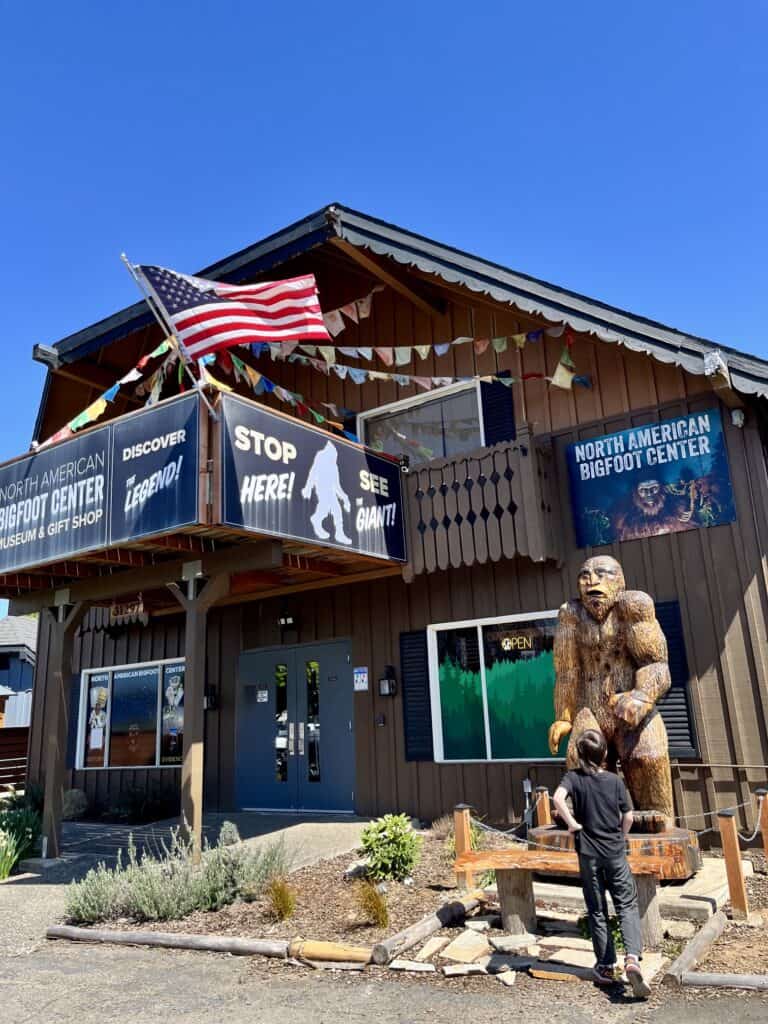
The North American Bigfoot Center is located near the intersection of Highways 26 and 212, making it an easy stop when traveling toward Mount Hood. The museum is owned and curated by Bigfoot researcher Cliff Barackman, known for his work on Animal Planet’s Finding Bigfoot.
The museum building is tucked away in a shared parking lot with a couple of restaurants. But you’ll know you’ve arrived at the North American Bigfoot Center when you see the enormous carved Bigfoot standing outside.
Wooden Bigfoot statues are practically a Pacific Northwest tradition. We see them in front of stores, restaurants and roadside attractions throughout Oregon and Washington. Our family has a tradition of taking pictures with them whenever possible, so of course we had to stop for photos.
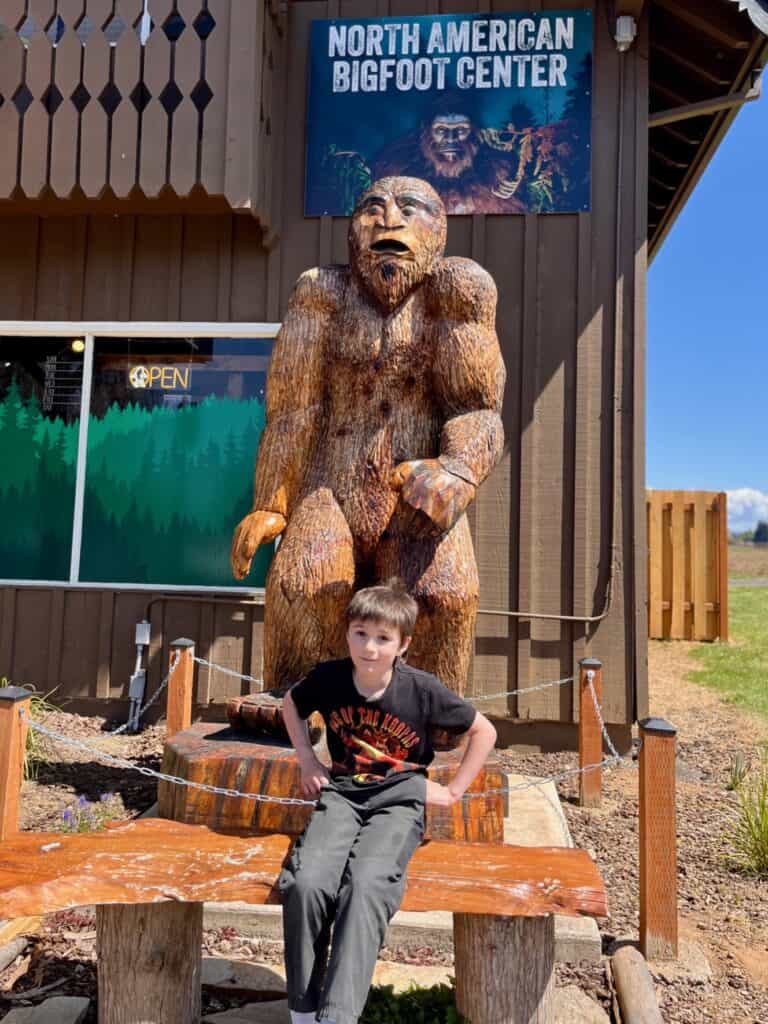
Once we had documented our first Sasquatch sighting, we headed inside.
Up first, the Bigfoot gift shop
The first area you enter is the gift shop. Bigfoot fans, consider yourselves warned.
There’s a lot of excellent Bigfoot merchandise in this shop. Shirts, stickers, books, signs, toys, socks and all sorts of other delightfully squatchy souvenirs fill the space. I had a very difficult time escaping with only a pair of funny socks for my husband.
NOTE: parents might want to talk about the souvenir budget with the kids before walking through the door.
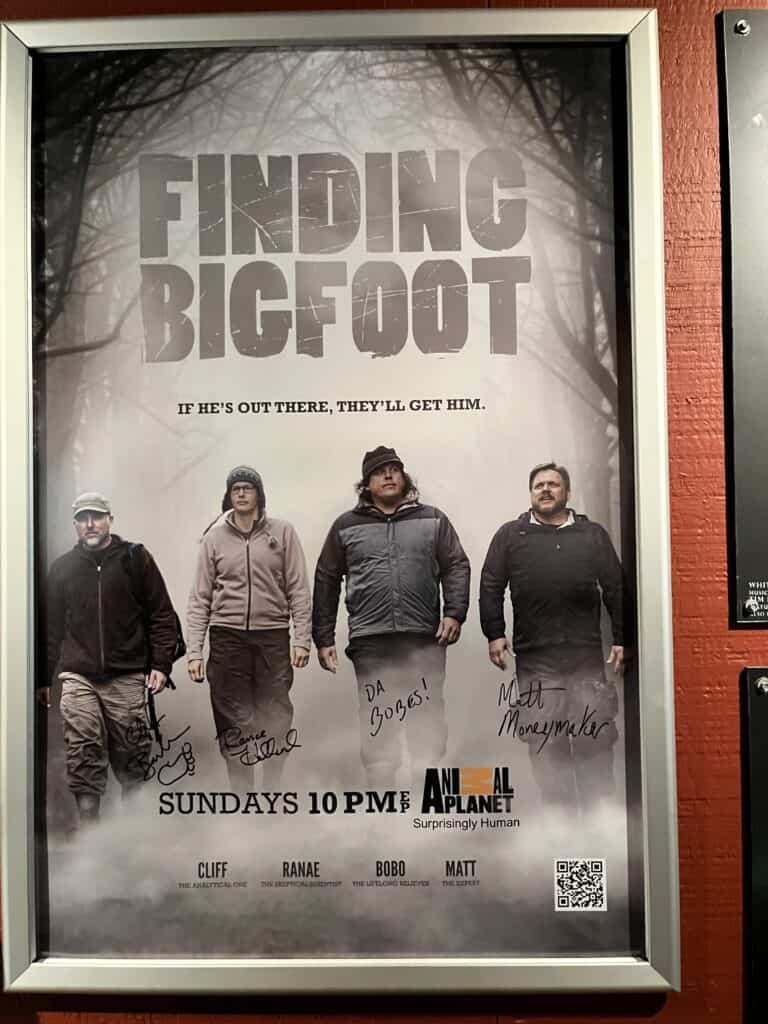
The shop is also worth exploring if you are interested in cryptids generally. A cryptid is a creature whose existence has been claimed but has not been scientifically proven (Merriam-Webster). Bigfoot is probably the most familiar example in the Pacific Northwest, but the category also includes creatures such as the Loch Ness Monster and Mothman.
One of my daughters is absolutely fascinated by cryptids, so she was excited to see books and merchandise featuring creatures beyond Bigfoot. She also talked in depth with one of the museum managers about everything Bigfoot-related – it was hard to tell who was enjoyed the conversation more!
Meet Bigfoot inside
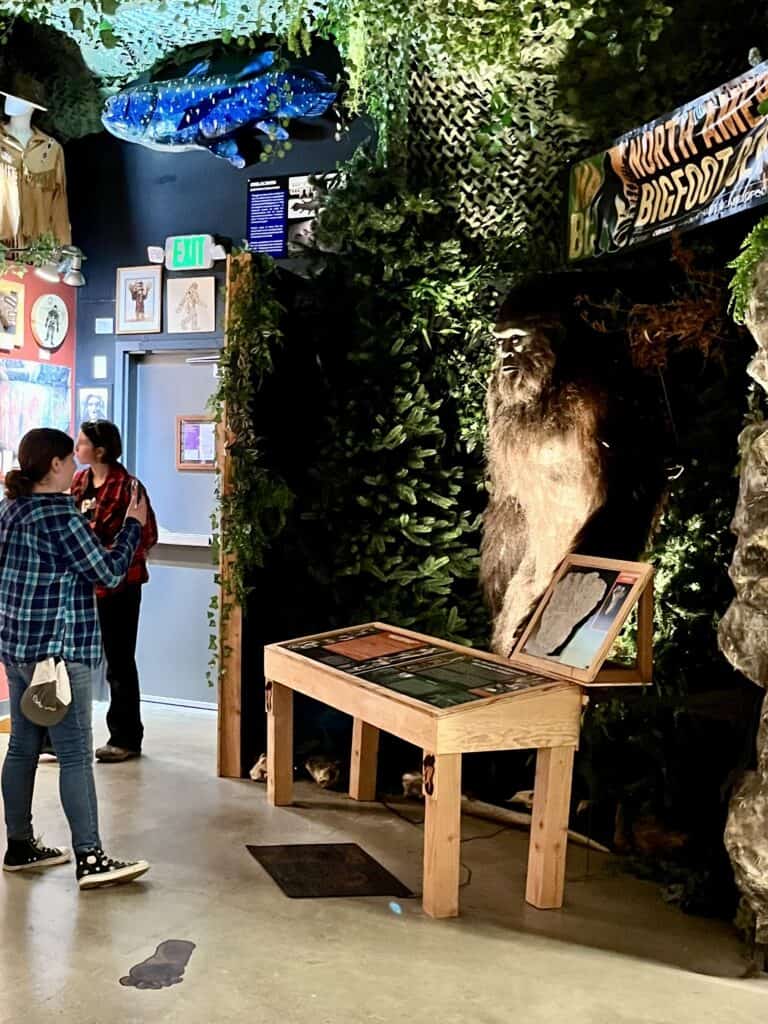
After the gift shop, we entered the museum through a narrow hall. Straight ahead, we saw a life-size Bigfoot standing among the trees, with other exhibits around the room. My son shot towards it.
He nearly jumped out of his skin when it suddenly roared at him!
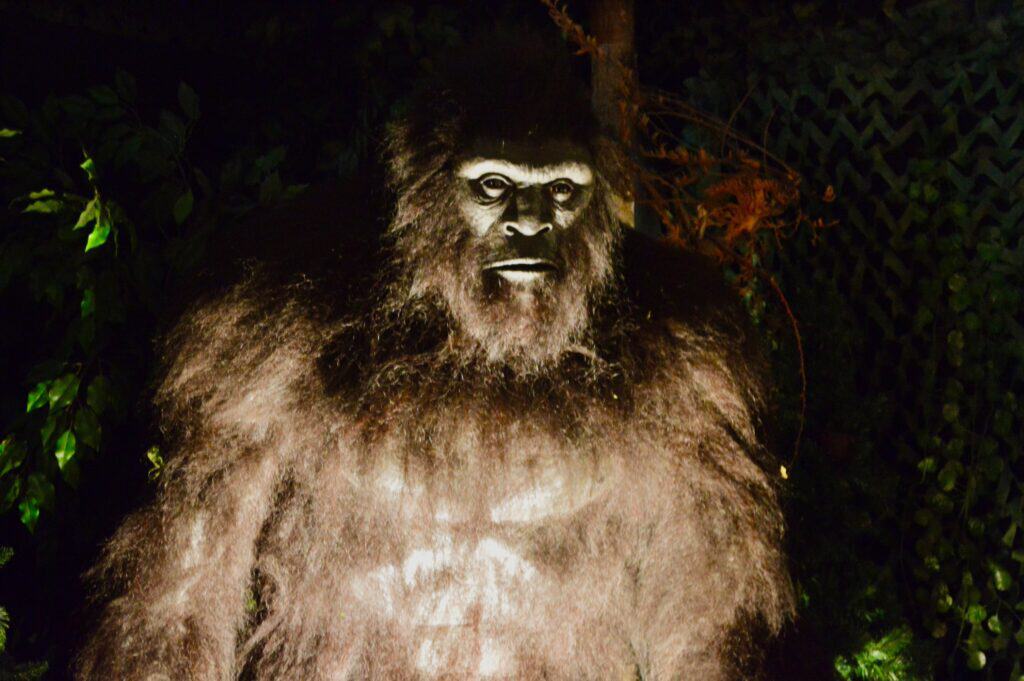
“Murphy” the Bigfoot is motion activated. When you step into just the right place, he suddenly makes a loud growling noise. It will startle you if you are not expecting it.
Sensory note for families
The Bigfoot is loud and activates suddenly. You may want to warn sensitive children about it ahead of time.
A surprisingly scientific look at Bigfoot evidence
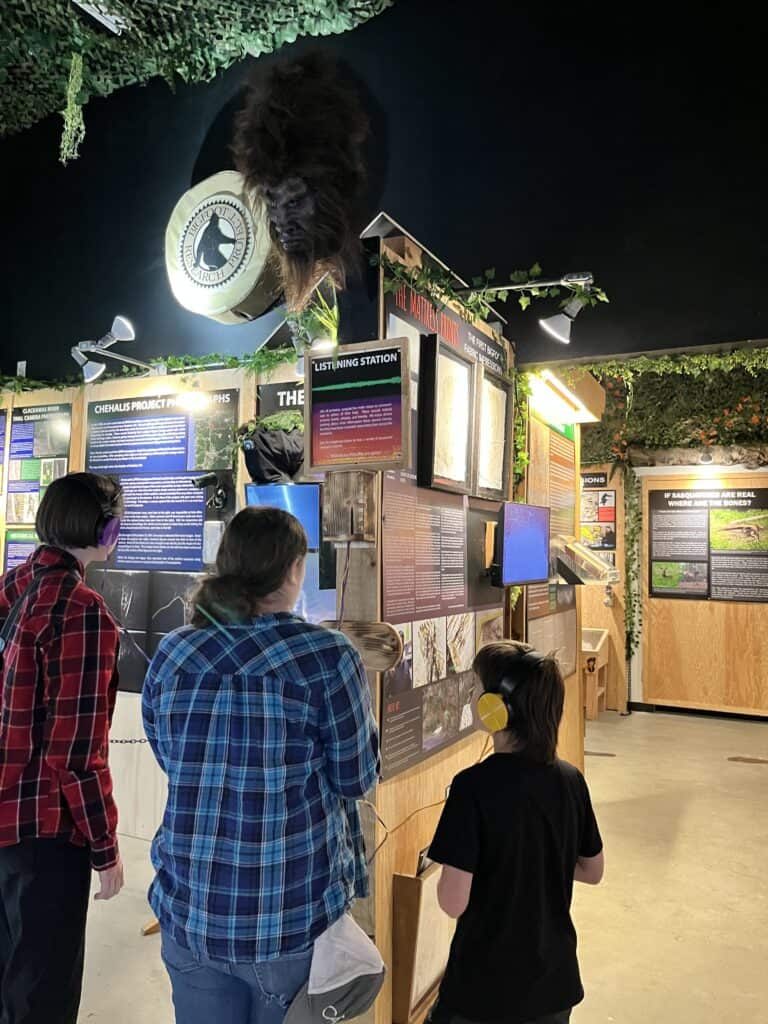
I figured the North American Bigfoot Center would be interesting, but I didn’t expect it to be so thorough.
The exhibits present Bigfoot evidence in a surprisingly scientific way. Rather than simply telling visitors that Bigfoot exists, the museum displays the information researchers use to support that possibility.
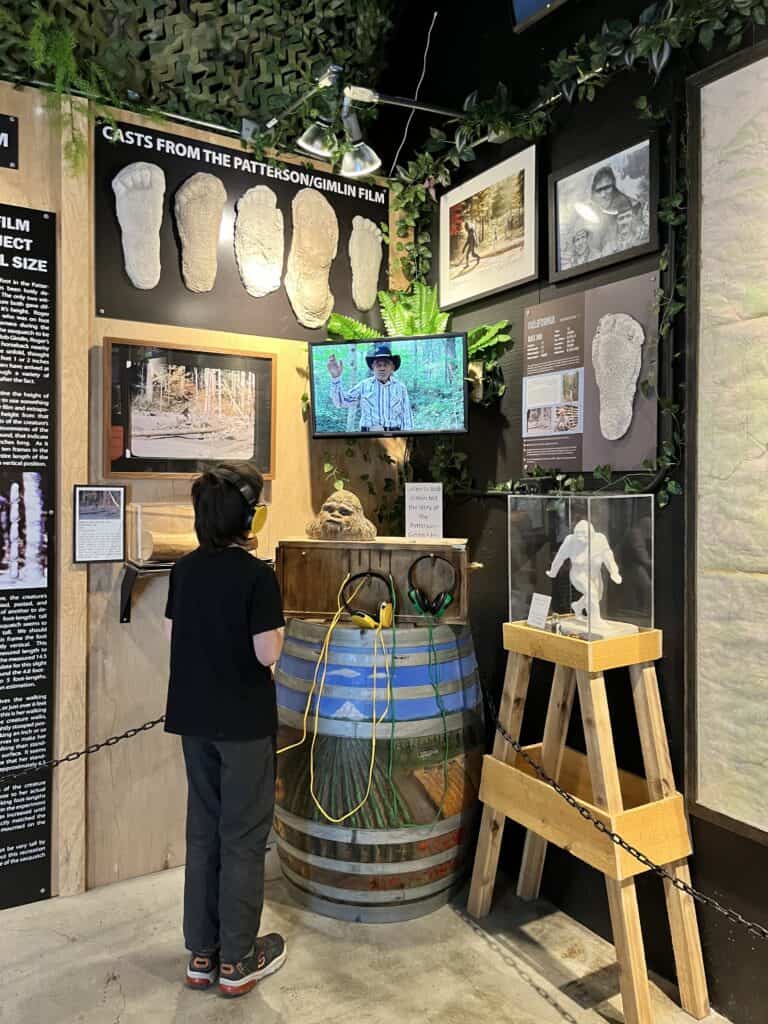
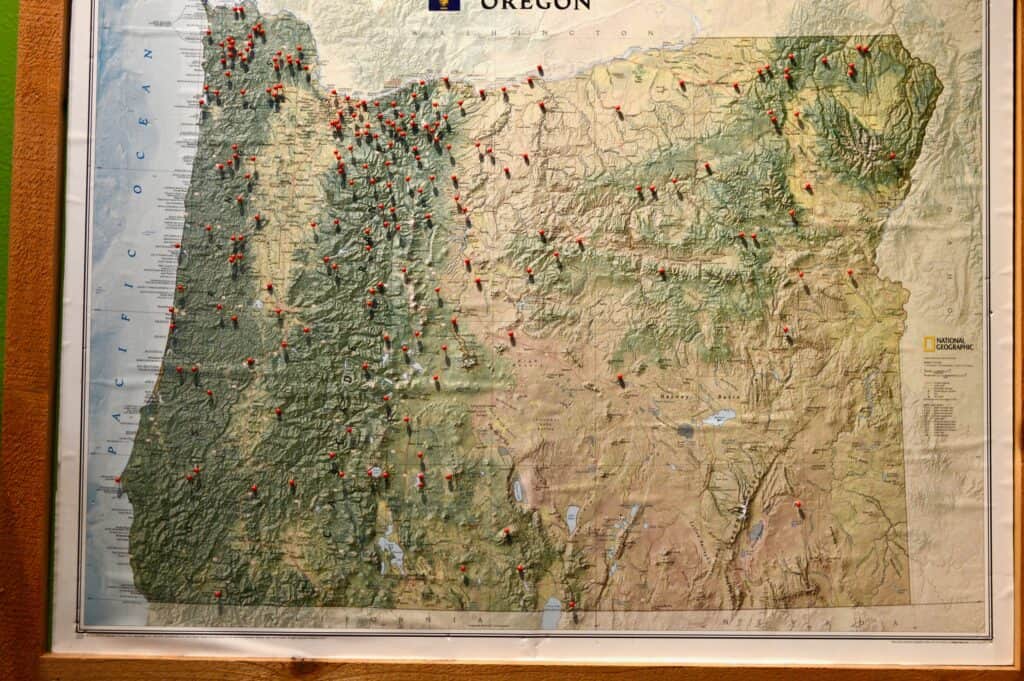
You can examine footprint casts, handprints, maps of reported sightings and diagrams exploring what Bigfoot anatomy might look like. There are audio recordings of alleged Bigfoot calls. Videos examine reported encounters and unusual evidence gathered in the field.
There are even casts of possible body impressions, including a Bigfoot butt print! Parents of middle school boys, consider yourself warned. 😆 The museum also examines details such as the lines and ridges found in footprint casts.
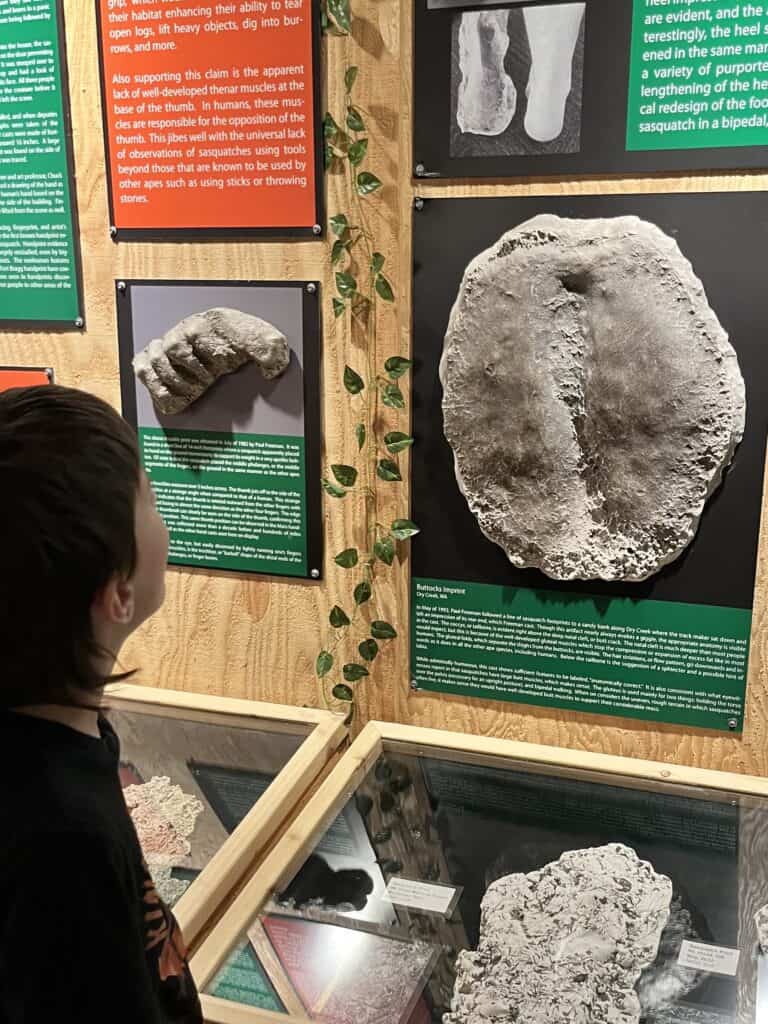
I still approached everything with a healthy amount of skepticism. However, I appreciated that the museum gave visitors actual evidence to consider.
It ‘s not a collection of blurry pictures assembled in someone’s garage. It’s a serious presentation created by experts who approach the subject scientifically.
Bigfoot videos, bones and possible skulls
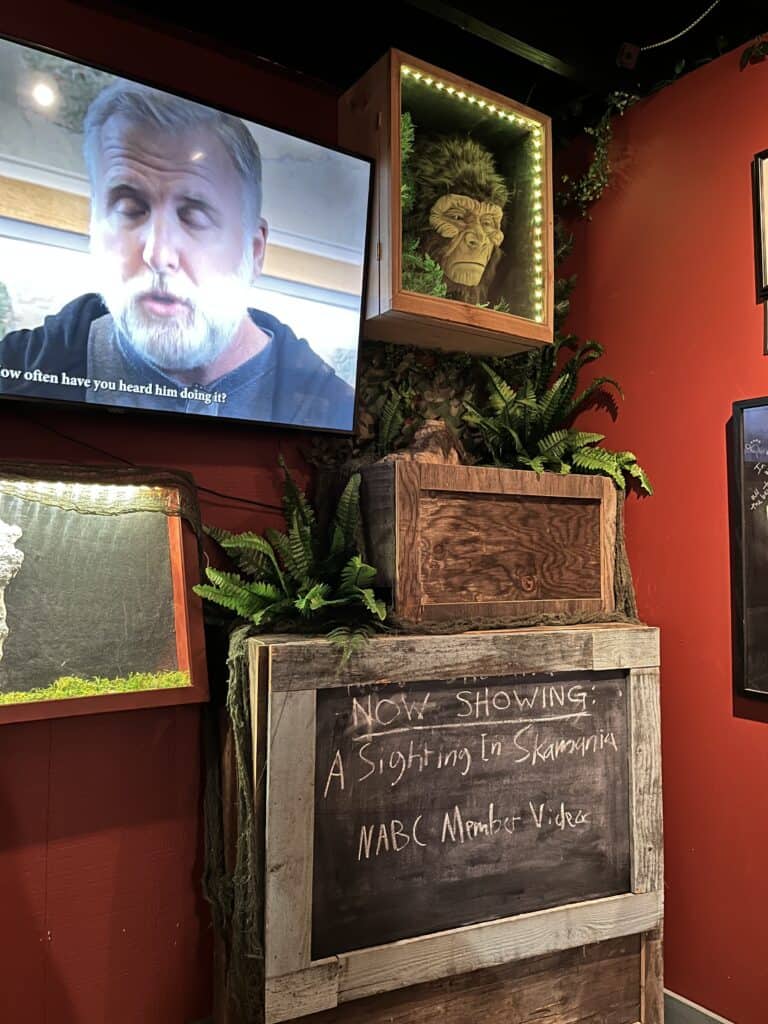
One section of the museum includes a small viewing room where visitors can watch footage related to Bigfoot research. I watched part of an episode featuring investigations conducted by the museum’s team – it was thought-provoking!
I’m not saying every sound, footprint or shadow in the forest was created by Bigfoot. But the videos did help me understand why some people are convinced that something unusual may be living in remote areas of North America.
Elsewhere in the museum, we found displays involving bones and possible skull evidence. Other exhibits explored what researchers believe the biology and anatomy of Bigfoot could be like.
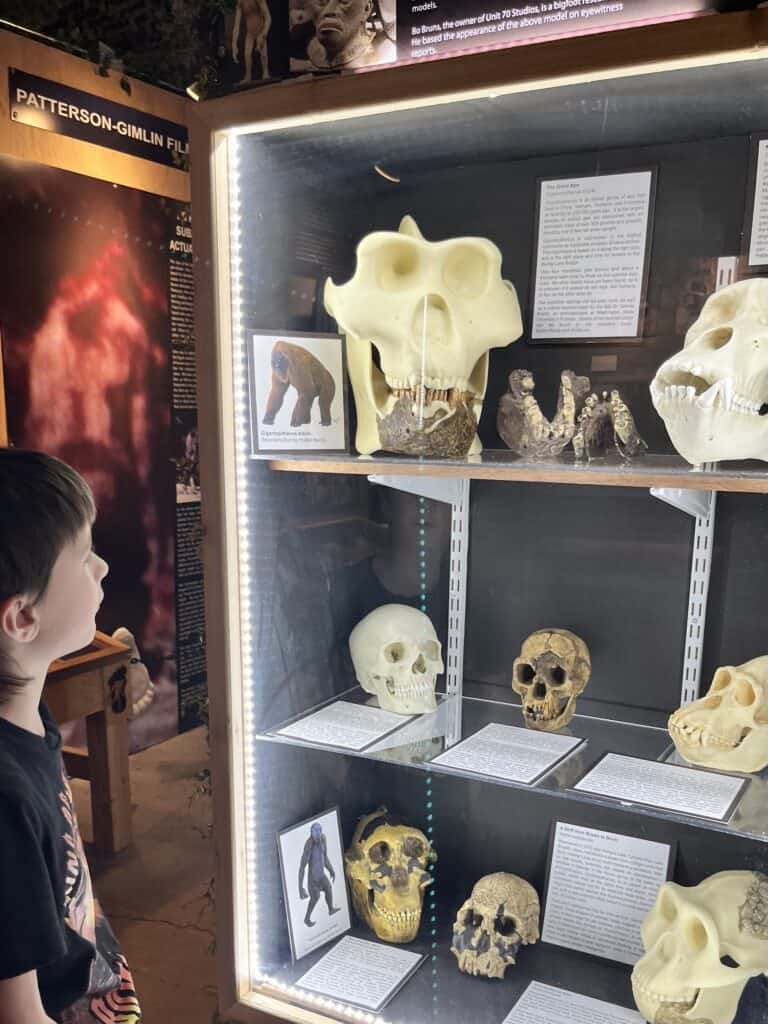
The museum also includes movie memorabilia, artwork and carvings inspired by Bigfoot-like creatures. There’s a lot packed into a relatively small space, but it’s well-organized so you won’t get lost exploring.
Interactive exhibits for kids
The North American Bigfoot Center is not specifically geared to kids, but it is thoroughly engaging for kids, teens and adults. My youngest son remained fascinated throughout our visit.
There are recordings to listen to, flaps to lift and displays that invite closer inspection. Children can compare their feet with enormous footprint casts and examine maps showing where sightings have been reported.
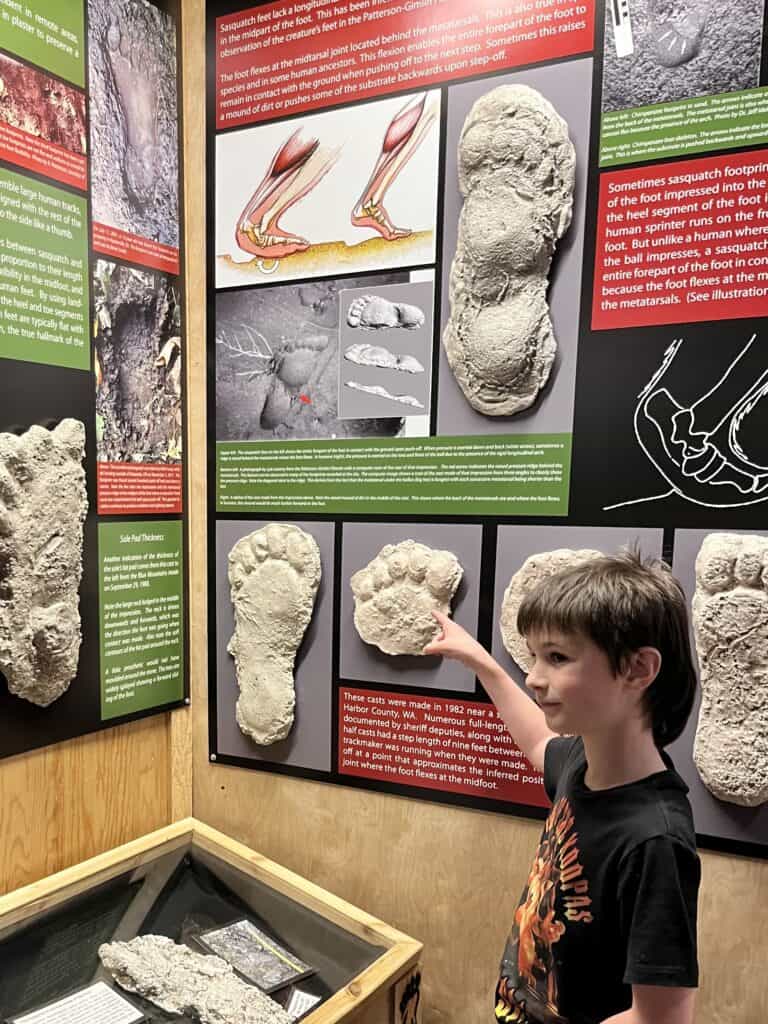
My son’s favorite activity was the museum scavenger hunt. Three small Bigfoot toys were hidden throughout the exhibits during our visit. Children who found all three could report their discovery and receive a small prize.
The scavenger hunt gave him a reason to study each exhibit carefully instead of racing through the museum. It also allowed the rest of us more time to read the displays, which is a big win when you’re balancing varying interests in a family.
Indigenous traditions around Bigfoot
Some of the most interesting exhibits explored the connections between Bigfoot and Indigenous stories. Traditions involving large, humanlike beings have existed in different cultures for generations. The museum includes carvings, artwork and information about the ways Bigfoot-like creatures appear in cultural stories.
This section added depth to the museum. Bigfoot is often treated as a modern pop-culture character—the furry creature printed on coffee mugs and T-shirts. But stories of wild, humanlike beings didn’t start with roadside gift shops or television programs.
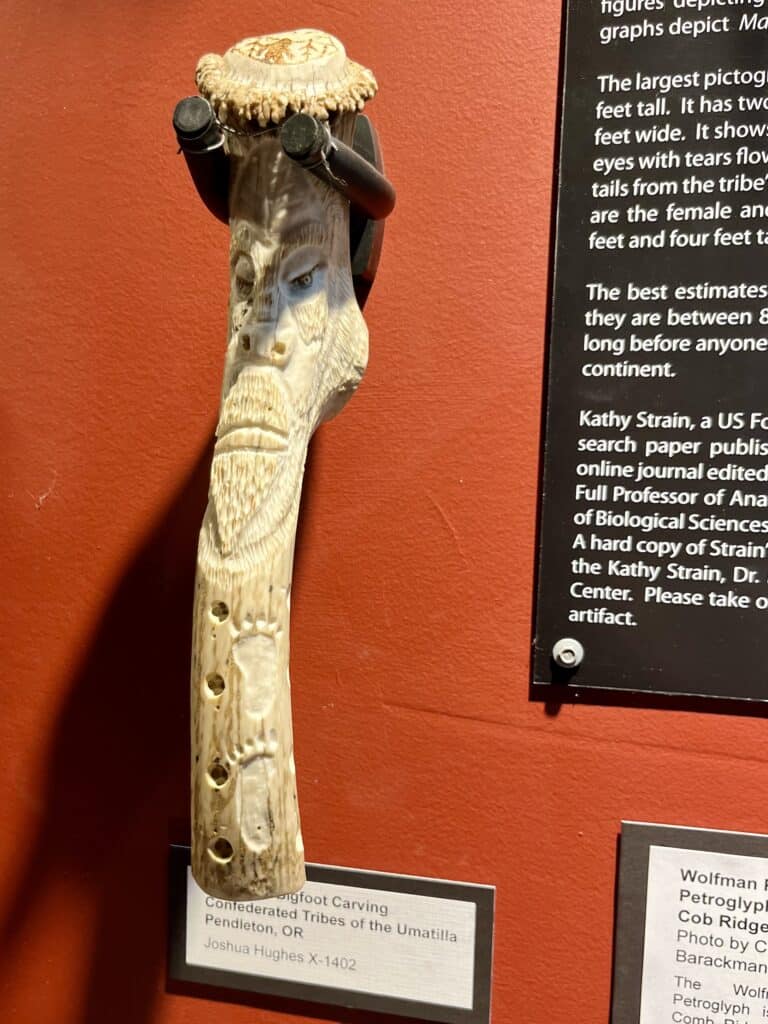
The exhibits invite visitors to consider how these traditions connect with the modern idea of Sasquatch.
Will the museum make you believe in Bigfoot?
The museum presents enough recordings, footprint casts, sighting reports and biological questions to make you pause.
There were several moments when I found myself thinking: “Huh. You know what? Maybe there is something to this.” While I wasn’t fully convinced, I do have to admit that I’m less skeptical than I was before.
The North American Bigfoot Center does an excellent job of letting visitors examine the evidence and decide what they think for themselves.
How long should you spend at the North American Bigfoot Center?
Plan to spend one to two hours at the museum. Families who enjoy reading every display, watching the available videos and carefully inspecting the gift shop could easily stay longer. My teen daughter could’ve stayed for half a day.
Is the North American Bigfoot Center worth visiting?
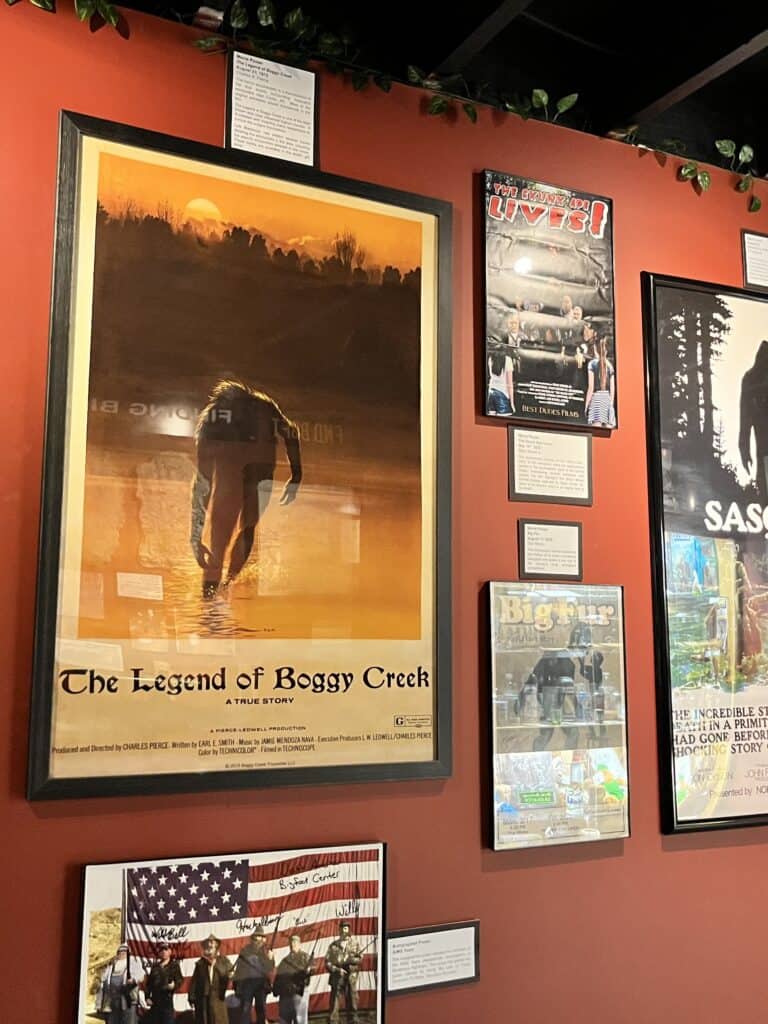
Absolutely. You don’t have to believe in Bigfoot to enjoy this quirky, well-designed museum.
Believers will appreciate the extensive collection of evidence and research. Skeptics may be surprised by the thoughtful presentation. Kids can search for hidden Bigfoots, listen to unusual recordings and encounter a growling life-sized Sasquatch.
The North American Bigfoot Center is a perfect roadside stop if you are visiting Boring, traveling along Highway 26 or heading toward Mount Hood.
You may arrive as a skeptic. But after a couple of hours examining footprints, listening to strange calls and staring at a Bigfoot butt print, you might leave asking the same question I did: Maybe?
Frequently Asked Questions about the North American Bigfoot Center
Is the North American Bigfoot Center scary?
Most of the museum is not scary. However, a life-size motion-activated Bigfoot near the entrance makes a sudden, loud growling noise. Children and adults who are sensitive to unexpected sounds may appreciate a warning before entering.
What can you see inside the Bigfoot museum?
Exhibits include footprint and handprint casts, alleged Bigfoot recordings, sighting maps, carvings, possible biological evidence, movie memorabilia and information about Sasquatch anatomy and cultural traditions.
Is the North American Bigfoot Center an indoor attraction?
Yes. The museum and gift shop are indoors, making this a useful activity during rainy, cold or smoky weather in Oregon.
Can you visit the North American Bigfoot Center on the way to Mount Hood?
Yes. Its location along Highway 26 makes it an easy roadside stop when traveling from the Portland area toward Mount Hood.
©️ Copyright Jennifer D. Warren 2026