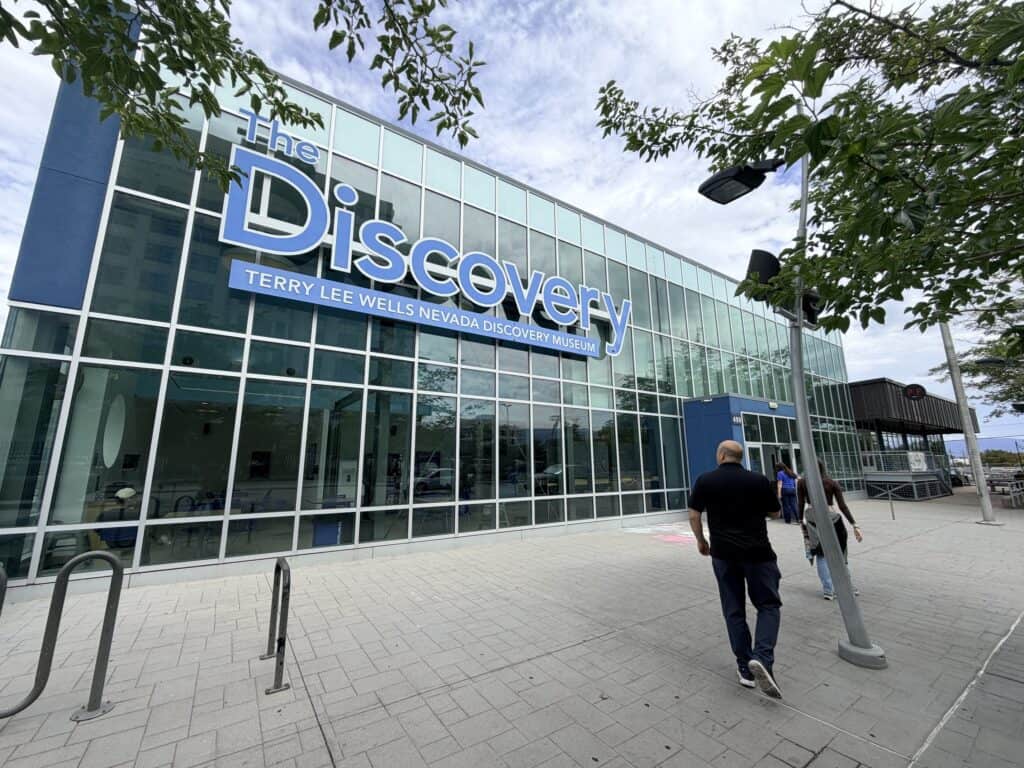
We visited The Discovery museum in Reno, Nevada, in July because we needed something indoors to do. Air conditioning was a huge plus! But once we started exploring, I realized this was one of the coolest hands-on science museums we’ve visited with our kids.
Our youngest son kept returning to the Cloud Climber. Our boys designed and tested virtual airplanes. My teenage daughter enjoyed exploring the surface of Mars, and even two of our adult daughters climbed through the clouds.
If you’re looking for things to do in Reno with kids, the Terry Lee Wells Nevada Discovery Museum, usually called The Discovery, is absolutely worth considering. Here’s what we loved and what I recommend knowing before you go.
Table of Contents
We received free admission to The Discovery for our family through a partnership with Visit Reno Tahoe. All opinions are my own.
The Discovery museum in Reno at a glance
The Discovery is a hands-on science center in downtown Reno with activities that kept our younger kids, teens, and adult children interested. Its exhibits bring together science, technology, engineering, art, and math—the subjects often grouped together as STEAM.
| Planning detail | What to know |
|---|---|
| Location | 490 S. Center Street, Reno, Nevada 89501 |
| Best for | Families who enjoy climbing, building, experimenting, and hands-on learning |
| Time to allow | I recommend at least half a day; we could easily have spent a full day exploring |
| Our family’s highlights | Cloud Climber, Truckee Connects, flight simulations, space activities, and mechanical models |
| What to bring | A change of clothes for water play, lunch or snacks, and any sensory supports your family uses |
| Before you go | Check current hours, admission, and featured exhibitions |
Check The Discovery’s official visitor information.
Our favorite things to do at The Discovery museum
1. Climb through the clouds
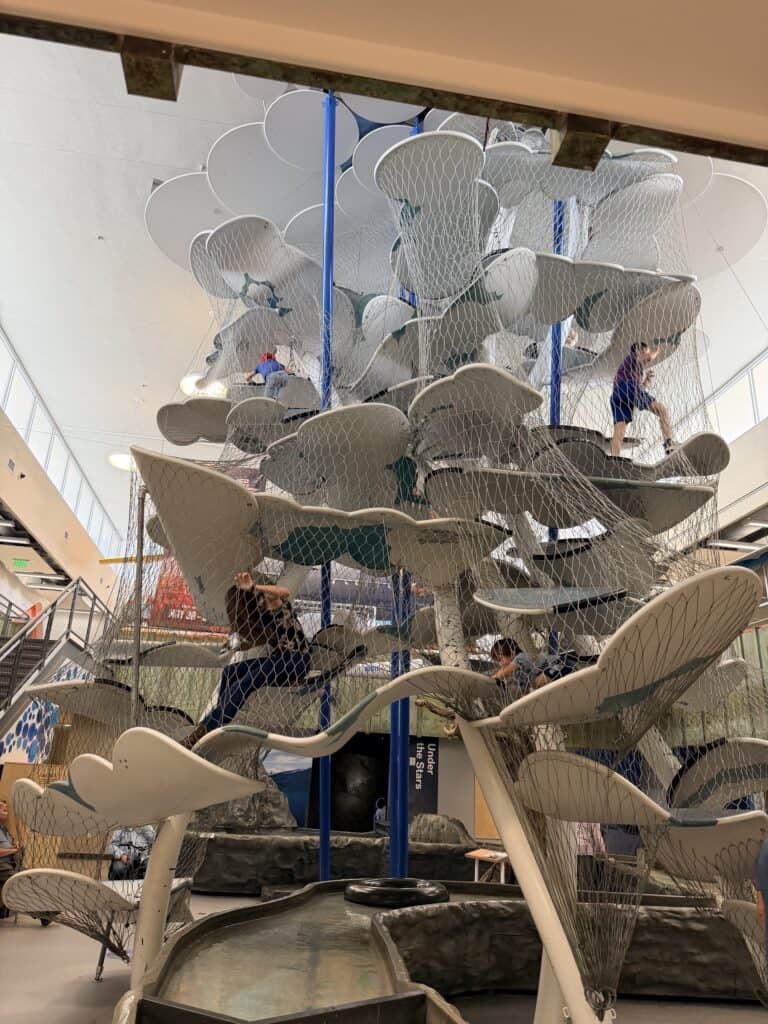
The Cloud Climber was probably the biggest hit of our visit. It rises through the museum’s central space and looks like clouds stacked on top of each other, with climbing routes tucked between them.
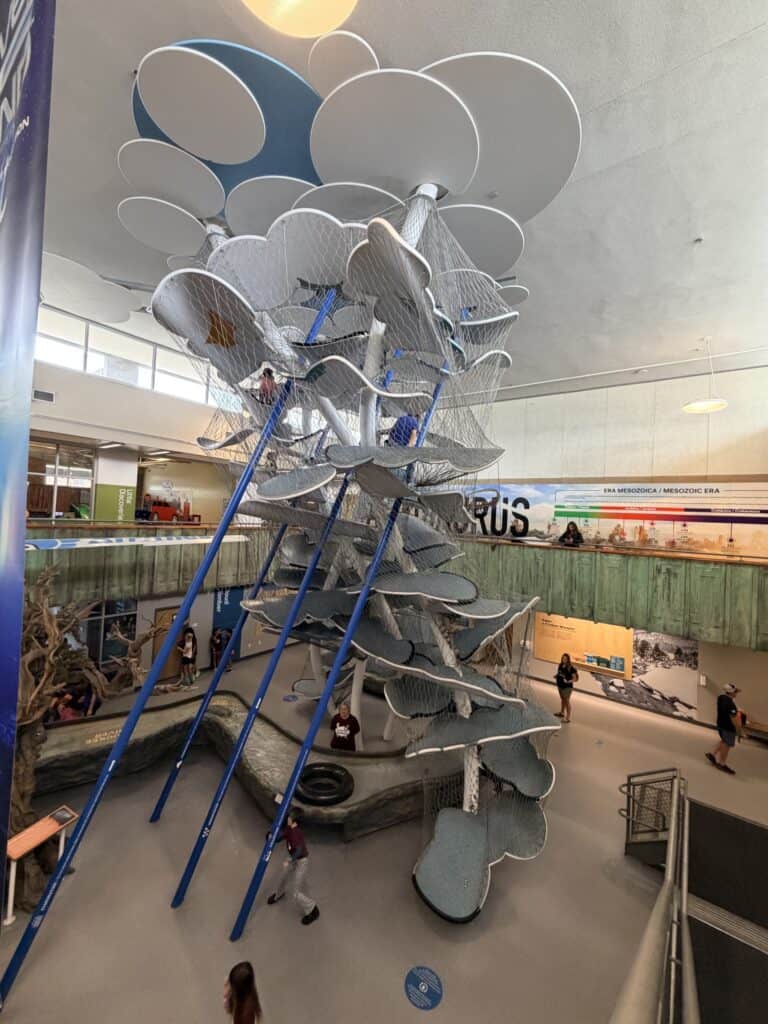
My youngest son spent about 20 minutes climbing on his first round, then returned several times during our visit. He pretty much lived in that thing!
This wasn’t just something our younger children enjoyed – two of my adult daughters climbed it too. I decided to stay outside because I didn’t want to get stuck, but they had a great time.
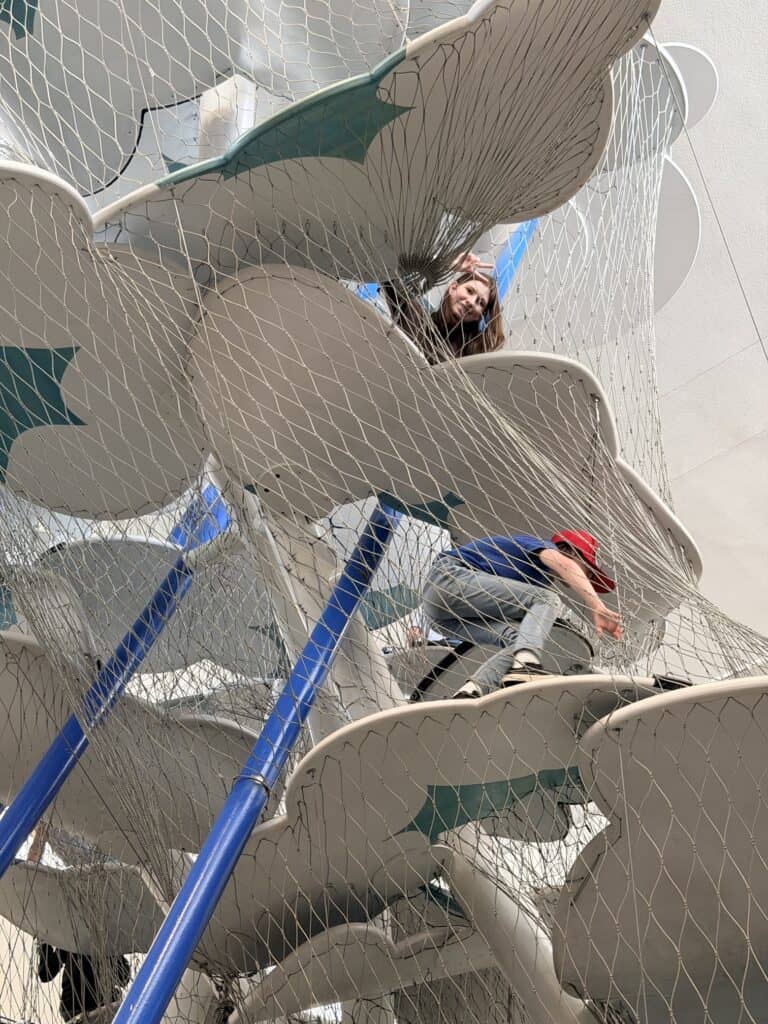
The Cloud Climber is also part of the museum’s exploration of the water cycle. That connection becomes even more interesting when you see what’s underneath it.
2. Follow the Truckee River from Lake Tahoe to Pyramid Lake
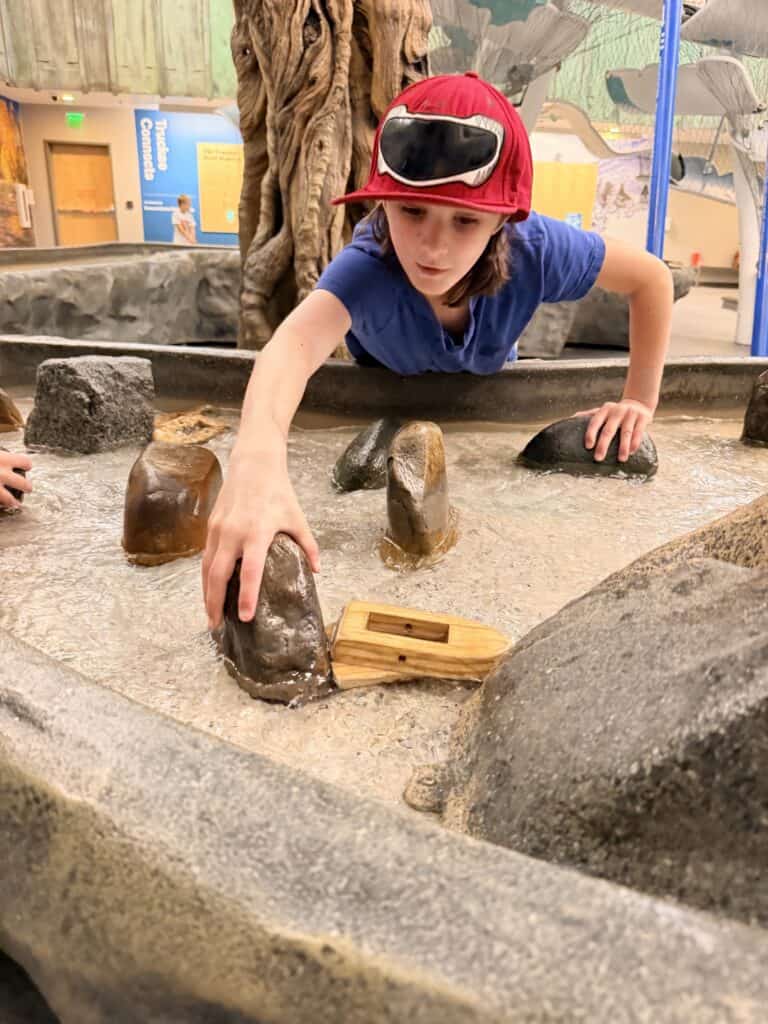
Below the Cloud Climber, Truckee Connects is a working water exhibit representing the Truckee River watershed, from Lake Tahoe to Pyramid Lake. The Cloud Climber actually has blue support poles labeled with words and arrows like “Evaporation” and “Condensation” to show the movement of water through the water cycle.
During our visit, kids could send little wooden boats downstream, experiment with a dam, and move features in the water to see how the flow changed. There was also a demonstration of hydroelectric power.
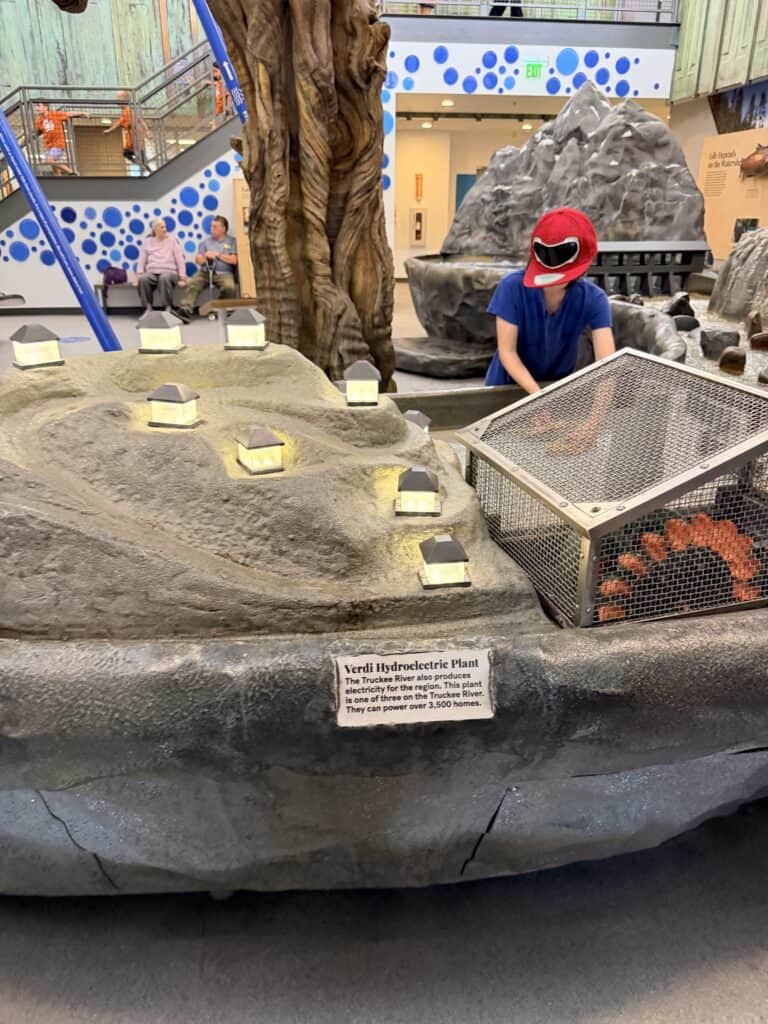
I loved how this exhibit connected water play to the landscape around Reno. Kids could see how a river moves through the region while experimenting with it themselves.
My youngest son loved this area, and my oldest daughter enjoyed checking it out too.
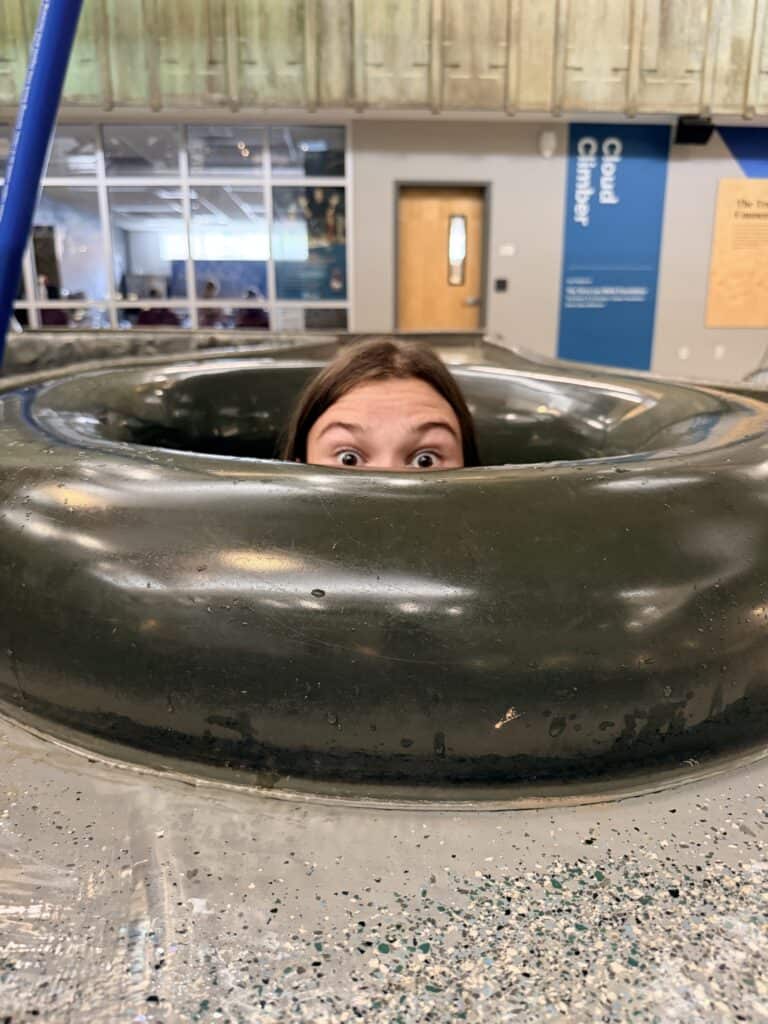
Parent tip: Bring a change of clothes. If your kids spend time playing here, there’s a good chance they’ll get wet.
3. Design an airplane and try flying like a bird
The flight activities were another favorite, especially for our boys.
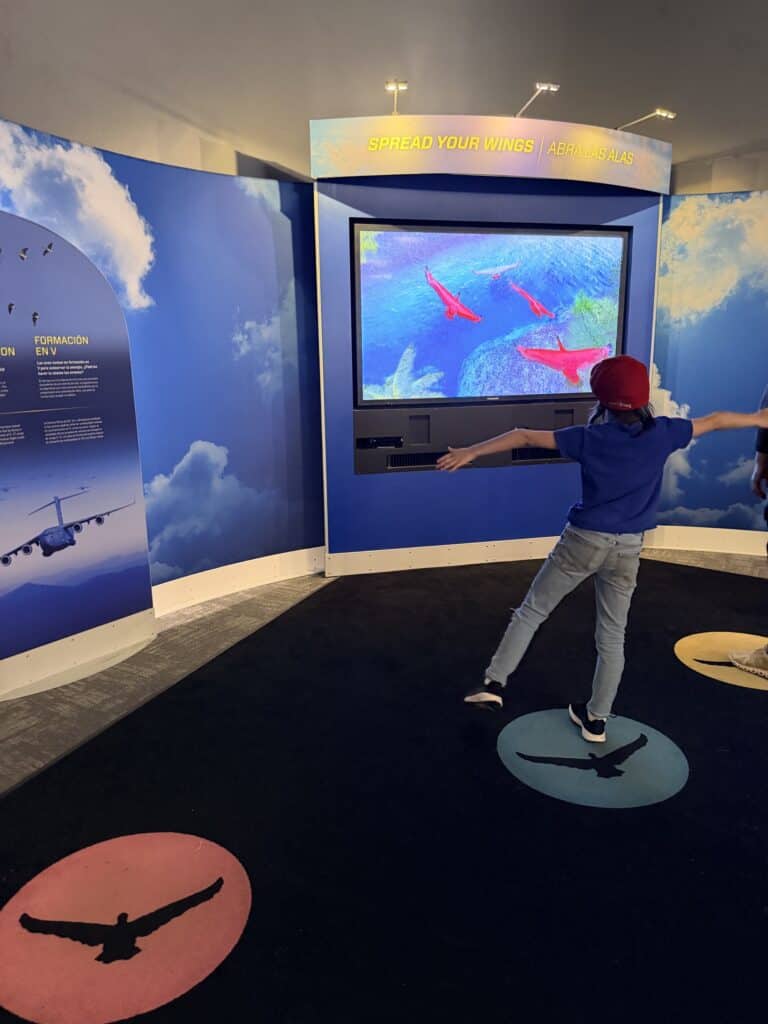
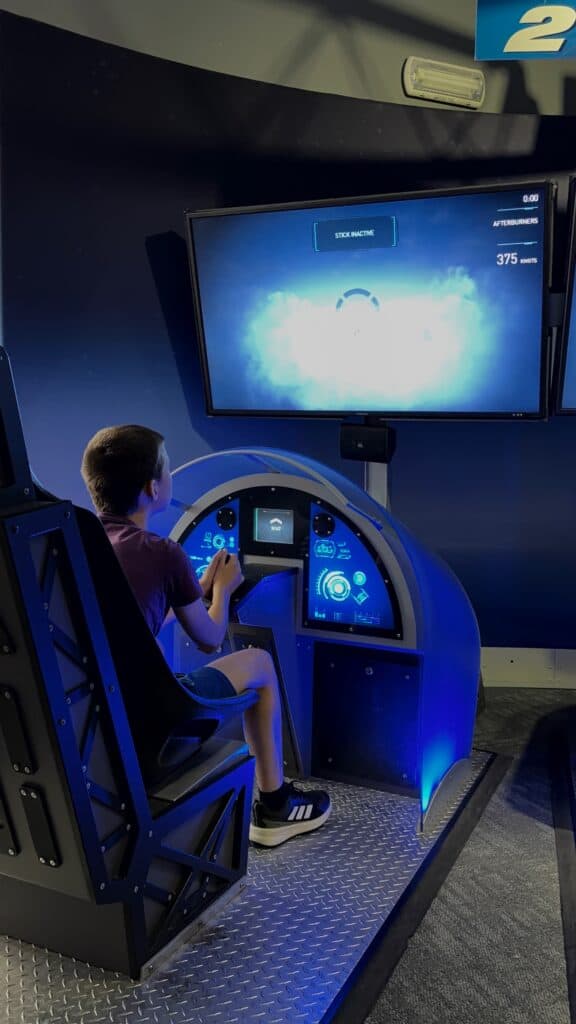
My youngest son tried an interactive experience where he moved like a bird and watched himself on a screen. Two of our boys also spent time designing virtual airplanes, then testing their designs to see how fast they could fly.
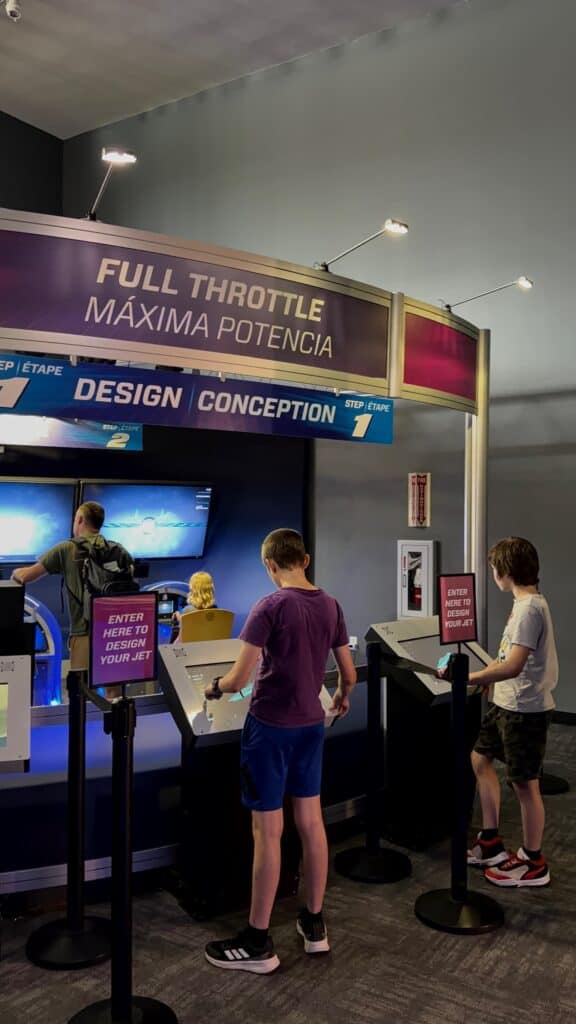
We saw another airplane display that helped demonstrate how its controls move different parts of the aircraft. It was a great opportunity to connect something familiar—turning a control—to what actually happens to a plane.
These experiences are featured in Above and Beyond: The Ultimate Interactive Flight Exhibition. The museum currently lists it as included with admission and scheduled to remain through January 10, 2027. Check the exhibition schedule if you’re planning a later visit.
See details about Above and Beyond. If your family loves flight simulations and airplanes, another fantastic museum is the Amelia Earhart Hangar Museum in Atchison, Kansas.
4. Build a spacecraft and explore Mars
The space activities were especially popular with my teenage daughter and younger son. We had recently watched Project Hail Mary, so they were already interested in space exploration.
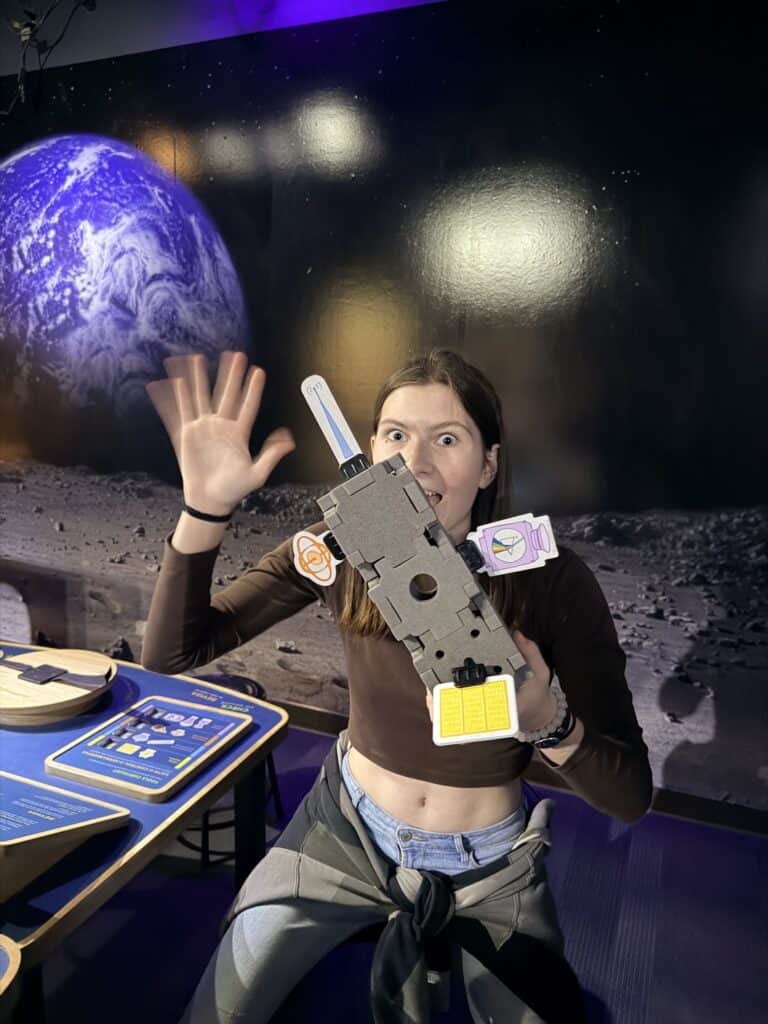
In the Under the Stars gallery, the museum’s Sun, Earth, Universe exhibition includes spacecraft design activities, solar system exploration, and information about the Apollo missions.
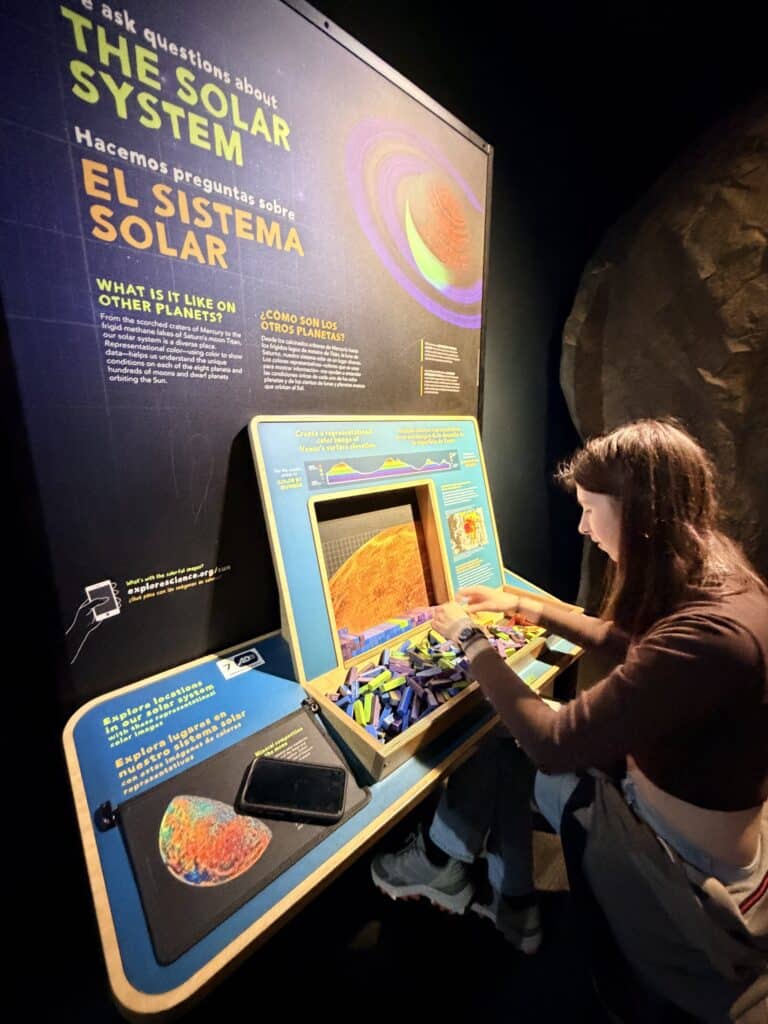
During our visit, my daughter particularly enjoyed an activity exploring the topography of Mars. My son spent time with a LEGO setup where he could work on a Mars station design.
We also found opportunities to test spacecraft designs and think about what people would need to survive on another planet. There was so much to investigate that this section alone could have kept us busy for quite a while.
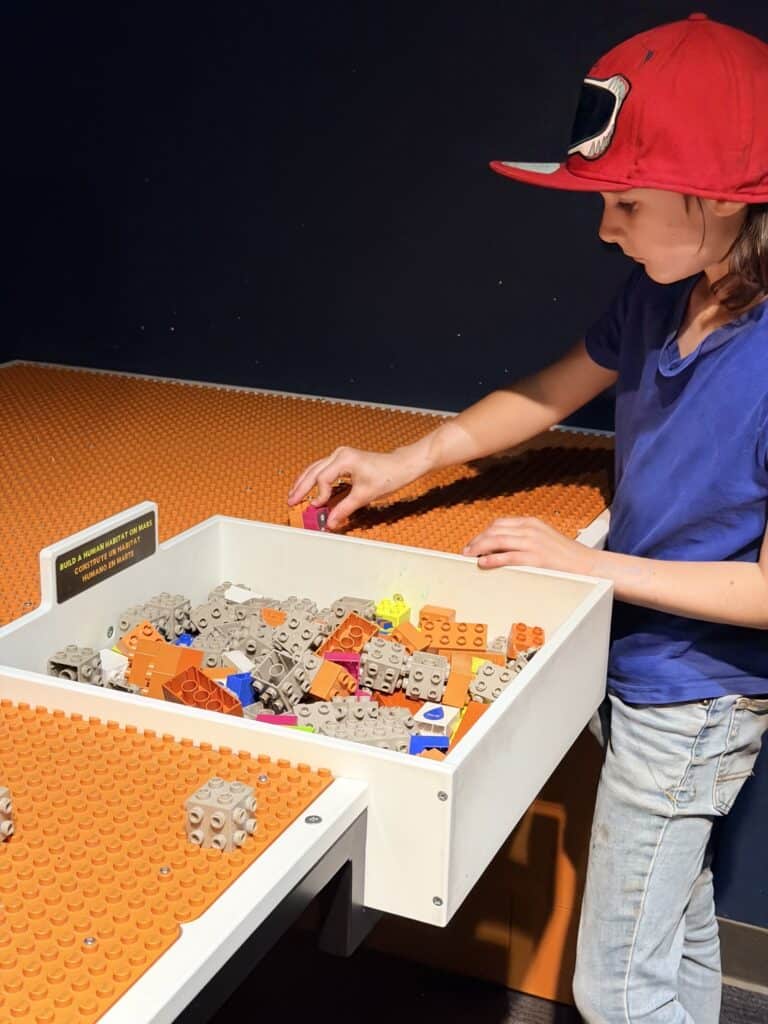
Explore the Under the Stars gallery.
5. See dinosaurs and explore Nevada’s geology
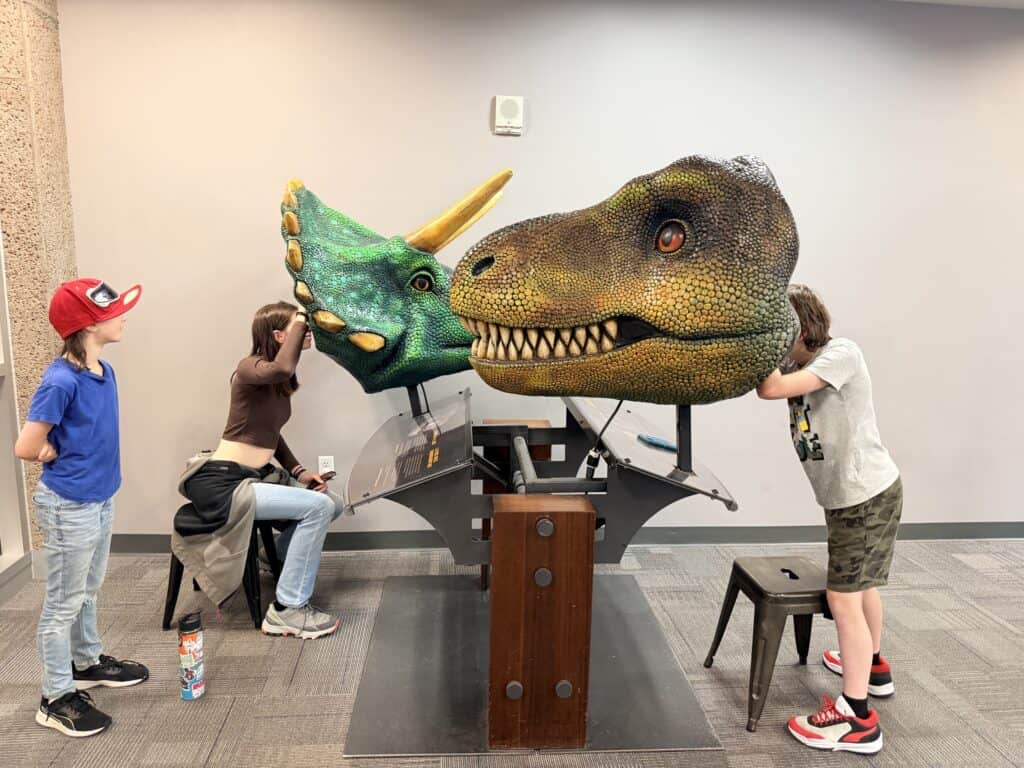
Before we even entered the paid exhibition area, we stopped to explore displays about rocks, minerals, fossils, plate tectonics, and earthquakes. There was already plenty to look at for our rockhounds and dinosaur-lovers!
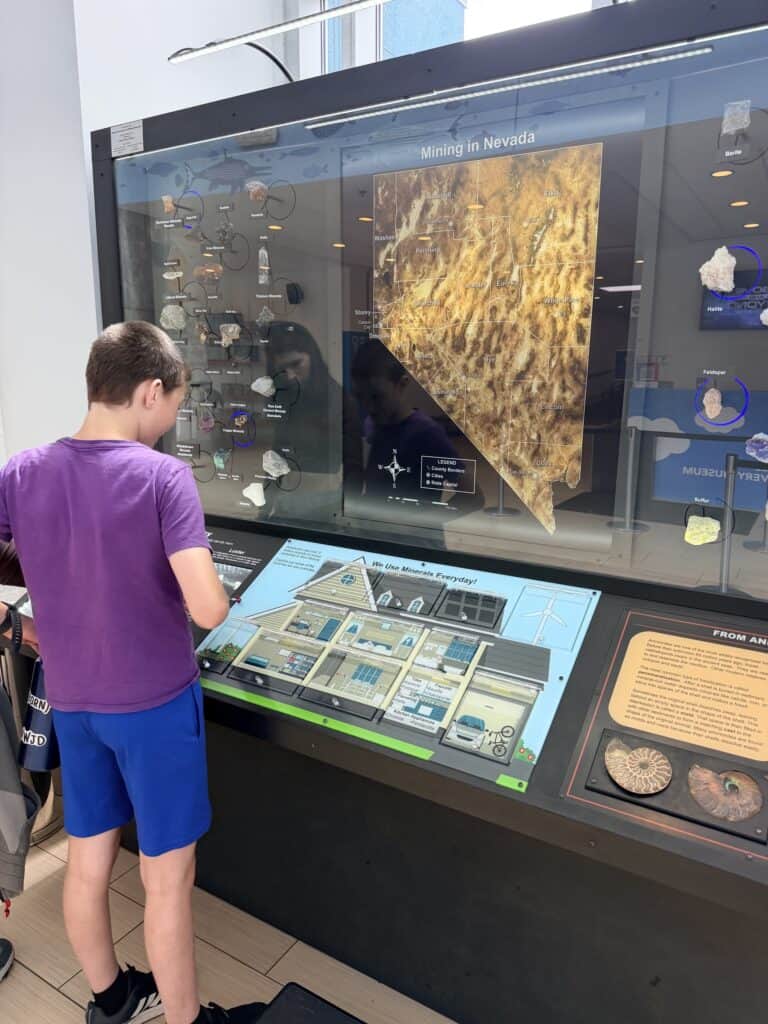
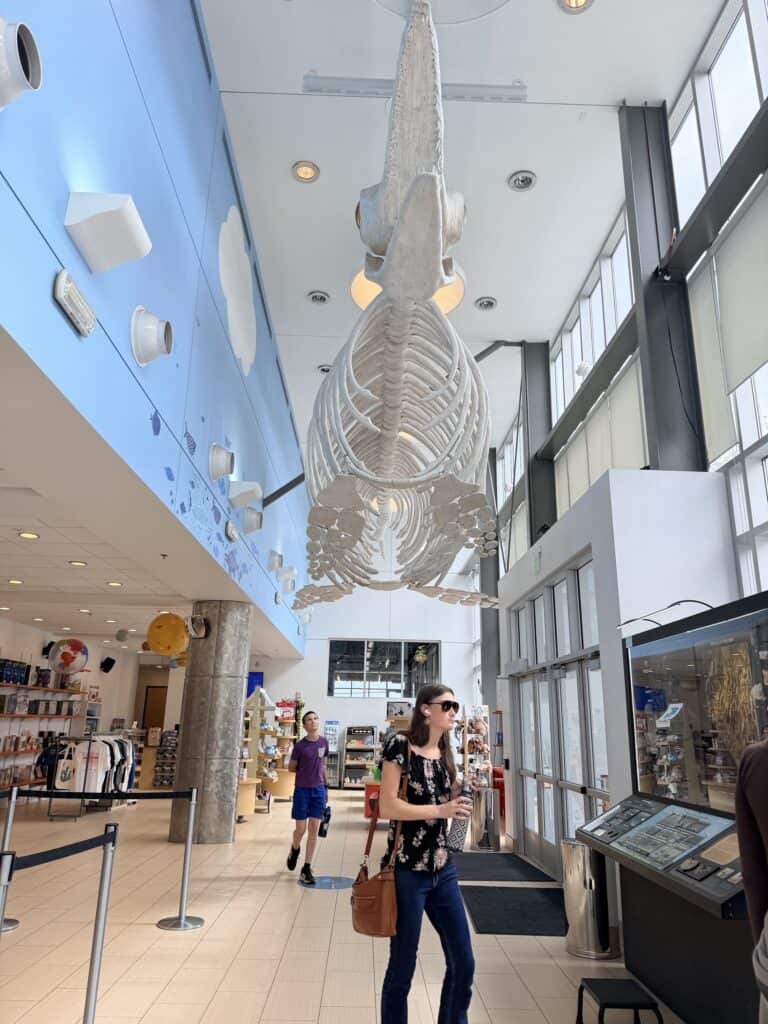
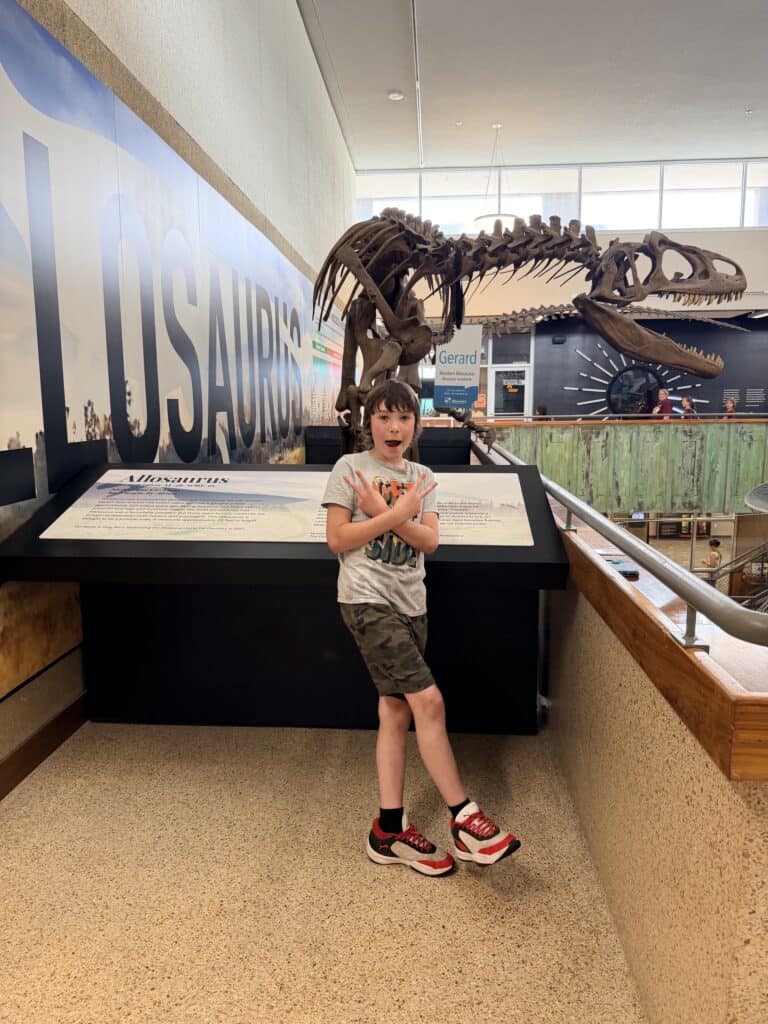
Inside the museum, a large Allosaurus skeletal model was another impressive sight. We also found paleontology activities and opportunities to learn about Nevada’s geography and landscape.
I appreciate museums that help us understand the place we’re visiting. Exploring Nevada’s rocks and landforms added another layer to our time in Reno.
6. Experiment with gears, catapults, and moving pictures
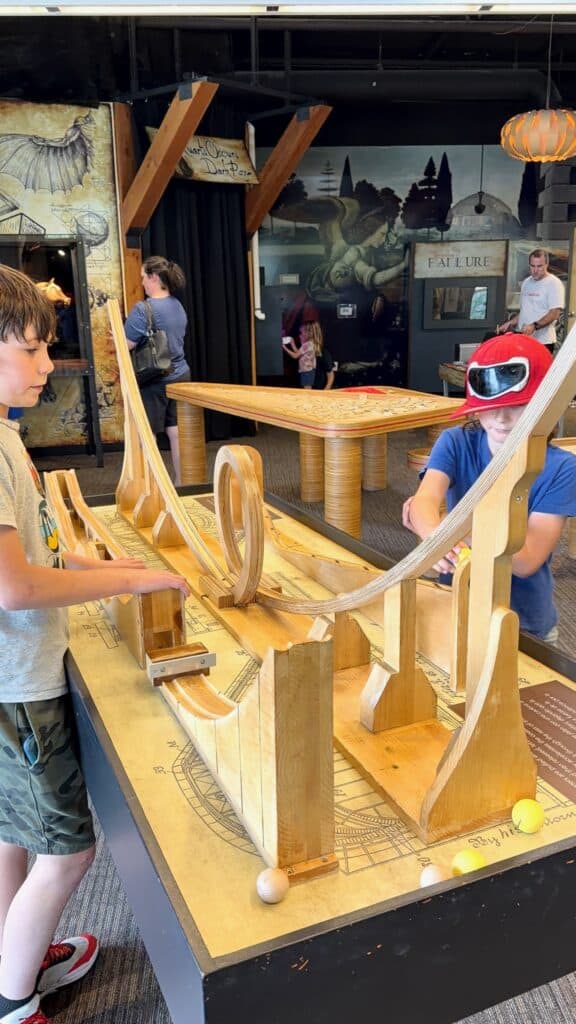
Da Vinci’s Corner brings art and science together through hands-on experiments. It was another area where our boys found plenty to do.
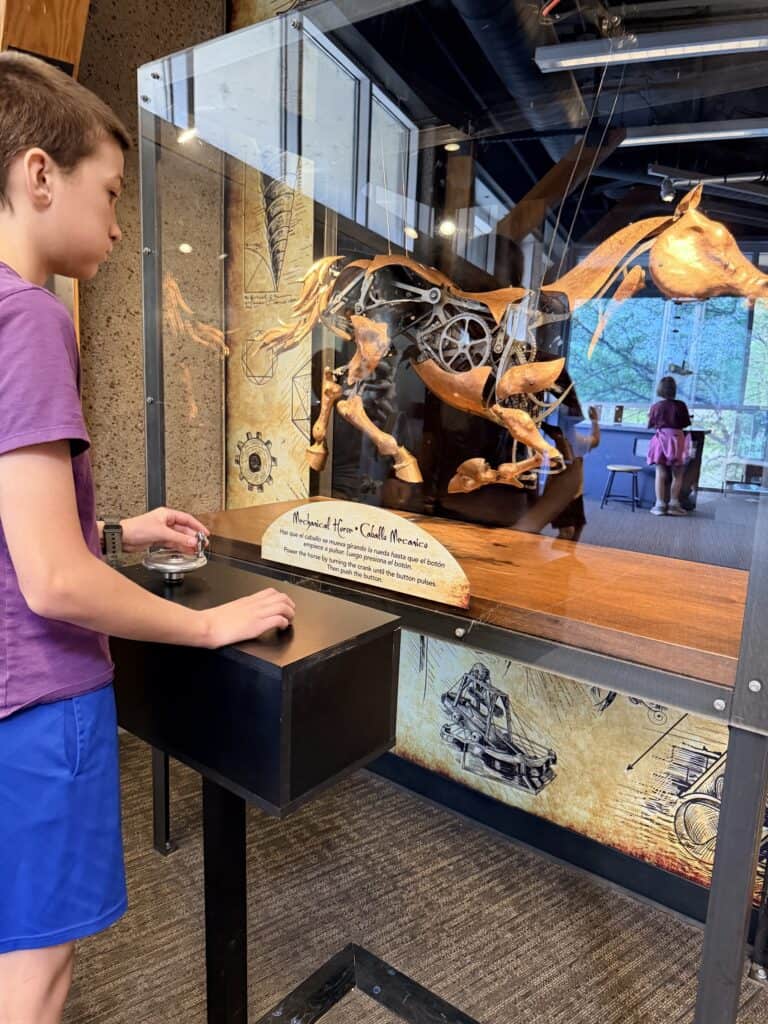
During our visit, we tried mechanical models, including a running horse, and explored how gears create movement. There were mazes and a catapult activity where you could experiment with weights and their positions to see how the results changed.
One of the most memorable displays used a spinning drum and small figures to create the appearance of movement. It was fascinating to watch still figures turn into something that looked almost like a movie.
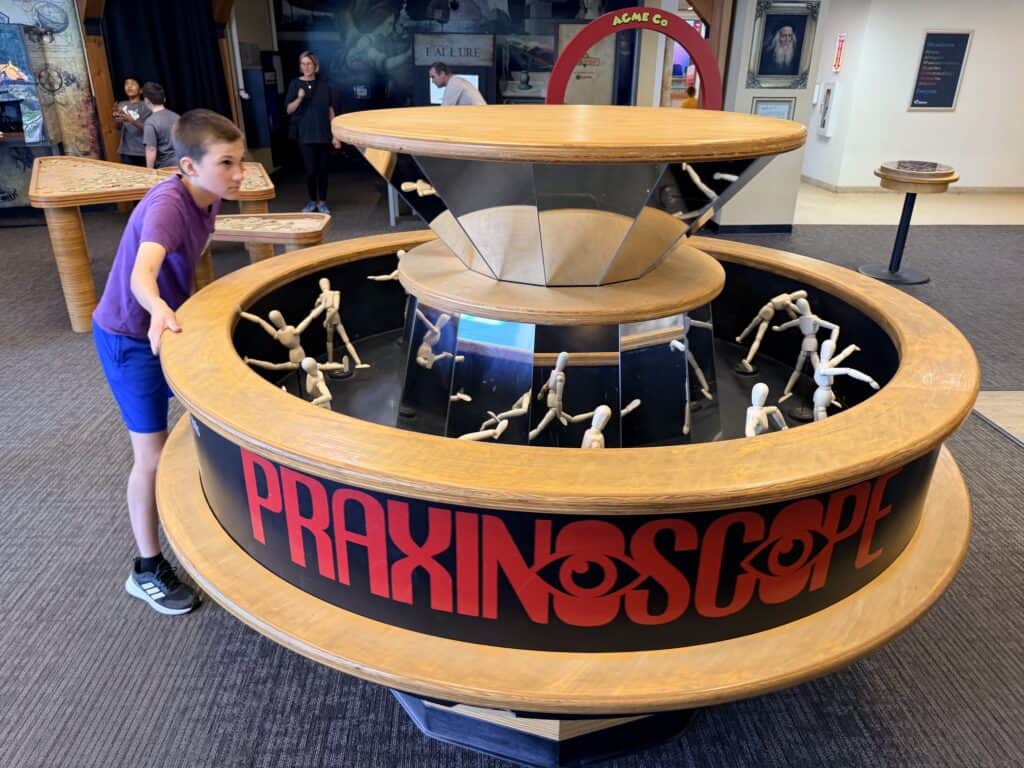
These were the kinds of exhibits that made us stop, try something, change it, and try again.
7. Take time to notice the art
There’s plenty of art to enjoy alongside the science exhibits. We noticed artwork inside and outside, including a painted goat sculpture.
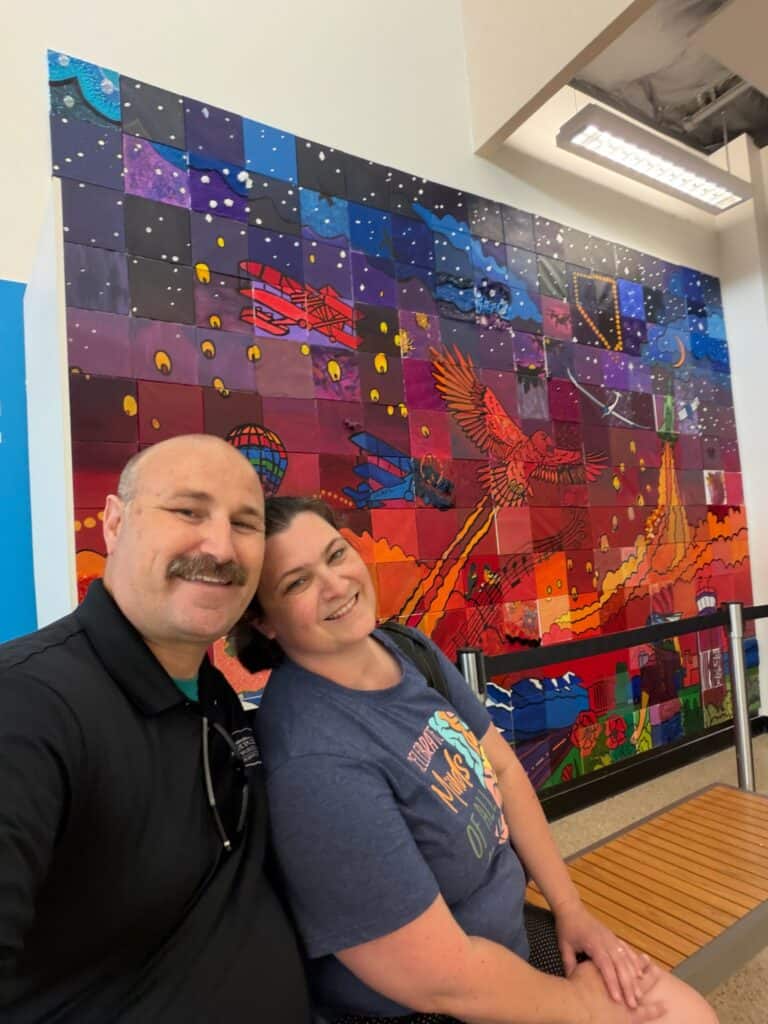
We also stopped to admire the Artown community tile mural on display during our visit. Individual tiles came together to create a larger image, and the finished piece was absolutely beautiful.
Between the art, light activities, recycling displays, and other experiments, there was always something else catching someone’s attention.
Is The Discovery worth visiting with teens?
Yes! Our teenage and adult children found activities they enjoyed alongside our younger kids.
The airplane design challenges, Mars activities, mechanical models, and Cloud Climber gave them different ways to participate. That makes a big difference when you’re choosing an activity for a family with a wide range of ages.
For younger visitors, the museum also lists Little Discoveries, an area specifically for children ages five and under. We didn’t cover that space in this review, but it’s worth checking if you’re visiting with toddlers or preschoolers.
Tips for visiting The Discovery with kids
Give yourselves plenty of time
I recommend planning at least half a day if your kids enjoy hands-on museums. You could easily make this a full-day activity, especially if they want to return to favorite exhibits the way our son did.
My recommendation is based on how much there was to explore, rather than an exact record of how long our visit lasted.
Pack lunch and dry clothes
A change of clothes is my biggest packing recommendation because of the water exhibit.
The museum also allows visitors to bring lunch or snacks and use its family dining area, which has a microwave and high chairs. For a longer visit, having food with you makes it easier to stop for a break.
Plan breaks around your family’s sensory needs
For our neurodivergent family, being able to move, build, and follow individual interests is a big part of what makes a museum visit work.
One other benefit of The Discovery is that, unlike many science museums I’ve visited, the noise levels were reasonable. At no time did I feel the need to have headphones in due to auditory sensitivity, which made the experience that much more pleasant.
With climbing, water play, screens, and light activities, I’d plan breaks and bring whatever supports your children normally use. Let them spend time at the exhibits that interest them instead of trying to finish every section.
The museum lists a Family Room downstairs, near the Yellow and Orange party rooms, as a secluded place for feeding, diaper changes, or a moment away from the museum’s activity. Ask staff about availability and any additional accommodations your family needs.
Check hours and admission before visiting
Regular hours are Tuesday through Sunday, 10 a.m. to 5 p.m., with extended Wednesday hours until 8 p.m. The museum is generally closed Mondays, with exceptions for summer, holidays, and school breaks.
Listed daily admission is:
- Ages 1–5: $13.95
- Ages 6–17: $15.95
- Adults: $17.95
- Seniors ages 65+: $15.95
- Under age one: Free
The Discovery also participates in the ASTC reciprocal admission program. If you have a membership at another participating science museum, check the eligibility rules before purchasing tickets.
Hours, prices, and exhibits can change, so check the official visitor page when planning your trip.
Frequently asked questions about The Discovery museum in Reno
What is The Discovery museum in Reno?
The Discovery, officially the Terry Lee Wells Nevada Discovery Museum, is a hands-on science center in downtown Reno. Its galleries explore subjects including science, engineering, art, anatomy, space, and invention.
How much time should you allow at The Discovery?
I recommend at least half a day for families who enjoy hands-on exhibits. With climbing, water play, design challenges, and space activities, you could easily spend a full day exploring.
Is The Discovery a good indoor activity in Reno?
Yes. We visited in July, and the air-conditioned museum was a welcome place to explore during the summer heat. Our family found plenty of indoor activities to keep different ages interested.
Can you bring food to The Discovery?
Yes. The museum allows packed lunches and snacks in its designated family dining area. Its amenities page lists a microwave and high chairs for visitors to use.
Is The Discovery only for young children?
No. Our teens and adult daughters enjoyed several exhibits during our visit. The museum is designed for curious visitors of different ages, although individual spaces and activities may have their own restrictions.
Would we visit The Discovery again?
Absolutely! We went looking for an indoor activity in Reno and found a museum where our kids could climb, splash, design, build, and experiment.
The Cloud Climber and water exhibit were clear favorites, but the aviation, space, art, and mechanical activities gave the rest of our family plenty to enjoy too. If you’re planning a Reno family trip, I highly recommend leaving time for The Discovery—and packing those extra clothes!
©️ Copyright Jennifer D. Warren 2026.