There’s a lot of mental health conditions and medical terms that are becoming buzzwords right now. You may have heard the term “acquired neurodivergent” and wondered about it.
Some people are born neurodivergent, and that’s different than someone who has acquired neurodivergence through life experiences.
Table of Contents
Disclaimer: We are not doctors, healthcare professionals, or mental health professionals. This post should not be construed as medical, legal, or professional advice.
Prefer to read this post? Here’s the video version:
@dinkumtribe In our family, some of us were born neurodivergent, while others have acquired neurodivergence. Here’s what that means. #neurodivergent #neurospicy ♬ original sound – DinkumTribe ADHD family travel
What does it mean to be neurodivergent?
Neurodivergent basically comes from two words. “Neuro” which is talking about your brain, and “divergent” which means different. So it’s just talking about brain differences.
The term “neurodivergence” is a big umbrella term for mental health professionals, and for the neurodiversity movement. It was coined by Kassiane Asasumasu to include anyone whose neurocognitive functioning is different than dominant societal norms in several ways.
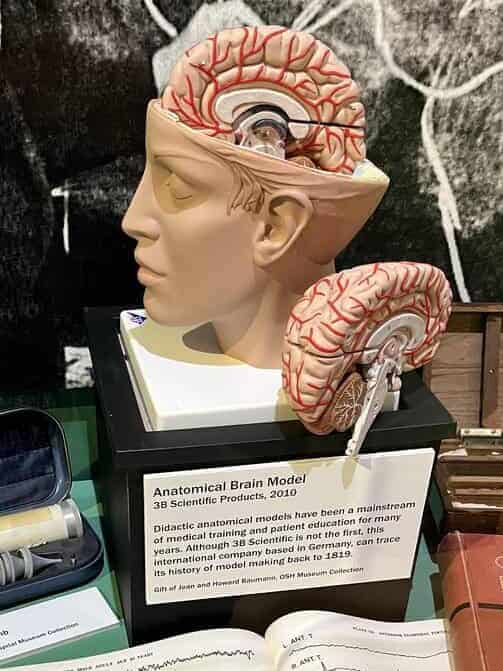
Neurodivergence can encompass several types of mental illness, as well as neurodevelopmental conditions like autism spectrum disorder (ASD) or attention deficit hyperactivity disorder (ADHD). Some mood disorders are included as well.
It can include struggling with executive functioning (decision-making and planning abilities). Or it can be struggling with emotional regulation, or with cognitive processing, or even with motor function.
What is acquired neurodivergence?
Neurodivergence can be something you’re born with. So autism is one of the forms of neurodivergence that you’re born with. That’s an innate neurodivergence.
It’s also possible to acquire some neurodivergent conditions with different types of life experiences. Trauma survivors often acquire neurodivergent traits.

Examples of acquired neurodivergence
One of the more common ways that people acquire neurodivergence is when they have a traumatic brain injury (TBI). I’ve known two people personally who have had traumatic brain injuries.
One of my relatives was injured in a snowboarding accident as a young man. He had bleeding on the brain, and he was in a coma for a while.
He’s pretty much fully recovered now. But he’s not able to learn new skills as a result of that brain injury, and it’s a permanent change in his brain function. That’s a form of acquired neurodivergence.
Another way you can acquire neurodivergence is through psychological trauma. That’s the kind of neurodivergence that I first recognized I had.

Complex trauma
I have something called complex PTSD (post-traumatic stress disorder). Complex PTSD happens when you have grown up with traumatic environmental factors that were semi-constant.
So, kids who are born in war zones is one example. Another example is people who had traumatic experiences (adverse childhood events or ACEs), such as childhood sexual abuse or childhood neglect.
Those are things that can cause c-PTSD – it’s not something that happens during adulthood.
Adult traumatic events that can cause PTSD are things like a major accident or violence. Those can cause PTSD symptoms.
But with complex trauma, you’ve been raised in an environment where that was your normal. Your nervous system never felt safe. That kind of unsafe environment can permanently change a person’s brain functions.
Misdiagnosis and co-occuring disorders
It’s sometimes difficult to figure out what the appropriate diagnosis is for specific medical conditions. That’s one of the reasons why so many people get misdiagnosed.
Women, especially, tend to be misdiagnosed with bipolar disorder or other mood disorders before finally getting an ADHD or autism diagnosis.
Another thing that happens fairly often is that they’ll get diagnosed with anxiety disorders or they’ll get diagnosed with obsessive-compulsive disorder (OCD). OCD is a type of acquired neurodivergence – it’s not considered to be innate.
The human brain is just so complex. Quite often the medical term for a neurodiverse condition refers to a collection of symptoms, and symptoms can have different sources.
So when we’re talking about acquired neurodivergence, it’s something that you’re not born with. That’s really the biggest difference.

When neurodivergence has multiple causes
Now, here’s where it gets fun because neurodivergent people can have both acquired neurodivergence and innate neurodivergence. It’s a really complicated relationship.
Autistic people are born with autism. Their brain structure and function is different from birth. But depending on their individual experiences, and support services they receive, it makes a huge difference in their severity of autistic traits.
Interestingly, autistic people are more likely to experience trauma due to differences in sensory processing. So it’s common for autistics to also be diagnosed with PTSD or cPTSD.
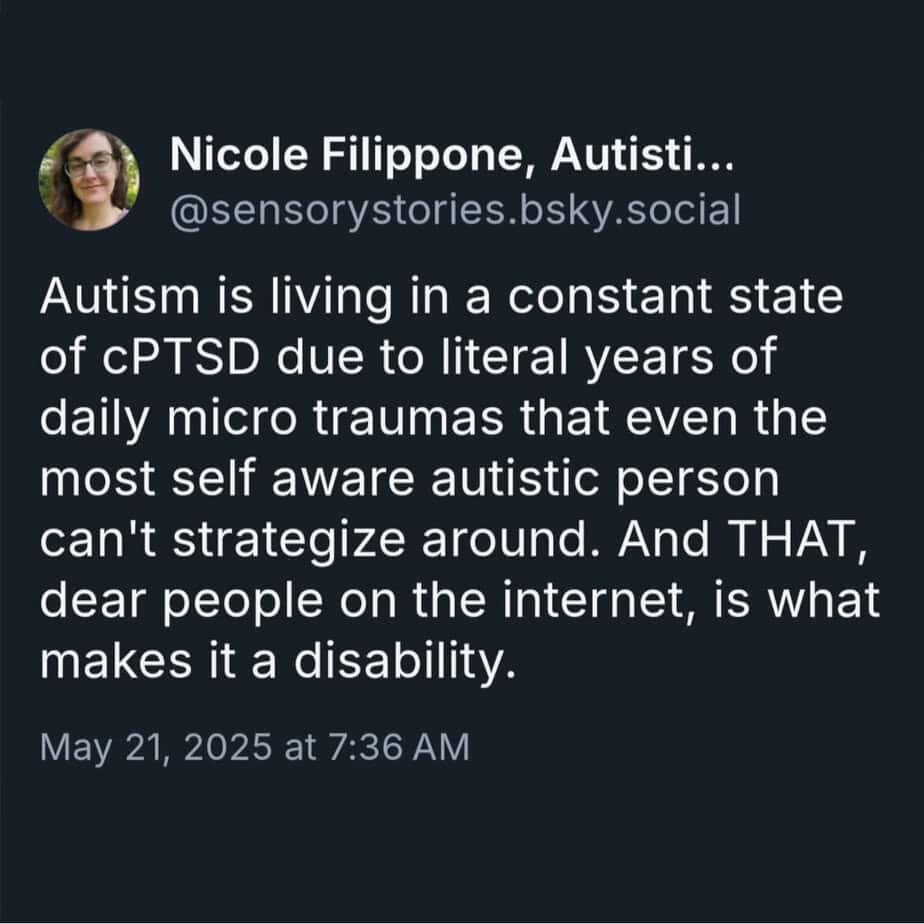
This makes for an interesting chicken-and-egg scenario. The question that’s often asked is, “Did the neurodivergent person experience trauma as a result of not fitting in to a neurotypical world? Or is the trauma the source of their neurodivergent traits?”
And quite often, the answer is, “YES.” It’s both.
Neurodiversity and brain research
When you’re talking about neurodivergence, there are measurable differences in the brain functions and the structure.
You can actually see activity differences when you’re looking at different sections of the brain on MRIs, CAT scans, things like that.
We started being able to really study the brain’s functions in depth in the ‘90s and that’s why a lot of these diagnoses seem newer. It’s not that they weren’t there before – it’s that we didn’t have a way to observe them and measure them physiologically.
We could only see the behaviors. We couldn’t see that people’s brain functioning is actually different. But now we can measure blood flow to the brain. We can measure electrical currents in the brain.
So we now can see how brains are different in people who have ADHD versus someone who doesn’t. Or how the brain is different in those who grew up with childhood trauma.
We can now observe physical changes in brain structure as well as differences in activity levels.
Brain differences show up in behavior
Ultimately, you’ll see huge differences in daily life skills, practical skills and in social skills for someone who is neurodivergent versus someone who is neurotypical.
I’ve known a couple people who’ve had serious traumatic brain injuries, and their life skills were impacted. There are cases of people who developed Tourette syndrome after an accident, or of people who develop ADHD-like symptoms after trauma.
@dinkumtribe Our daughter describes how it feels inside her head to have ADHD. #adhdteen #adhd #neurodivergent #neurospicy ♬ original sound – DinkumTribe ADHD family travel
Another friend of mine was an oncology nurse, and had several concussions over the course of about 15 years. Her recovery after the last one was painfully slow – it took her a long time (months) to be able to stand up without having a migraine.
So neurodivergence really can impact a lot of the things that you do every day.
Another friend of mine who had a traumatic brain injury in childhood struggles to make decisions. It takes a lot more planning and preparation for them to be able to do some things.
Why does it matter whether neurodivergence is acquired or innate?
If you have acquired neurodivergence as a result of trauma to the brain, there’s the possibility that with treatment and appropriate supports, you may be able to recover.
However if your neurodivergence is innate, there’s no need to “cure” it, since it results from natural variations. So practically speaking, the approach to treatment will be different based on the type of neurodivergence.
This is why assessments for ADHD and autism include understanding childhood medical history and family history. There’s a strong genetic correlation for ADHD and autism, and traits are present from early childhood into adulthood.
Of course, many of the same treatments that help people who have ADHD or autism will also be helpful to people with acquired neurodivergence.

Personal perspective
For our family, understanding that ADHD and autism are a naturally occurring variation has been incredibly helpful.
If you grow up not knowing why you are different, it’s easy to absorb the social messaging that there’s something “wrong” with you.
Both my husband and my oldest daughter have talked about their experiences with this in some of our other posts. This often results in low self-esteem, and can exacerbate mental health challenges like depression and anxiety.

However when you understand that your brain is simply built differently, it’s easier to accept those differences and shift your focus to supporting your needs.
In our family, we spend a lot of time creating systems that work with our strengths. Our daily routines and environment at home are designed to support the different conditions each of us needs to succeed.
Neurodiversity acceptance
The concept of diversity isn’t a new one- after all, variety is the spice of life! Just like hair color, eye color, and skin color, everyone’s brain is different, and that’s actually a wonderful thing.
Figuring out whether neurodivergence is innate or acquired leads to a more accurate diagnosis and a more effective treatment approach, although there’s still plenty of overlap.
In the end, recognizing that all brains are wired differently supports self-acceptance for neurodivergent individuals, and allows them to focus on leveraging their strengths.
You may also enjoy these posts:
- What does it feel like to be autistic?
- How to talk to an autistic teenager
- Self care ideas for anxiety
- 3 ways my untreated adult ADHD affected me
- ADHD in teen girls
©️ Copyright Jennifer D. Warren 2025.