I first discovered Tanganyika Wildlife Park through the viral TikTok videos of Keeper Sierra trying to get Mars out of the pool. So when a recent work trip brought me to Wichita, I jumped at the opportunity to see my favorite internet star!
Tanganyika surprised me in ways I didn’t expect—sometimes tender, sometimes hilarious, sometimes awe-struck. Even without my kids beside me, I felt the wonder I know they’d experience here.
As I moved through the park, I noted everything a parent of neurodivergent or sensory-sensitive kids would want to know. Here’s my full review, with honest details, sensory notes, and the moments that stayed with me.
Table of Contents
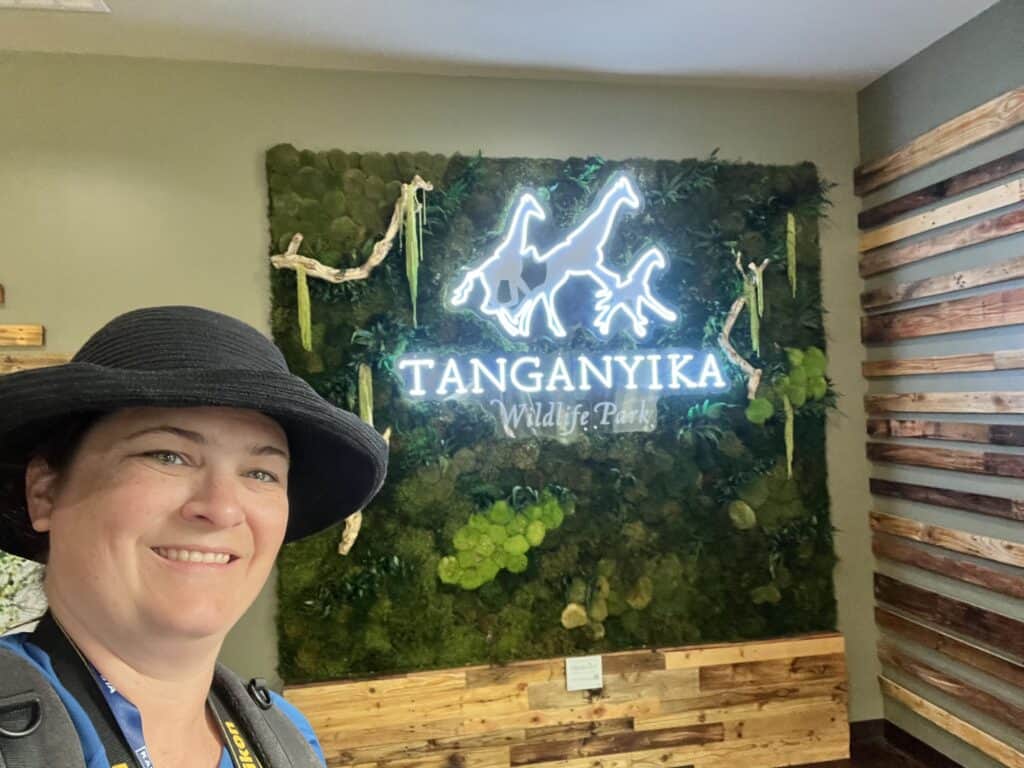
What sets Tanganyika apart from other wildlife parks?
Tanganyika Wildlife Park is SO MUCH MORE than a zoo or wildlife preserve – it’s a bucket-list destination. Yes, you’ll see animals in their enclosures, but everything about Tanganyika is designed with the concept of “Connect and Preserve.”
@dinkumtribe I will never forget my day at Tanganyika! #hosted Not in my wildest imagination could I dream of feeding and petting a rhinoceros, or snuggling a baby kangaroo, or swimming with penguins. And these are only SOME of the amazing animal experiences that are available! It’s a special place, and definitely a bucket-list destination. #connectandprotect #tbexwichita #wildlifeencounter @Visit Wichita @tbex events @TanganyikaWildlifePark ♬ เสียงต้นฉบับ – OH😲CRAZYGIRL😮 – แพรรี่ขายทุกอย่างจ้า🥳
Connecting people with animals is at the heart of the Tanganyika experience. As park manager Lynnlee explained, when people connect with an animal personally, they are highly motivated to protect and preserve these special creatures.
Another thing that’s different about Tanganyika is that the price is all-inclusive. Your ticket to Tankganyika includes meals, drinks, and snacks for the day. It also includes several animal encounters, with the option to add on more specific encounters.

Comfort food and easy logistics
My tour group started early with a delicious hot breakfast—fresh sausage-and-egg biscuit sandwiches that tasted more homemade than theme-park. The biscuit was flaky, buttery and oh-so-good!

One of the best things about Tanganyika is how open it is. Even during peak encounter times, no area ever felt crowded, and it was easy to find a good animal viewing spot.
That low-level bustle felt manageable and calm. As a parent of neurodivergent kids, I’m always counting heads and watching the crowds, and that was easy to do at the park.
Later in the day, I devoured some pretzel bites with cheese and a warm chocolate chip cookie. Tanganyika’s food options impressed me – everything tasted fresh, not processed or stale.

Inside Trouble Makers Cove (penguins)
Our first stop was Trouble Makers Cove, home to the African penguins. Note: the air hits you with a strong, warm, fishy scent the moment you step inside. It wasn’t overpowering, but it’s notable.
Then we got to meet Patty the African Penguin. Patty demonstrated her signature art-making routine—dipping her feet in paint and waddling across a canvas while her keeper answered questions.
@dinkumtribe #hosted On of the coolest experiences at Tanganyika was watching Patty the African penguin paint! We learned all about penguins while watching her explore all around us. Good thing she didn’t peck my camera, though! 😆 @tbex events @Visit Wichita @TanganyikaWildlifePark #penguin #wildlifeconservation #connectandprotect #tbexwichita @Angie | Chicago Creator ♬ original sound – DinkumTribe ADHD family travel
The moment felt lighthearted and personal, and I was impressed at how confident and relaxed Patty seemed around guests. She pecked at my camera a couple of times, in between trying to catch a fly buzzing around.
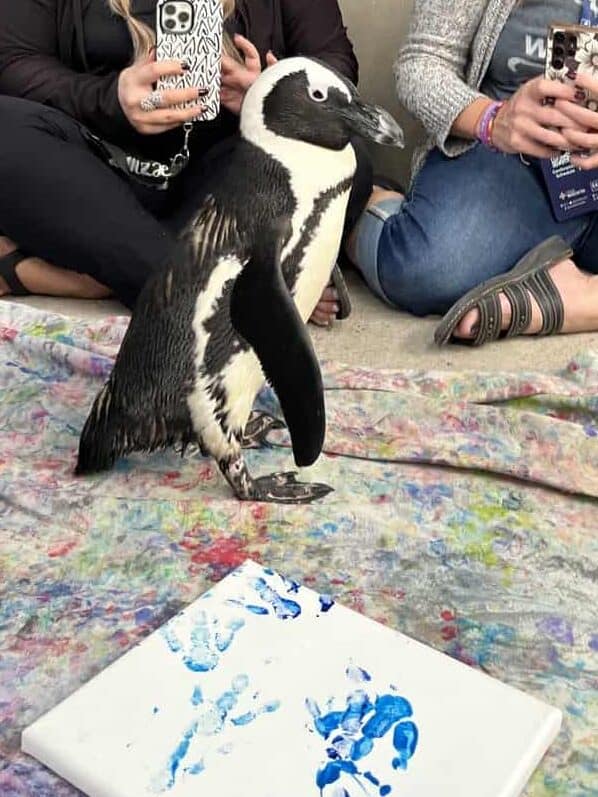
As a bonus, you can take home your penguin painting as a keepsake! The gift shop also offers Patty’s paintings for sale.
Parent heads-up: sensory-sensitive kids may not enjoy this space, but it’s small and easy to exit quickly.
Feeding and Posing With a Capybara

Next, we met one of Tanganyika’s most beloved residents—a capybara named Pinto who patiently waited for snacks and photo ops. I fed her crisp lettuce leaves and scratched her in her favorite spot under her chin.
Then we posed for a “handshake” photo. Her paw rested in my hand, and I noticed the coarse texture of her fur—much rougher than I expected.
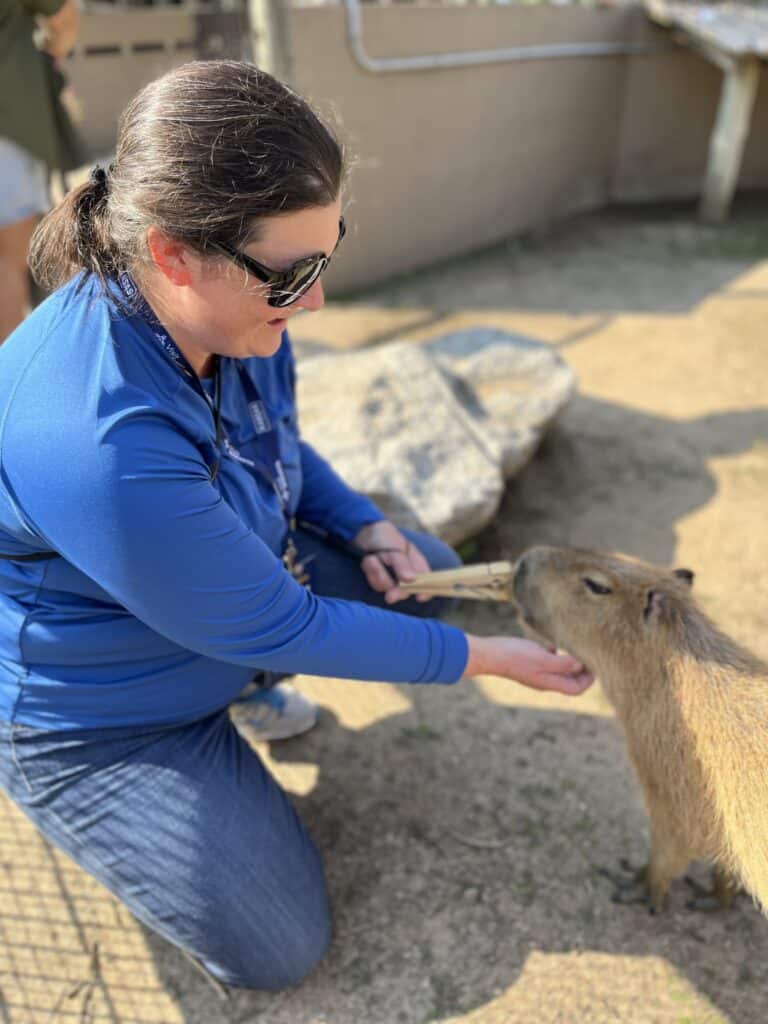
It was a delightful surprise. Those little sensory quirks are part of what makes Tanganyika special. You don’t just see animals here—you feel them, smell them, and interact with them in real time.
Meeting Jasper the ruffed lemur (“Jazzy”)
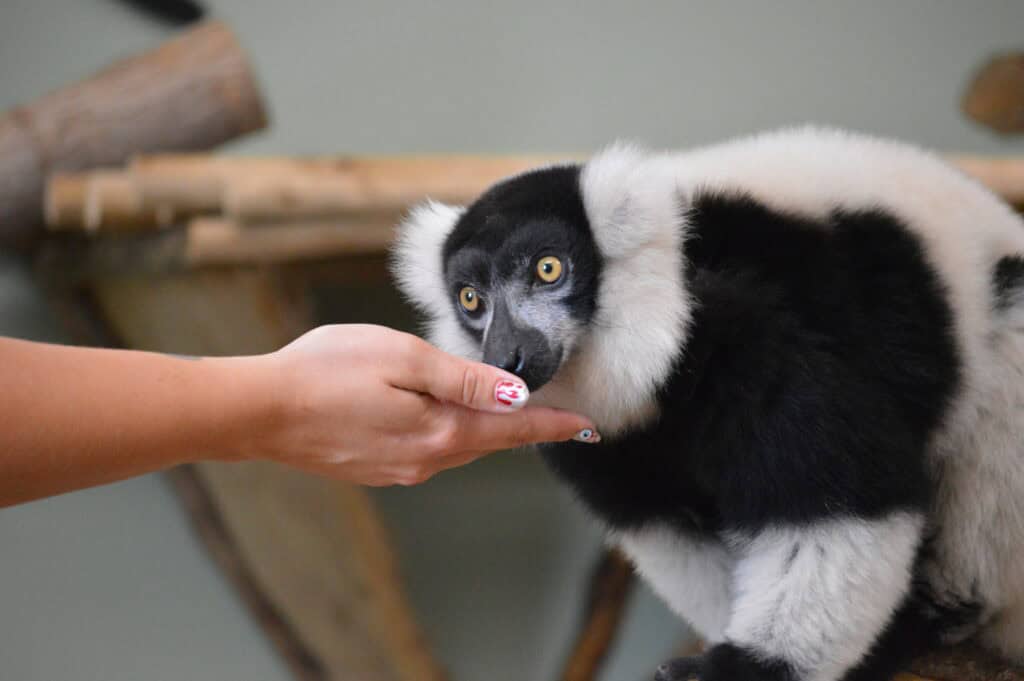
One of my favorite encounters was meeting Jasper, a ruffed lemur affectionately called Jazzy.

Jazzy moved like a mischievous cat on a climbing tower—stretching, leaping, and posing dramatically. At one point, he walked across the backs of three visitors in a row, including mine.
Feeling his paws and gentle weight was unexpectedly endearing.
His fur felt incredibly soft. I wasn’t prepared for how plush lemur fur is—it reminded me of a luxurious house cat.
Cooling off on the air-conditioned shuttle
The day reached over 80°F, and I was grateful for the air-conditioned shuttle that ferried our group to the giraffe and rhino habitats. Tanganyika is wide, and the shaded rest from the sun felt restorative.
Families should bring hats, sunscreen, and sun-protective layers. Shade is limited throughout the park, and I was glad to be wearing my UV protective long-sleeved shirt and hat.
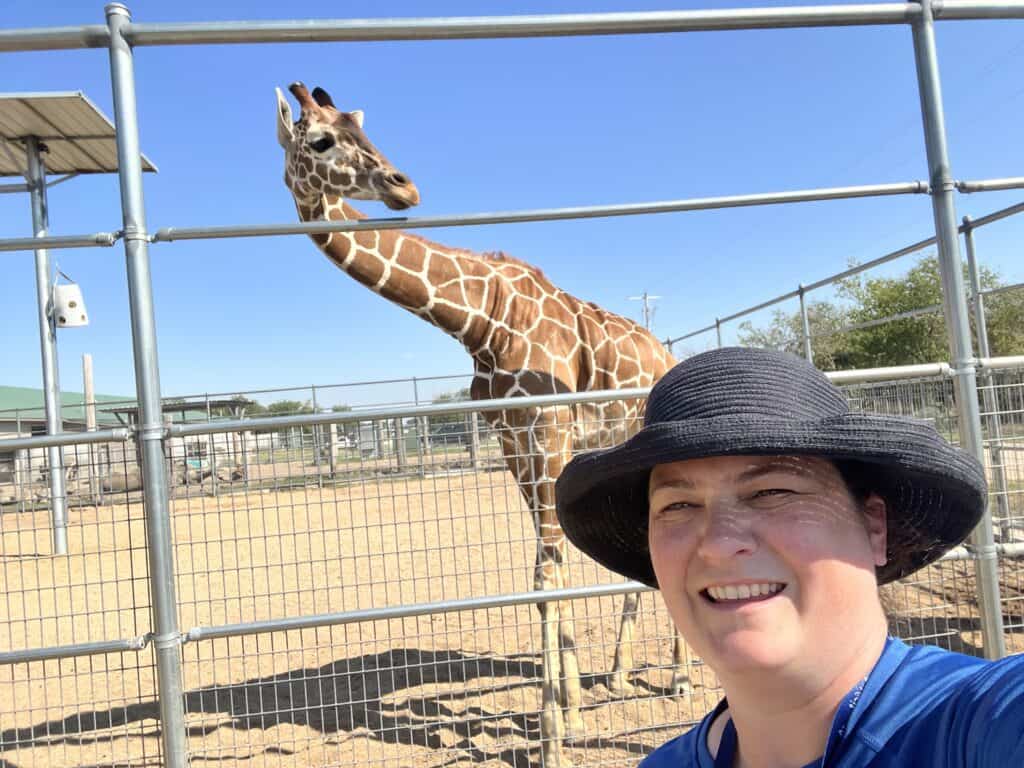
Hand-feeding lettuce to giraffes

Feeding the giraffes was SO COOL!
I held out long leaves of lettuce, and the giraffes stretched to reach them. Their super-long, black tongues wrapped around the greens with incredible precision.

The staff member reminded us not to get too close to their heads—giraffes are gentle but powerful. Their heads weigh over 200 lbs., so if they knock you accidentally, you’ll feel it!
Scratching an Indian rhino behind the ear
Next came the rhinos. I still can’t believe how close we were allowed to get! We fed them handfuls of alfalfa while keeping an eye out for their sharp horns.

Then I reached out and touched one of the rhinos’ thick, leathery skin. I even scratched it behind the ear and ran my hand along its rough horn base. I was surprised by its soft lips grasping the alfalfa.
It was humbling and intimidating, reminding me of the Triceratops encounter in the first Jurassic Park movie. Rhinos are huge and bulky, but in spite of that they move quite gracefully.
This is the moment I wished my kids were with me. They would’ve talked about it forever!

One of the fun details about Tanganyika is how the animals are named. For example, all the rhinos are named after characters on The Office show. It was hilarious (and a little scary) to watch Pam and Jim (the rhinos) shove each other around!
Lunch and a Peek at Baby Mars the Pygmy Hippo

We paused for lunch, then visited the pygmy hippo enclosure to see baby Mars and his mother swimming together.
Well, not at first, because the toddler hippo was sleeping when we got there! But then he waddled over to the pool to swim.
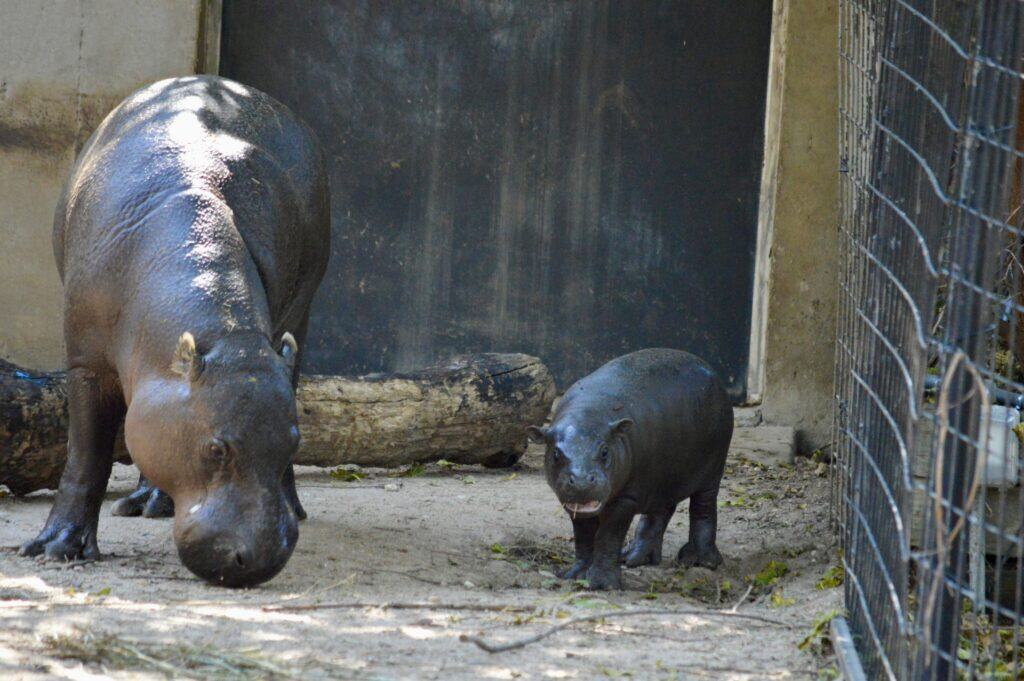
Mars is tiny and charming—a round, pudgy little “water potato.” He paddled beside his mom with slow, clumsy kicks, and our whole group melted into “Awws”. The enclosure was bright, warm, and easy to view.
Right next door, a baby mandrill threw a tantrum, shrieking and hopping in an effort to get his mother’s attention. She ignored him completely.
@dinkumtribe This baby mandrill was so funny! He had a mouth, and mom was ALL DONE. 😅 #connectandprotect #tbexwichita @tbex events @TanganyikaWildlifePark @Visit Wichita ♬ original sound – DinkumTribe ADHD family travel
Every parent in our group laughed – some moments cross species!
Ring-tailed lemurs and a very licky surprise
Later, on Lemur Island, I fed ring-tailed lemurs. One lemur kept licking my hands and arm just like my pet cats. Guess I’m salty!

The keepers reminded us to discourage that behavior by moving our hands away, because it can cause social issues with the other lemurs later. Then we got a fun group shot surrounded by the climbing lemurs.
Parents, be aware that some of Tanganyika’s animals explore with their mouths. Expect gentle nips, licks, and curious sniffs.
A close-up with a white tiger
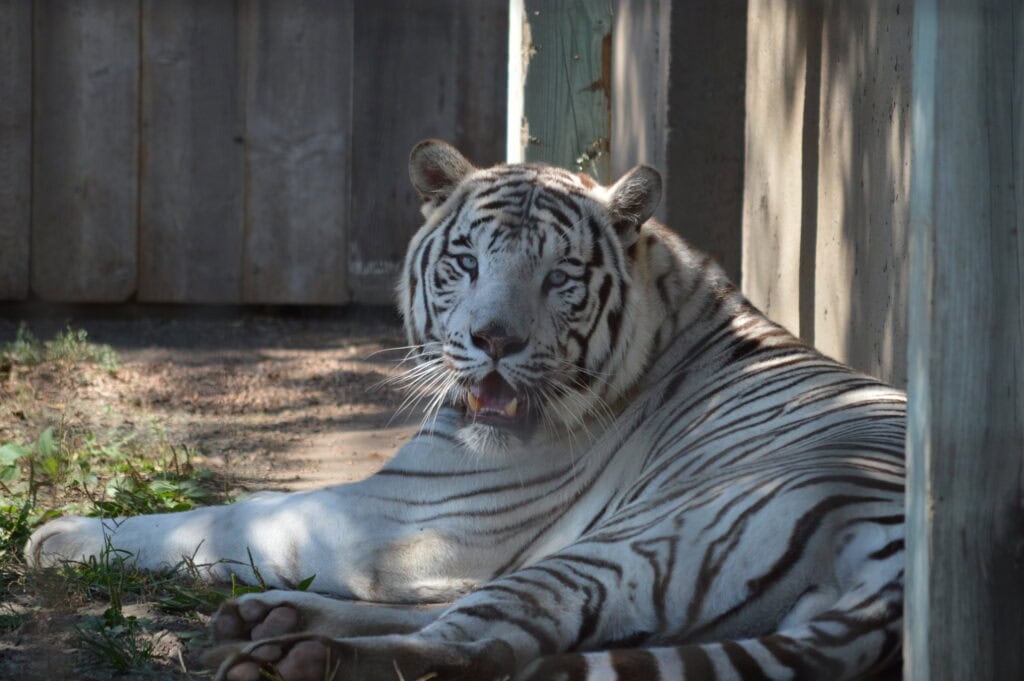
Before we moved on, we passed the white tiger resting in the shade. She lay only a few feet from the fence, relaxed and beautiful. Seeing such a powerful animal so close felt surreal.
Lorikeets nesting (and a splash of color)
Inside the lorikeet aviary, we fed cups of nectar to the rainbow-colored birds. Most inched along branches, sipping cautiously with their heads tilted to watch us closely. A few landed on our arms or shoulders.
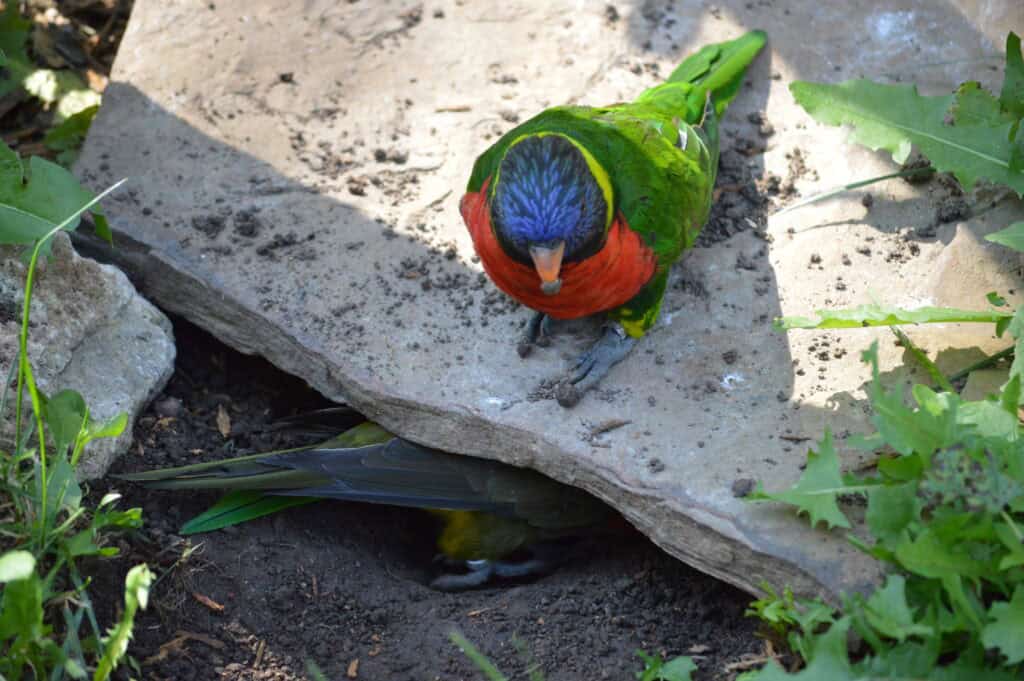
One pair dug into the ground together, working to build a nest. Watching them cooperate felt intimate and sweet.
This space feels lively but not overwhelming—great for kids who enjoy birds and motion.
Swimming with penguins

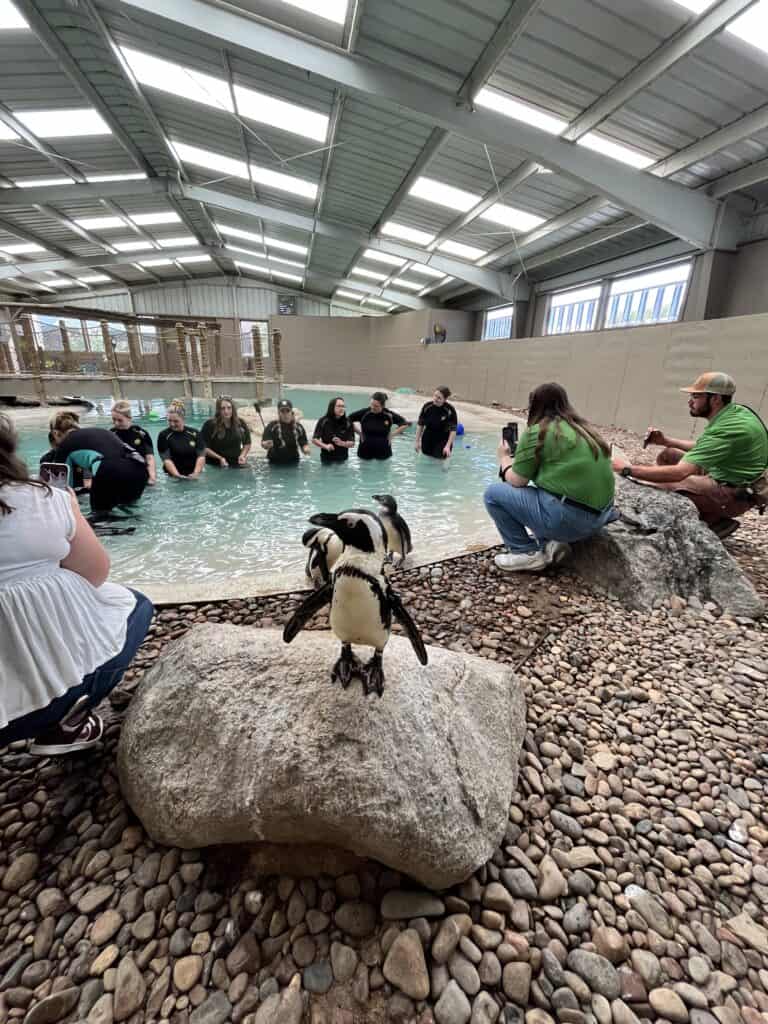
The grand finale was our penguin swim. This is an extra special animal encounter that you’ll want to reserve ahead of time. The Park provides wetsuits, aqua socks, and a commemorative beach towel that you can take home.
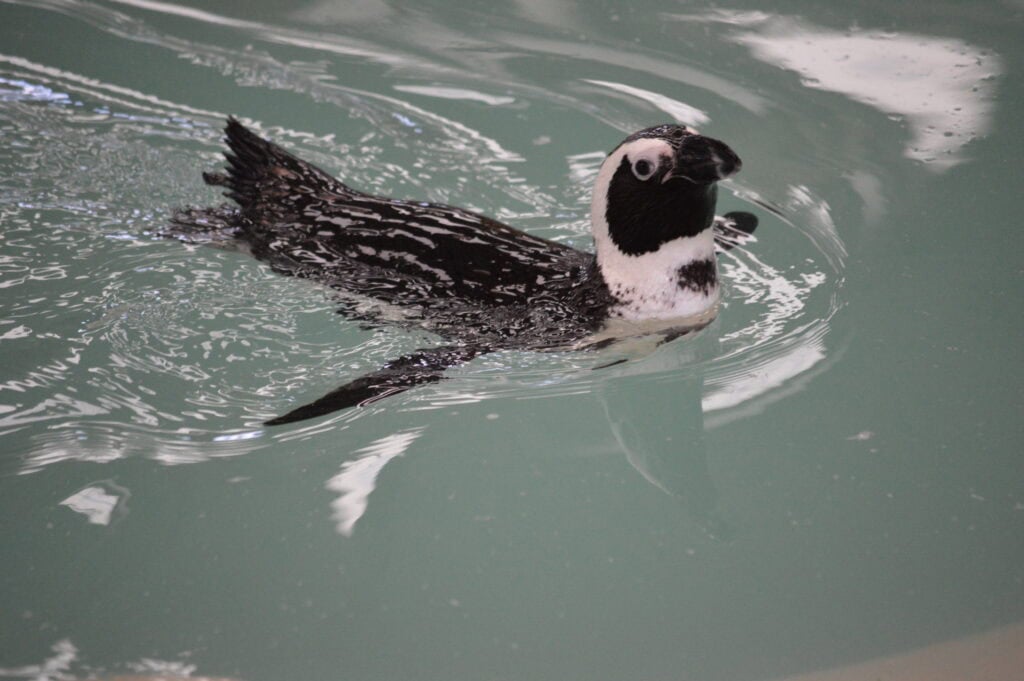
We changed into our wetsuits and made our way into the cold pool. Once in the water, the penguins zipped around us like erratic torpedoes.
Several keepers assisted from the side to take photos and videos of the experience. I was thankful not to have to manage my camera AND the penguins – it allowed me to fully be in the moment.

Each of us got to hold a penguin for a photo. Their feathers felt smooth and dense.
Then we played with them using cat toys. They chased strings and sticks with sharp, excited turns. A few penguins gave gentle exploratory nips. They weren’t painful, but they surprised me.
This encounter is a showstopper! If your kids love penguins, this is the moment they’ll replay again and again.
Ending with baby lion cubs
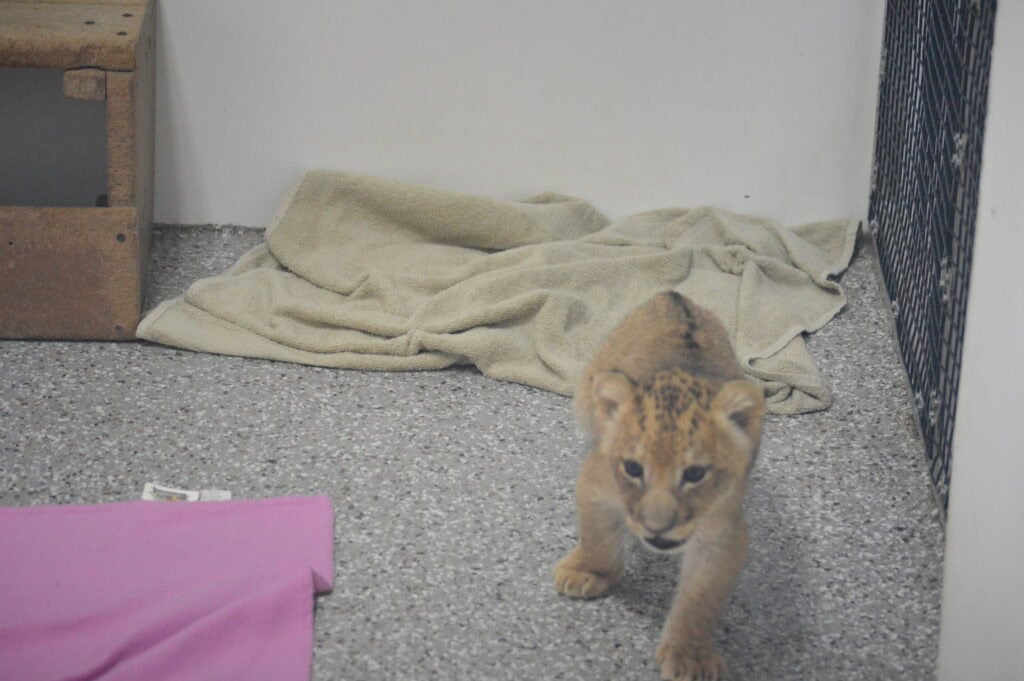
On our way out, we visited the lion cub nursery. Two tiny cubs wrestled and tumbled around the room, completely absorbed in their play.
We learned that the big cat cubs are hand-reared by park staff to ensure the greatest chance of survival. Sounds like a dream job to me!
Extra encounter with a kangaroo joey
As part of the TBEX Wichita event, Lynnlee brought a baby kangaroo to the conference venue for a day. I was delighted and overjoyed to snuggle the sweet baby and pet its soft fur.

Those big curious eyes were absolutely captivating!
Tanganyika has several other animal encounters available that we didn’t have time to experience in just one day. Plan for more than one day of visiting if you want to see more of Tanganyika’s 100+ species.
Sensory and accessibility notes (from a parent’s perspective)

Even though I visited solo, I was thinking about my neurodivergent kids and how they would respond to different experiences. Here’s what stood out:
Standout features:
- Minimal crowds during encounters
- Many quiet spots with benches for rest or calm
- Playground and splash pad for movement breaks
- Wheelchair-accessible paths through most of the park
- Clear instructions from keepers before each animal interaction
- Predictable, structured encounters that help with anxiety or transitions
Things to be aware of:
- Strong smells in the penguin enclosure
- Very limited shade in many outdoor areas
- Heat during warm months
- Animals may lick or nibble lightly, which may startle sensitive kids
Staff support and pre-visit planning

Tanganyika’s staff impressed me the entire day.
Lynnlee, the park manager, stayed nearby to answer questions and support our group. Every keeper clearly loved their job and was committed to a fantastic experience for both guests and animals.
If your family has specific sensory, mobility, or pacing needs, reach out to the Park ahead of your visit. They are committed to helping visitors craft a positive experience.

Know before you go
- Pack sunscreen, hats, and long sleeves—shade is limited.
- Hydrate regularly and take breaks often.
- Warn sensitive kids about strong smells in some areas.
- Expect gentle nips or licks during close encounters.
- Wear clothes you don’t mind getting a little messy.
- Build time into your day for the playground or splash pad if bringing kids.
- Don’t rush—let each encounter unfold at its own pace.
Is Tanganyika worth it?
Absolutely.
I left Tanganyika Wildlife Park with a full heart and memory cards full of photos. The encounters felt intimate, structured, and safe—ideal for families who want meaningful animal experiences without overwhelming chaos.
I’ve been to theme parks, museums, zoos and all kinds of unique attractions around the country. Few were as unforgettable and spectacular as my day at Tanganyika.
Tanganyika blends high-interest with calm in a way that works beautifully for neurodivergent families and animal-lovers of all ages.
I can’t wait to return with my family!
You may also enjoy these posts:
- One day Western itinerary in Wichita
- Hotel at Old Town Wichita review
- Georgia Aquarium review
- Tips for neurodivergent family travel
- Museum of World Treasures Wichita
©️ Copyright Jenn D. Warren 2025.