What if the Oregon Trail never really disappeared?
Across Oregon, wagon ruts still cut through lonely hillsides. Old toll roads wind around Mount Hood. Modern highways run alongside routes where emigrants became lost, stranded, and desperate hundreds of miles from their destination.
From Baker City’s preserved wagon tracks to the dangerous Barlow Road and the disastrous path of Meek’s Cutoff, Oregon’s landscape still holds the evidence of one of America’s largest migrations. Some of these places are easy to find, while others hide in plain sight.
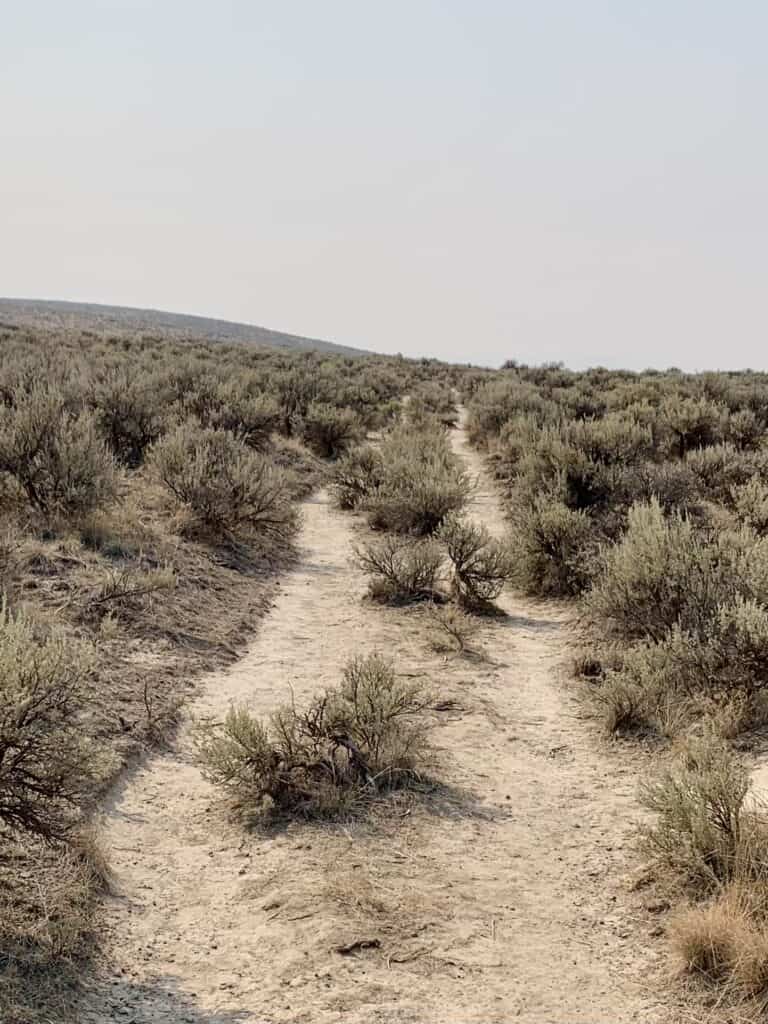
These seven must-see Oregon Trail sites in Oregon let you do more than just read about the journey west. You can walk where emigrants walked, follow their routes by car, and stand in places where a single wrong decision could change an entire wagon train’s fate.
Table of Contents
How the Oregon Trail got started
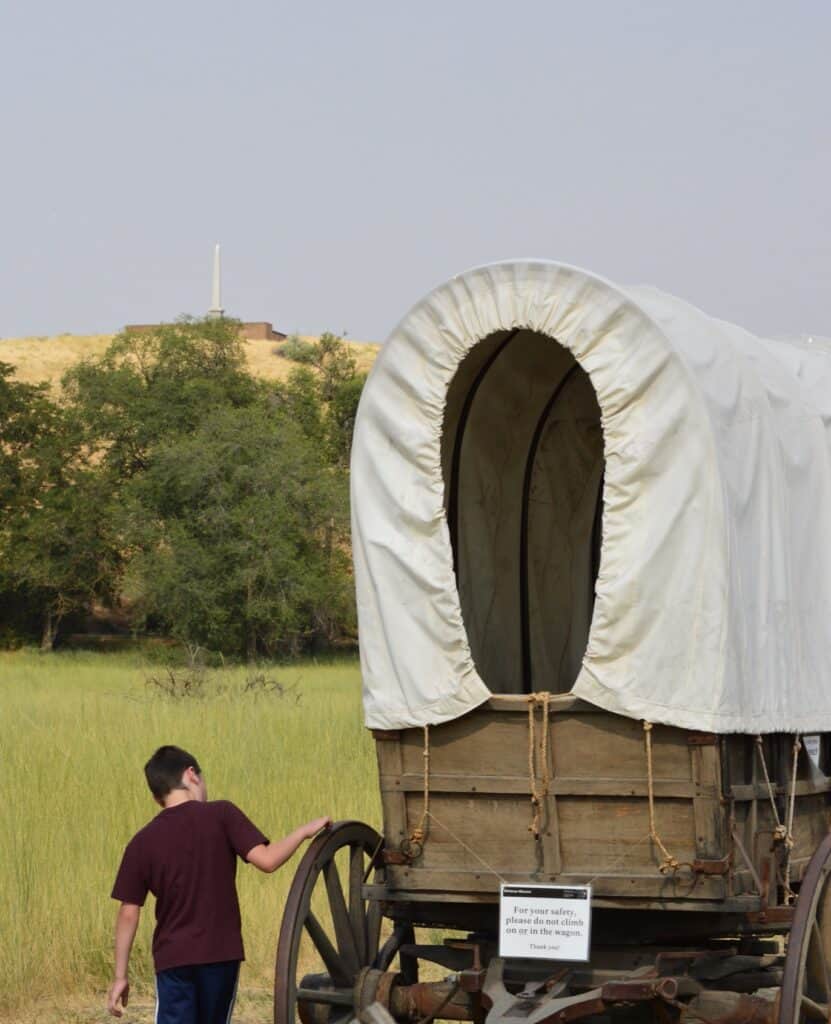
In 1836, missionaries Marcus and Narcissa Whitman did the unthinkable. They successfully traveled to Oregon Country using a covered wagon. Soon, families across the United States were inspired to follow their lead and begin a new life in Oregon.
The result was nothing short of a mass migration. It’s estimated that between 1843 and 1869, upwards of 400,000 people crossed the continent via the Oregon Trail.
The Oregon Trail and Oregon Trail sites can be found all over Oregon. Here are the best places to experience the Trail.
Oregon Trail Sites Map
1. Oregon National Historic Trail
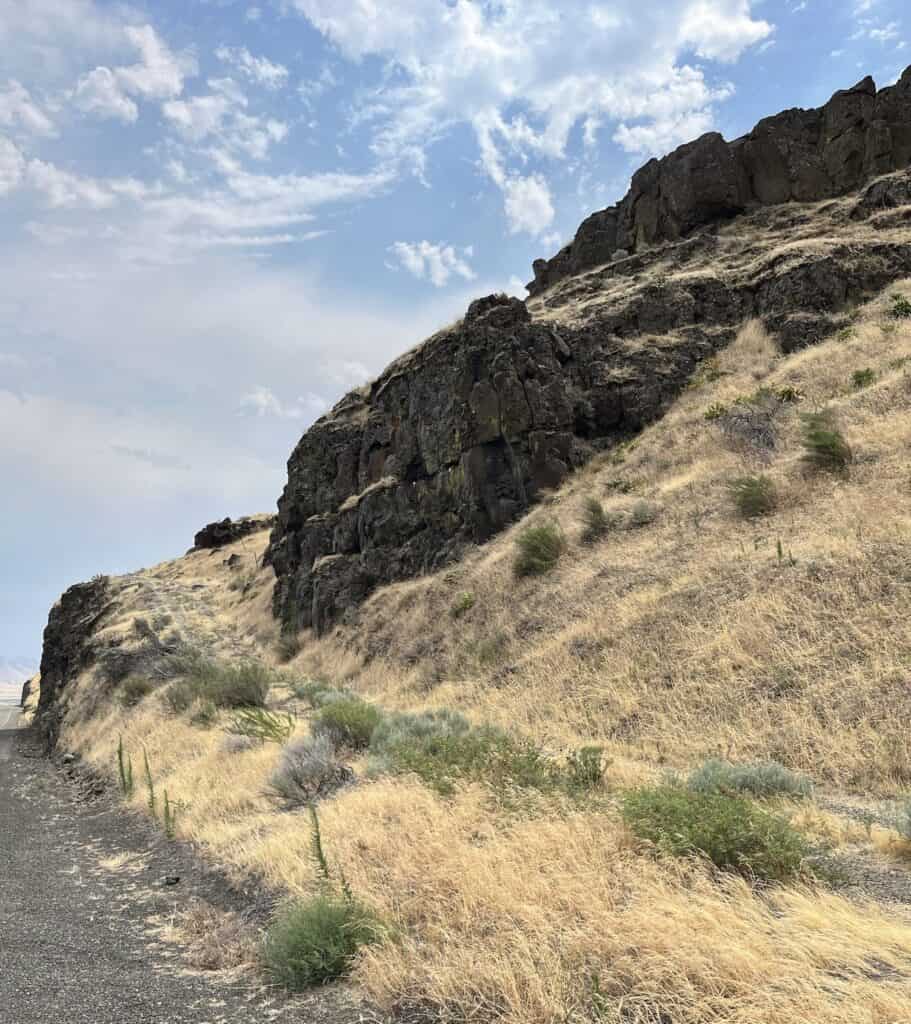
Believe it or not, you can still see the Oregon Trail today! Thousands of feet, hooves, and wheels created ruts and swales that can still be found across the American West.
Eastern Oregon has several miles of ruts and numerous trail landmarks. You’ll also find gravesites of unfortunate emigrants who never made it to Oregon.
The Oregon National Historic Trail is an auto tour route that follows the trail from Independence, Missouri, all the way to the Willamette Valley. Oregon’s segment of the trail begins in Southeast Oregon and arcs northward until it joins the Columbia River. From there, it follows the Columbia to its ending points: Fort Vancouver and Oregon City.
2. Baker City
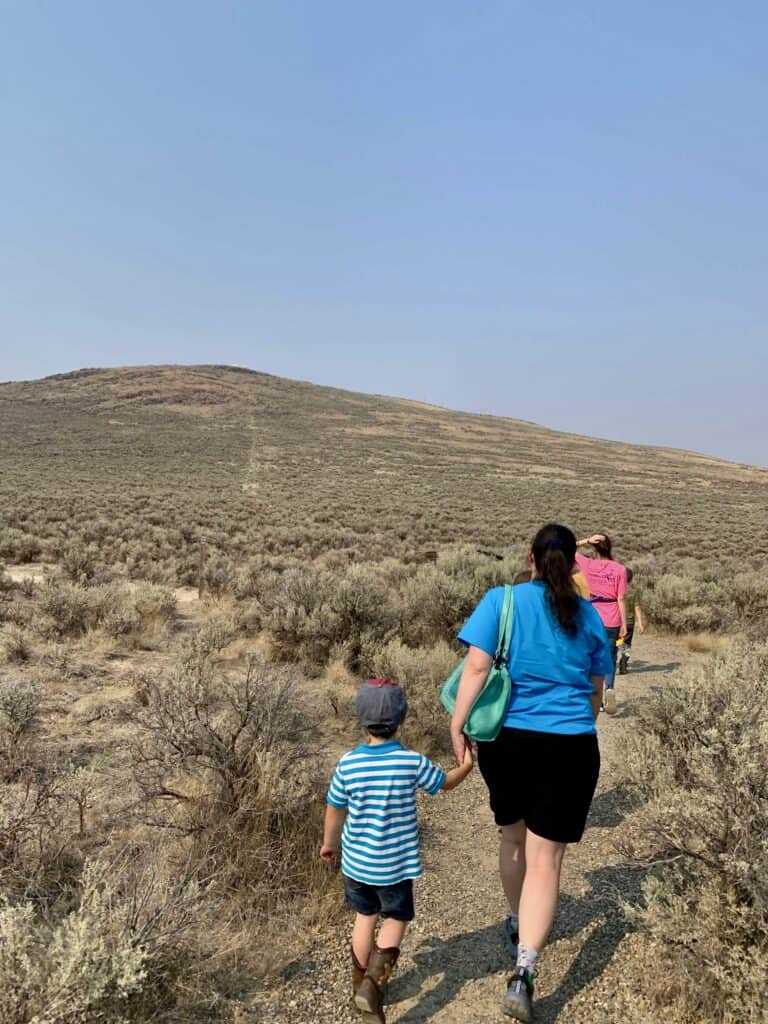
Baker City is the place to go for Oregon Trail history. The Oregon National Historic Trail Interpretive Center is located just outside the city limits. This top-notch museum is perched upon Flagstaff Hill, offering a bird’s-eye view of miles of Oregon Trail ruts.
To walk among these ruts is something else. There are no cars, no noise, just you and the hills. You get a sense of what it was like to cross the continent with only your wagon party to support you.
3. Oregon City
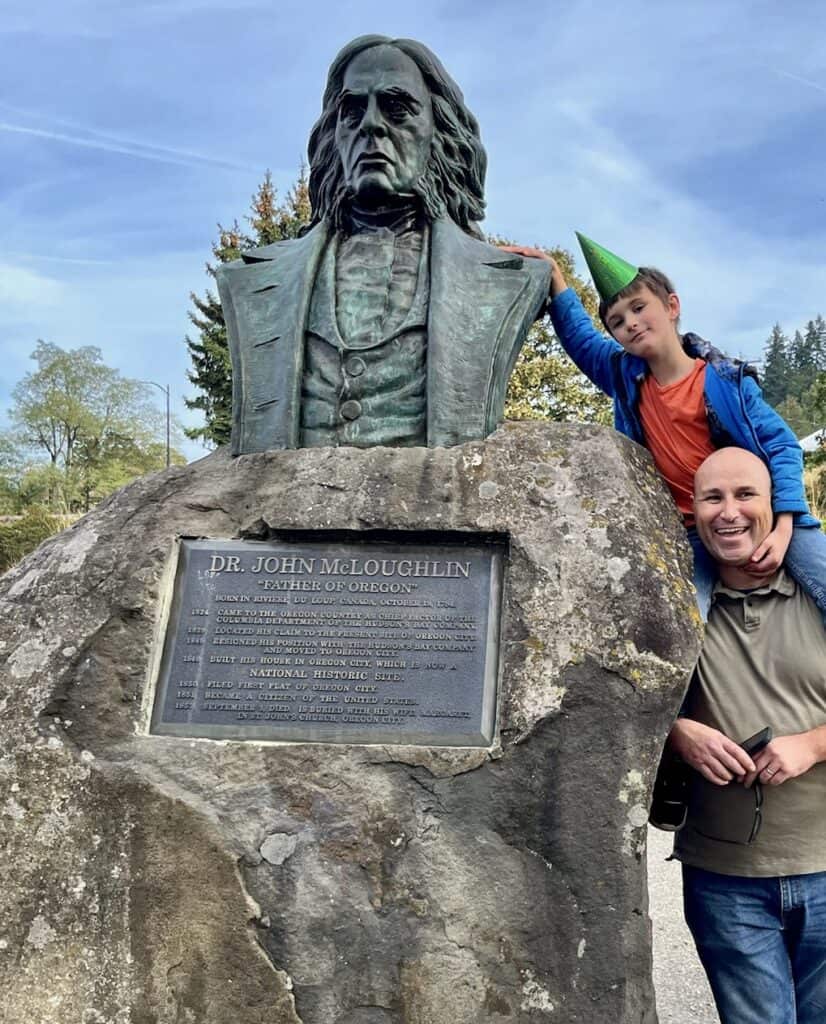
Oregon City was the first white settlement in the Willamette Valley. The city was the brainchild of John McCloughlin, the chief factor of Fort Vancouver.
As Americans arrived at Fort Vancouver, McCloughlin sent them down to his newly platted town of Willamette Falls (now known as Oregon City). The town soon became the main center of American settlement and the endpoint of the Oregon Trail.
You can easily spend a day exploring the historic buildings and museums of Oregon City. Be sure to also make time to enjoy majestic Willamette Falls.
4. The Barlow Road
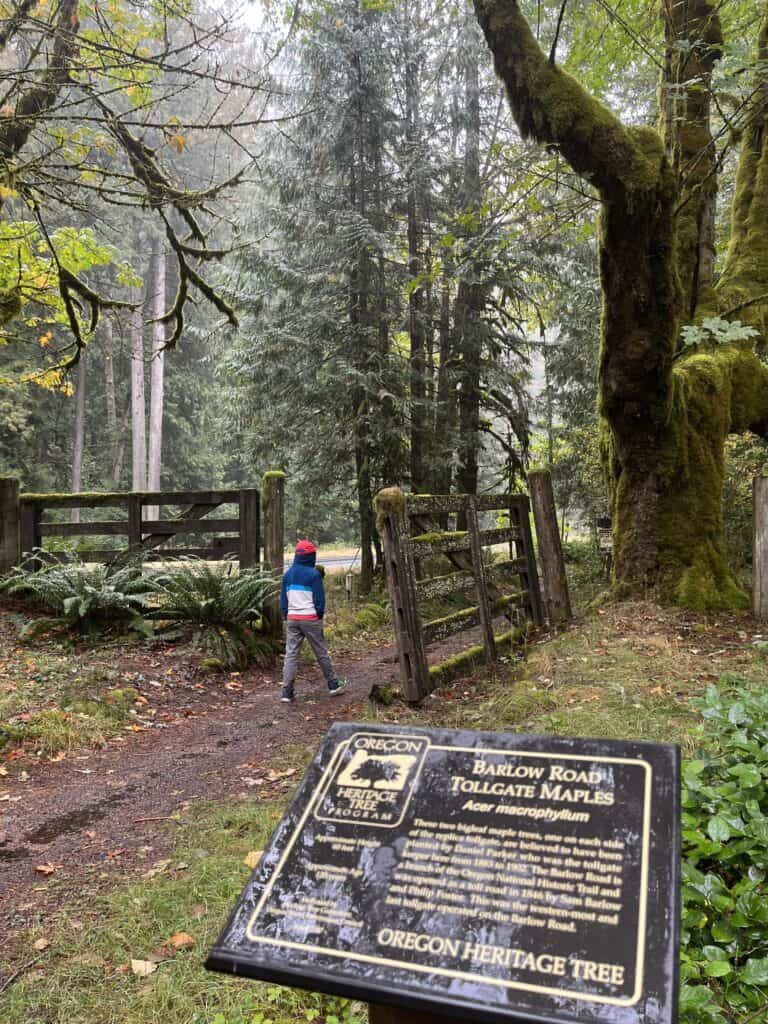
Wagons couldn’t traverse the Columbia River Gorge, so emigrants built rafts at the Dalles. Then they attempted to float their families and goods downriver. This was incredibly hazardous, so people began looking for an alternative route to the Willamette Valley.
In 1846, Samuel Barlow and Philip Foster built a toll-road as a land route into the Willamette Valley. Actually, the word “road” was an exaggeration. The route was extremely difficult, but it did afford emigrants a way of avoiding Columbia’s killer rapids.
Today you can follow the Barlow Road as a segment of the Oregon National Historic Trail. The route begins in The Dalles, rounds Mount Hood, and eventually arrives in Oregon City.
5. The Applegate Trail
In the same year as the Barlow Trail, Jesse Applegate sought out his own alternate route to Oregon. His trail separated from the Oregon Trail at Fort Hall, Idaho.
The route veered southward through Northern Nevada before entering Southern Oregon near Klamath Falls. From there, the trail navigated Oregon’s southern mountains before entering the Southern Willamette Valley.
The Applegate Trail looked great on paper, but it was a nightmare for its first wagon trains. They faced dwindling supplies, severe weather, difficult terrain, and violent conflicts along the route in Southern Oregon.
Today, you can follow an auto tour route of the Applegate Trail. The trail is grouped among the various routes of the California National Historic Trail.
6. Meek’s Cutoff
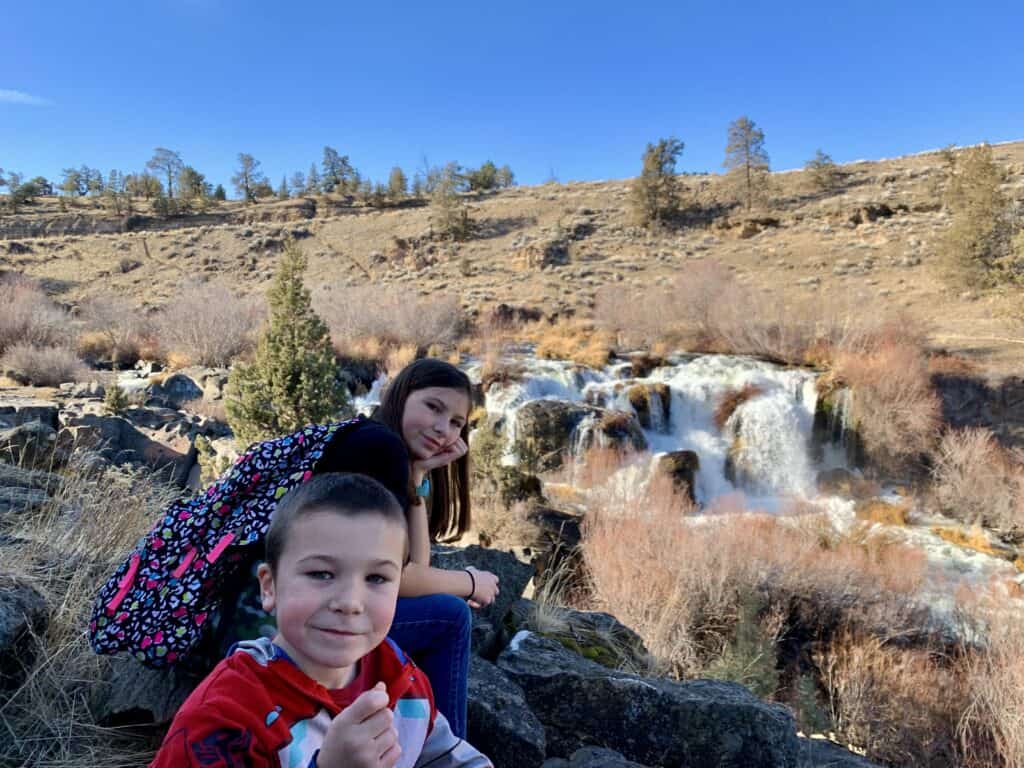
Meek’s Cutoff was yet another disaster perpetrated in the name of finding a better route. In 1845, a wagon train entrusted itself to the guidance of Stephen Meek. Meek was a fur trapper who claimed to know a shorter route through Central Oregon.
Stephen and his followers soon became lost and disoriented in Oregon’s high desert region. 23 emigrants died before the ordeal was over.
Unlike the Oregon and Applegate Trails, there is no auto tour route for Meek’s Cutoff. However, you can trace the trail through a series of notable landmarks across Oregon. Vale, Wagontire Mountain, the Crooked River, Cline Falls, and the Dalles were all important stops along Meek’s disastrous journey.
7. The Free Emigrant Road
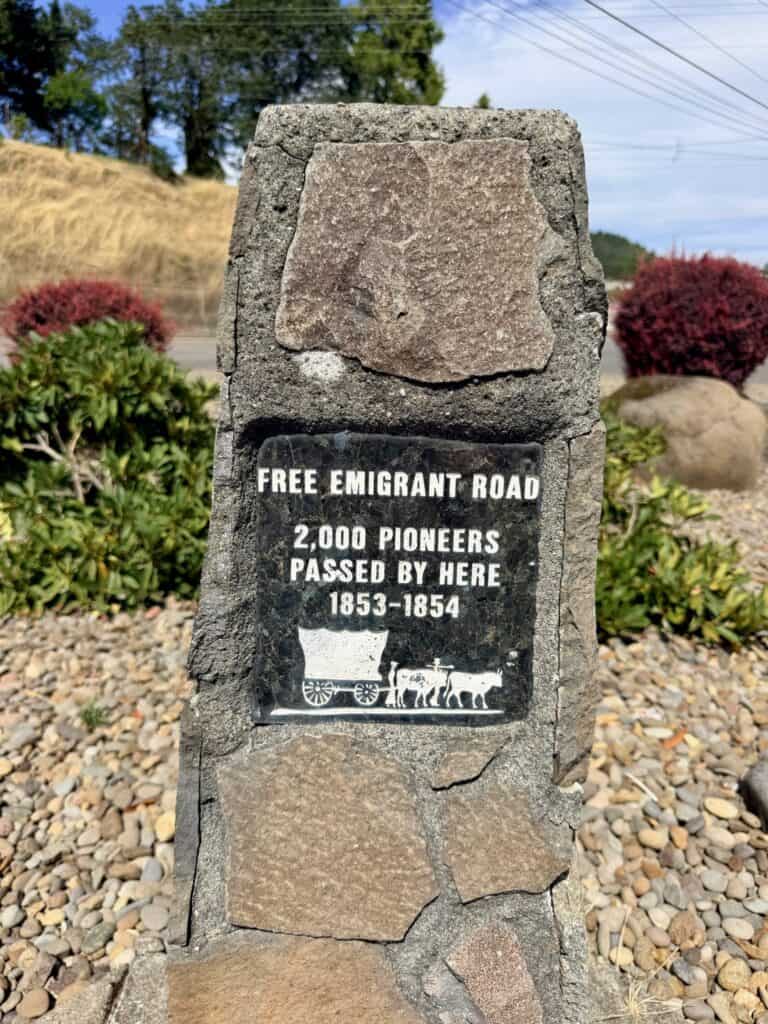
Despite Meek’s disastrous Cutoff, wagon leaders continued to seek out a middle route through Oregon. In 1853, Elijah Elliot successfully crossed Oregon’s high deserts but became stranded in the Cascades.
By 1854, William Macy successfully traversed a middle route from the Oregon Trail to the Southern Willamette Valley. Unlike the Barlow Road, Macy’s road would not charge any toll, so it came to be known as the Free Emigrant Road.
Today, you can follow the Cascade segment of the Free Emigrant Road as you drive Oregon Highway 58.
Experience part of Oregon’s emigrant history firsthand
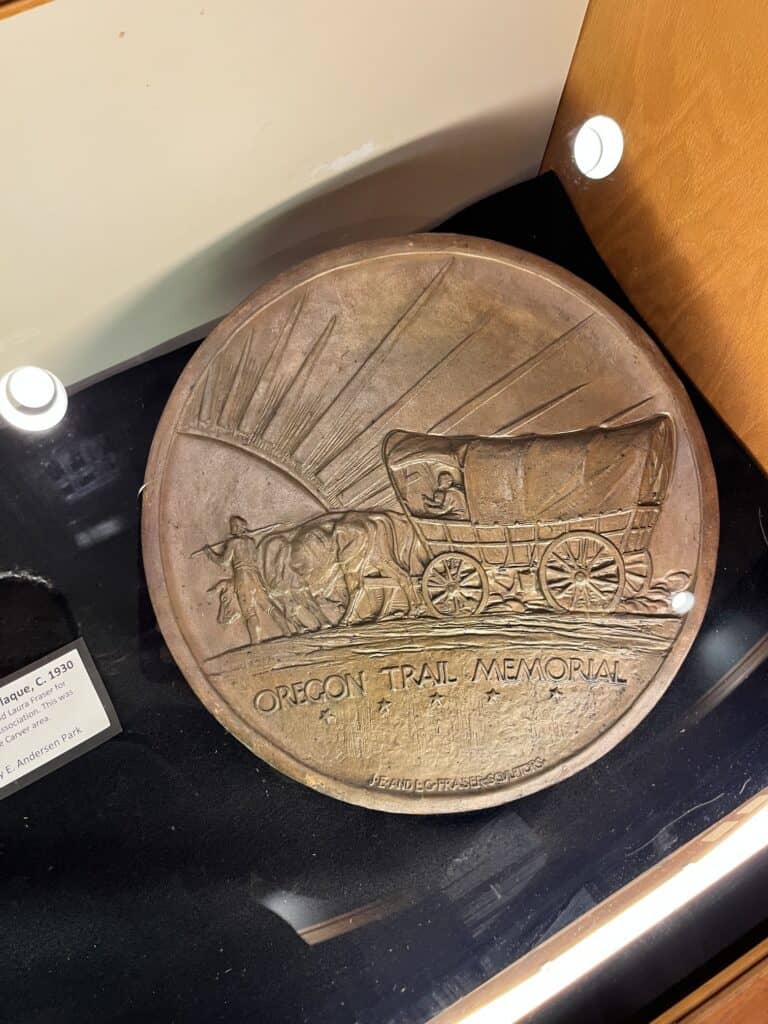
Oregon Trail history is all around us here in Oregon. Some of these places have museums, exhibits, and marked trails. Others are little more than a lonely road, a wide-open view, and a story that nearly disappeared.
That’s part of what makes exploring the Oregon Trail so memorable. Get out of the car when you can. Stand in the ruts. Feel the wind. Look across the hills and imagine crossing them without knowing what waited on the other side.
Planning a stop near Baker City? Read about our family’s experience in Oregon Trail Ruts: Silent Strength, Powerful History. We share what surprised us—and why this simple history stop was far more powerful than we expected.
Frequently Asked Questions about Oregon Trail sites in Oregon
What is the best Oregon Trail stop for families?
The National Historic Oregon Trail Interpretive Center near Baker City is one of the best all-in-one stops for families. Its exhibits help kids understand the overland journey, while nearby trails allow visitors to walk beside visible wagon ruts.
Where did the Oregon Trail end?
Oregon City is commonly considered the traditional endpoint of the Oregon Trail. After completing the journey west, many emigrants traveled to Oregon City to claim land, purchase supplies, and begin building new lives in the Willamette Valley.
Can you drive the Oregon Trail through Oregon?
Yes. The Oregon National Historic Trail Auto Tour Route follows modern roads through Eastern Oregon, the Columbia River Gorge, and the Mount Hood region before reaching Oregon City. However, visitors cannot drive directly on every part of the original trail.
What was the Barlow Road?
The Barlow Road was a difficult toll road built in 1846 as an alternative to rafting through the dangerous Columbia River Gorge. It carried emigrants around Mount Hood and into the Willamette Valley.
Is the Applegate Trail part of the Oregon Trail?
The Applegate Trail was an alternate southern route into Oregon. It separated from the main Oregon Trail near Fort Hall, Idaho, traveled through Northern Nevada and Southern Oregon, and eventually reached the Willamette Valley. Today, it is recognized as part of the California National Historic Trail.
How many days do you need to explore Oregon Trail sites in Oregon?
You can visit an individual Oregon Trail site in a few hours. Exploring several locations across the state will require a multi-day road trip because the sites extend from Oregon’s eastern border to the Willamette Valley.
©️ Copyright Brian A. Warren 2026