As more people are diagnosed with autism and ADHD, many families are discovering how often these conditions overlap. When someone has both autism spectrum disorder (ASD) and attention deficit hyperactivity disorder (ADHD), people often call it AuDHD.
In our family, this is personal. Our daughter, who goes by Kaiju online, has both autism and ADHD. Through her lived experience, we’ve seen how these conditions can overlap, conflict, and shape daily life in ways that are often misunderstood.
In this post, we share her perspective, along with our own, to help other families better understand AuDHD.
Table of Contents

Disclaimer: we are not medical professionals or mental health professionals, and this article should not be considered professional advice. We are simply sharing our family’s experiences to help others who are dealing with ADHD and autism.
@dinkumtribe #onthisday ♬ original sound – DinkumTribe ADHD family travel
TL;DR
• Between 50-70% of autistic individuals also present with ADHD symptoms, creating a dual diagnosis often referred to as AuDHD.
• The primary distinction between ADHD and autism lies in their relationship to novelty: ADHD brains persistently seek novelty and avoid sameness, while autistic brains crave routine and predictability while avoiding change.
• Terms like “high functioning” and “low functioning” rate neurodivergent individuals based on how inconvenient they are to others rather than acknowledging the internal struggles and energy required for masking.
• ADHD and autism present differently in girls than boys, with symptoms often dismissed as stereotypical female behaviors such as “ditzy” forgetfulness or excessive chattiness, leading to underdiagnosis in females.
• Self-diagnosis of AuDHD is widely accepted within the neurodivergent community due to barriers including cost, discrimination, lack of access to knowledgeable professionals, and fear of being gaslit or misdiagnosed.
How Autism and ADHD Are Connected
According to current research, 50-70% of autistic individuals also present with ADHD symptoms (NIH). Both ADHD and autism impact social skills and emotional regulation, and both present unique challenges to everyday life for affected individuals.
While ADHD and autism have many similar symptoms, they are distinct conditions with specific needs that are managed in different ways. Getting an accurate diagnosis can be a complicated process and often takes several years.
ADHD vs. Autism: Core Drive Differences
| Aspect | ADHD | Autism |
|---|---|---|
| Primary Drive | Seeks novelty constantly | Craves routine and sameness |
| What They Avoid | Boredom and repetition | Change and unpredictability |
| AuDHD Experience | Thrives in chaos but needs long predictable rest periods; any unexpected change causes extreme distress | |
| Symptom Overlap | Both impact social skills, emotional regulation, and create challenges in daily life | |
Autism vs ADHD: Key Differences
Practically speaking, it can be extremely difficult to distinguish between symptoms of ADHD and symptoms of autism, particularly for an outside observer. There’s a lot of symptom overlap, and symptoms are expressed differently and at differing intensities for every individual.
Professionals use the diagnostic criteria listed in the Diagnostic and Statistical Manual of Mental Disorders, fifth edition (DSM-5) and behavior analysis to determine the correct diagnosis. However, it’s not an exact science, and misdiagnosis is common (NIH).
One of the main differences between ADHD and autism is the importance of novelty and stimulation.
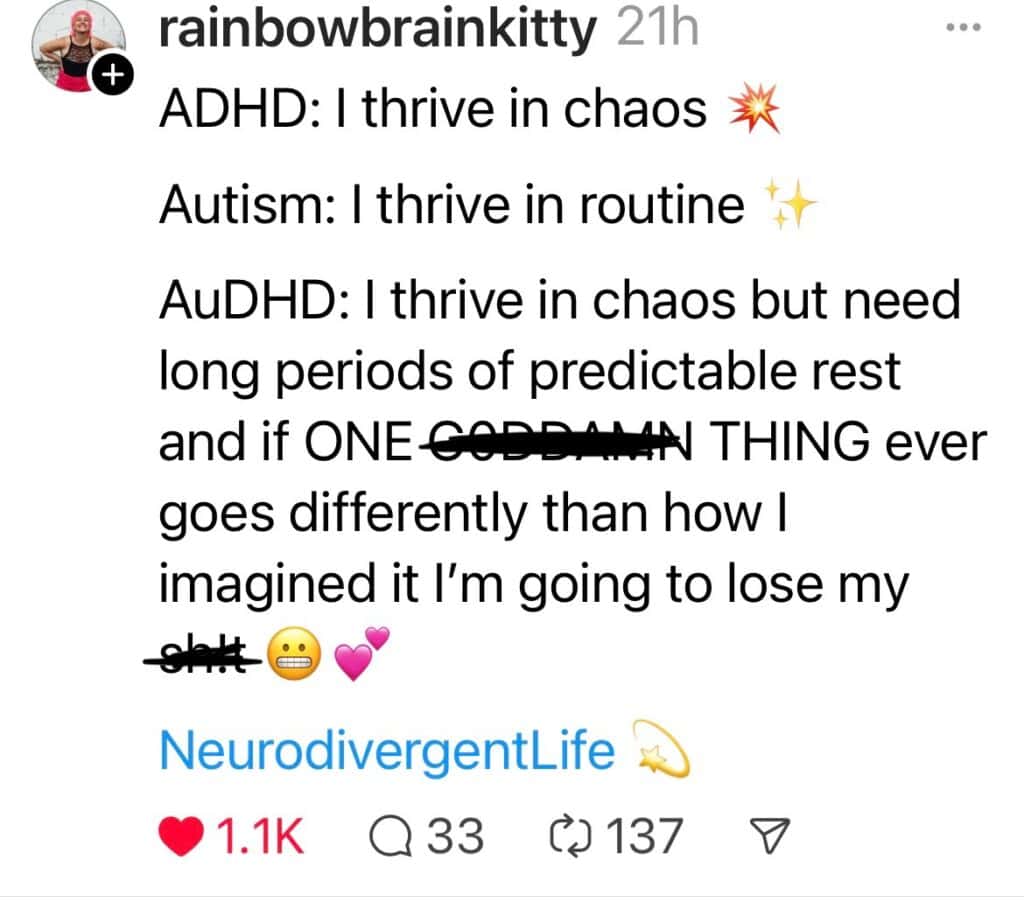
An ADHD person has a persistent drive for novelty and avoids boredom or sameness. An autistic person has a persistent drive for routines and sameness, and avoids change.
It’s often easier to understand the differences by hearing it through someone’s lived experience. So here’s the interview I conducted with our daughter about her autism and ADHD.
Lived Experience: Our AuDHD Teen
What symptoms of autism did you notice about yourself?
I think a big one was social cues. I am very much like the stereotypical autistic person, in that I do take things at face value. I am a very serious person and that’s part of my nature.
I like serious conversations because I like how they can change the dynamic of a relationship and make it stronger. Any kind of relationship: friendship, family, romantic relationship, whatever – I think that’s awesome! I like learning more about people through serious conversations.

Struggles with interpersonal relationships
I have had people tease me in a nice little way – not a bullying way, just friendly teasing – and I’m like *makes loading symbol*. I’m wondering, “What do I do here?”
So frequently my responses were just to be confused or get offended because I didn’t have the default response that I think most people do, of “Oh haha! I’ll tease you back!” So I had difficulty understanding how to do that.
And when I tried it would go too far, or it wouldn’t go far enough, or it would just be awkward. So I’d just be puzzled and blinking. My default response for the longest time was just to take it literally or get offended.

I’ve managed to change that into mild confusion or a little bit of teasing back, but it’s still hard to know how to respond to those social norms.
Autistic Social Response Patterns vs. Neurotypical Expectations
| Social Situation | Neurotypical Response | Autistic Response |
|---|---|---|
| Friendly teasing | Tease back playfully | Confusion, taking it literally, or getting offended |
| Learning to tease back | Instinctive social calibration | Goes too far, not far enough, or feels awkward |
| Serious conversations | Reserved for close relationships | Preferred way to deepen any relationship |
| Default processing mode | Automatic social intuition | Takes things at face value; requires manual processing |
Common ADHD Traits in AuDHD
ADHD is obvious with not being able to focus and getting lost in my brain.
It’s easy to get overwhelmed by my own thoughts.
-AuDHD teen
It’s just like standing in a room full of people and they’re all shouting, and someone’s singing Broadway over here really badly and you’re trying to pay attention!
The ADHD brain: a chaotic room full of people
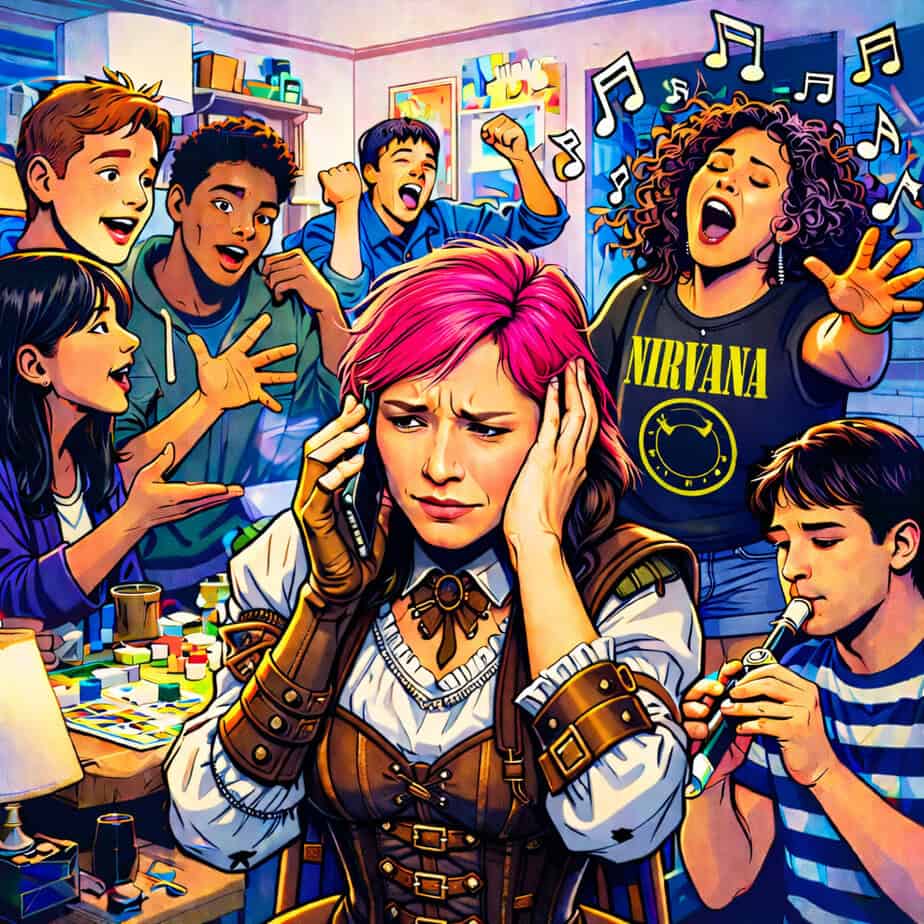
ADHD is like you’re standing in a room full of people, and they’re all talking super loudly all at once. There’s a ton of conversations, and there are four different people trying to have a conversation with you, but you have to pay attention.
And then someone calls you on the phone, and you have to pay attention to that call. You have to talk to that person, but you don’t want to shout into their ear, and the person is whispering. They’re saying something serious, and you’re trying to pay attention.

That’s what it feels like, trying to pay attention with ADHD. The person on the phone call is whoever’s talking to me at the moment. They could be talking about something so serious, and I care about that person – I want to know what they’re saying!
But over here there are four different people singing Broadway karaoke! There are people loudly playing games over here. Someone’s playing Megalovania badly on a recorder in that corner… it’s insanely distracting!

Fast thoughts
I still have that with ADHD medication, or without. So when I start talking super fast, my speech is matching my thoughts.
That either happens when I’m tired, when you give me a Monster energy, or when I’m out of meds. Or just if I’m excited.That happened on a car ride with a friend a couple days ago.
Excessive talking
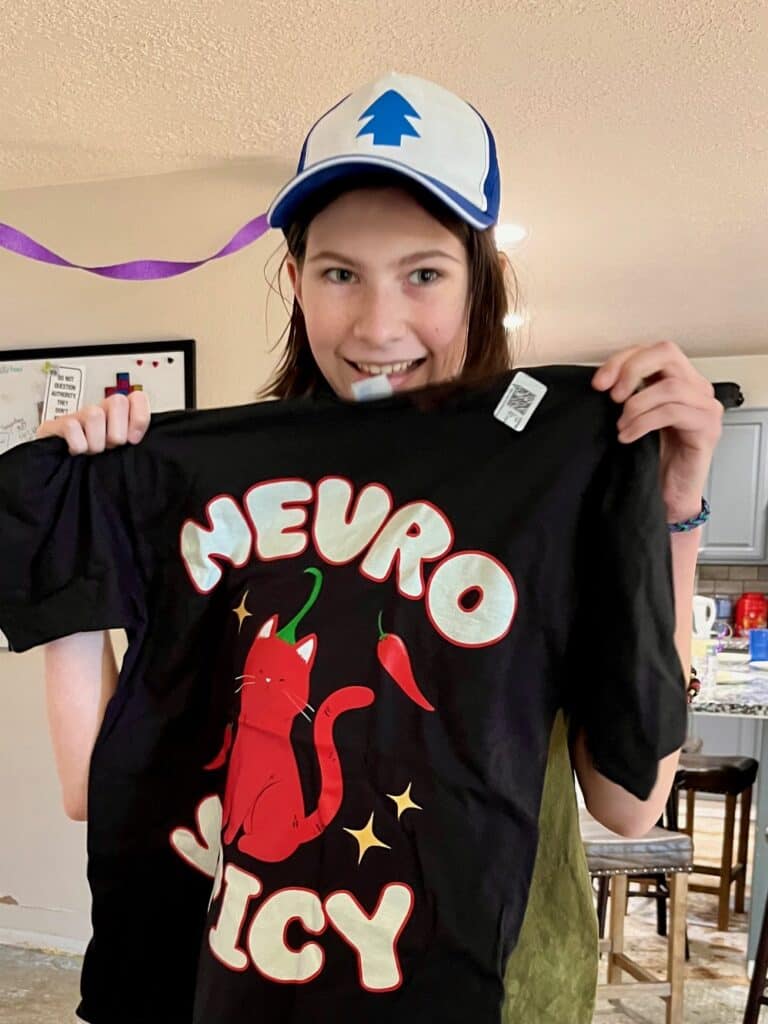
We both started chatting and I started realizing all the ways we were similar. We both like kaijus, and like Gravity Falls, and we’re both talking really super fast about all these amazing things… We were just vibing together and my sisters were like, “Please slow down!”
Meditation is often recommended for ADHDers and I know that’s about calming down and focusing on one thing.
Neurotypicals could play a video game, and focus only on the video game, but ADHDers think of it as having absolutely nothing in your brain. Now that I’ve described what our brains are like all the time, you can see how that would seem almost impossible.

More signs of ADHD
It does make my poetry good. I’m very good at ‘stream of consciousness’ because of how many places it goes at once. I wrote a ‘stream of consciousness’ poem and it switches between my brain:
“Oh my gosh, my sister’s playing Hamilton, that’s what this reminds me of…”
“Hamilton totally had ADHD!”
“I can’t focus on my English assignment.”
Supersonic Roomba
That’s how I’ve described my conversation – like a supersonic Roomba. Just ping, ping, ping… because a Roomba can’t go in a straight line. As soon as it bumps into something, it heads off in a different direction.
-AuDHD teen
Hyperfocus
One of the things my parents noticed even from early childhood is that when I’m in a book it doesn’t matter if explosions are happening around me!
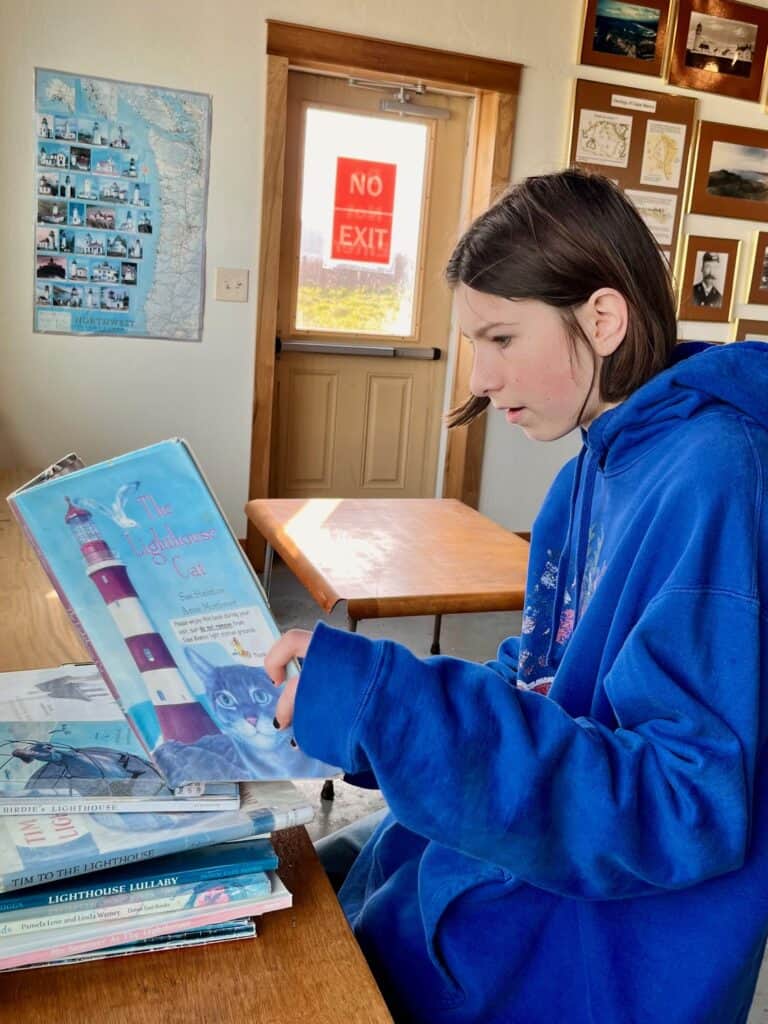
When I’m really engaged in reading something they had to literally go over and shake me, or tap me. They’d have to make my eyes look at their eyes and get their like faces right in front of mine for me to actually recognize they were talking to me.
Because if I’m too deep in a book and you try to interrupt me while I’m reading Eragon, or Lord of the Rings, it’s going to take a full 30 minutes for me to process what you’re saying.
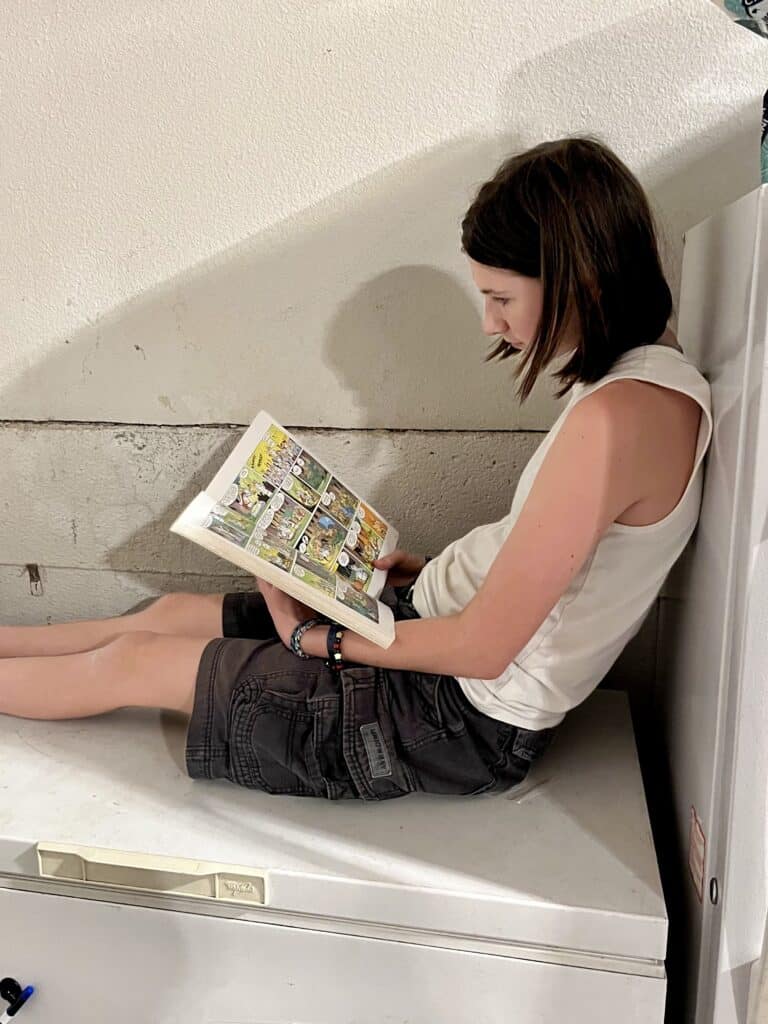
It doesn’t matter if you have eye contact, that stuff takes intense focus! There’s some things I can dip in and out of if I’ve read it before, or it’s like a graphic novel. I can be like, “Yeah, hang on, what was it you needed?”
Intense focus
But if it’s Lord of the Rings, or if it’s a book that I’ve never read before and I’m so invested! Even when I do like shake myself out of it to go eat or whatever, I’m walking around the house like a zombie.
Mom will ask, “Are you okay?” and I’m like, “Oh yeah. I was reading and my brain’s still going over the last 12 lines of text that I read, how the plot’s going…”
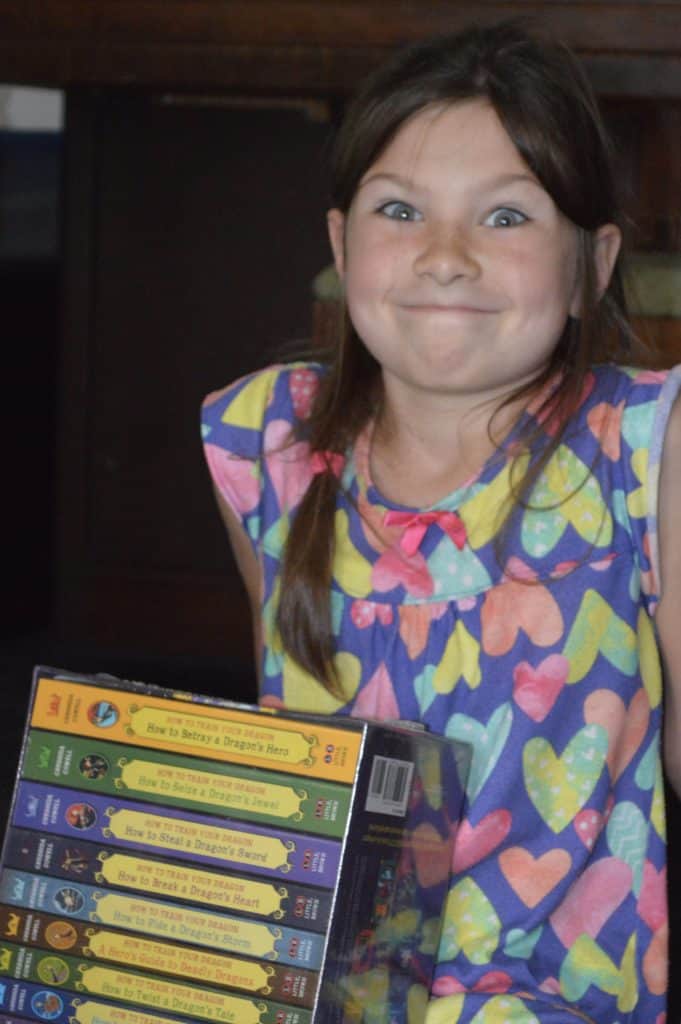
Sometimes my brain’s going super fast, but when I’m in book mode it actually slows down. It’s the closest I get to “quiet brain” which is part of why I like books so much.
Vivid imagination and visualization
Reading a book is also kind of like drawing because my brain imagines things very vividly. So this is why I don’t read Stephen King. That’s why anxiety is also a problem, because my imagination is too good.
It’s so good, it’s painful, because it doesn’t matter how good the CGI gets or how high definition stuff gets. I could be on one of those 3D Spider-Man rides at Disneyland that’s supposed to be super engaging – it’s not! It’s nothing next to my imagination.

Increased anxiety
It makes books amazing but it makes anxiety horrible! Part of anxiety is not being present in the moment – it’s imagining all the things that could be happening.
If I’m awake at night and someone says something that could even go a mildly scary direction at night I’m gone! I’m not sleeping, because my brain is too good at that.
Why Many Autistic People Reject “High Functioning” Labels
What is it about that term that is bothersome? Well, it rates us on how inconvenient we are to others, which is rough! Nobody wants to be inconvenient.
I’m just going to give a moment for that to sink in, how annoying that is. In our brains, we’re the ones who are struggling the most!
Is it annoying for others? Yes, but we’re the ones who are struggling the most. So using a term like “high functioning” or “low functioning,” it rates us on how inconvenient we are.
Masking different symptoms

It’s really annoying especially because if you’re rated as ‘higher functioning’ people think you need less help, but that means you’re masking more. That means you’re more exhausted by it.
In my head, I often compare masking to acting, except you’re just improv all the time.
AuDHD teen
If you’re high functioning, that means you’re a better actor. It means that they don’t see what it’s costing you, or what’s going on in your brain. It means that there’s lots of energy we’re putting into it.
High Masking vs. Low Masking

If you need to rate us on “how autistic we look,” it does kind of make sense. You can look at someone and see the repetitive behaviors, or other external autism symptoms, and you’re like, “Oh right, that makes sense.”
For example, if I was flapping my hands and someone says, “You look autistic,” I’d be like, “Well I am! Good observation!”
If you have to rate autistics on that kind of stuff I would prefer personally “high masking” versus “low masking.” That’s a much better term because it still shows that we’re masking, and still dealing with stuff up in our own minds.
It still shows that you’re struggling and that you’re trying to fit in – which we shouldn’t have to!

Masking takes significant effort
It validates your effort and your struggle. It says, “I see that you are struggling and that you are really trying.” High masking would show that you’re doing a lot of masking which means you’re going to be really exhausted.
So if your kid is high functioning or high masking, and you know them pretty well, you probably know that they’re going to be pretty exhausted after social interactions. It doesn’t matter if they’re an extrovert, they’re going to be exhausted.
I love people! I can be around my best friends for a while, and I can really enjoy it. But I am so dead afterwards!
AuDHD teen
Even though I don’t have to mask as much around them, and even though I try to bring the masks down, the masks can become automatic. Then you don’t even realize why you’re so drained.
The Hidden Cost of High Masking in Autism
| What Others See | Internal Reality | Actual Need |
|---|---|---|
| Good grades and social success | Constant exhaustion and anxiety | More support, not less |
| “Fitting in” at social events | Non-stop mental improv acting | Extended recovery time afterward |
| “They seem fine” | Panic attacks and crying breakdowns | Accommodations and understanding |
| Meeting expectations | Physical health deterioration from stress | Recognition of struggle and validation |
Neurodivergent Burnout from Masking (parent’s perspective)
From Jenn:
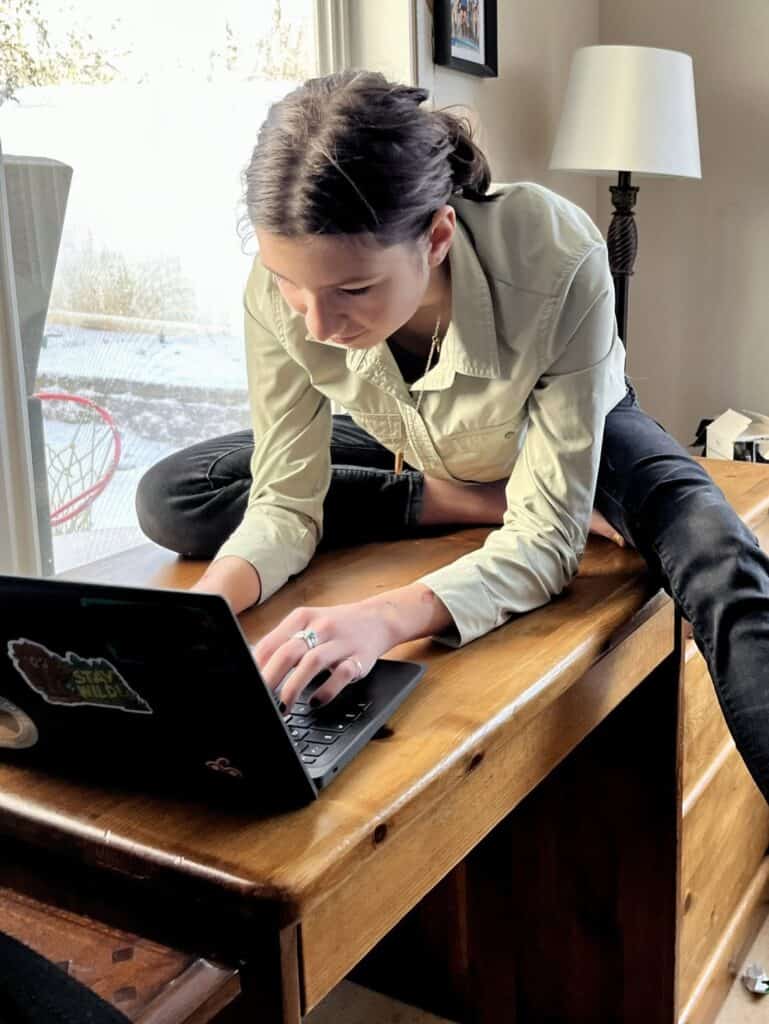
One of the issues our family ran into, is that when neurodivergent people (autistics or ADHDers) have to mask all the time, you burn out so much faster. That was one of the issues ran into when we had Kaiju in public school.
We had trouble getting her support services. She was really having a hard time, and she was exhausted all the time, but since her grades were looking amazing it was so hard to get accommodations!
All the staff saw was that she was performing well, so in spite of her ADHD diagnosis, we still couldn’t obtain the necessary support services.

Gifted academically, but burning out
From Kaiju:
My grades were great, and I was showing up to D&D club, so (the staff reasoned) I must be fine! But the exhaustion, and the additional anxiety, and the lack of sleep, and all the mental health issues…
If I had been given accommodations I think I would’ve been taller. Less stress, less lack of sleep equals taller. There’s a cost in your body – a physical cost from the symptoms of ASD and ADHD.
Overwhelmed nervous system
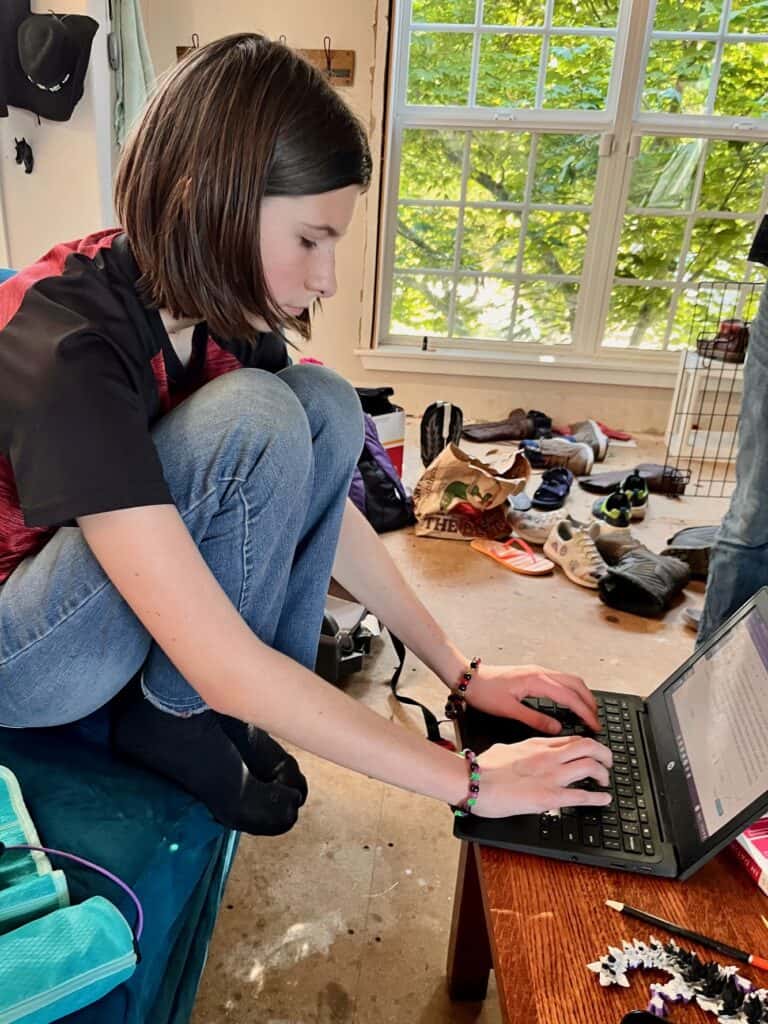
I got really burned out by it. The stuff they (school staff) weren’t seeing was, I was breaking down crying. I would go into panic attacks when I found an assignment I’d forgotten, or when I got a new assignment, or realized I’d missed something.
I’d think, “Oh my gosh, I’m so close to finishing!” and then I found something else I’d forgotten and I was like “NO!” Then Mom would say, “Hey, it’s fine, we got this!”
I was having a lot of anxiety, and panic attacks. I was stuck on an endless roller coaster.
It shouldn’t be that it costs you that kind of energy to do what’s considered ‘standard schoolwork.’ Even thinking about it now, I’m getting a little bit short of breath.
When mental health deteriorates from masking
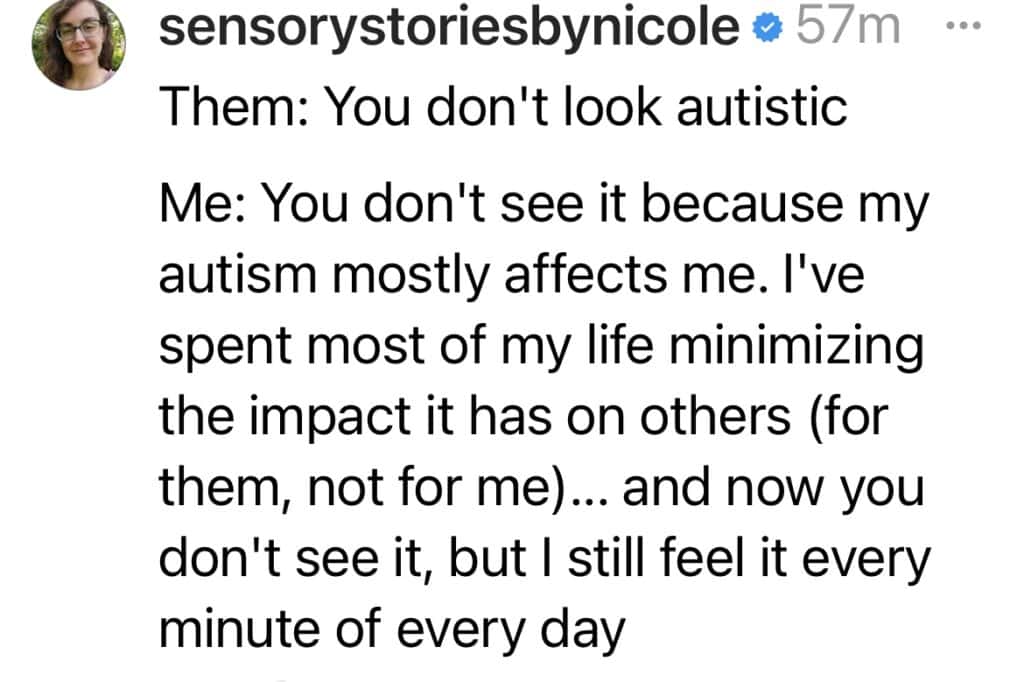
That’s how it is if we’re “high masking.” We’re struggling to get the grades done.
On the social side, we might seem like we’re fitting in a little better. We’re still pretty obviously autistic, especially if you know what the signals look like, but it has a huge cost. A lot of people don’t see what it’s costing you.
I genuinely didn’t know if I was going to make it to college one way or another. Would I burn out first or make it to college? I didn’t know if I was going to live to age 21 with the level of stress I was at.
I wasn’t sure if I would make it to summer – I thought I would just collapse. I had three days until school was done, and I was really excited to go to summer camp, but I really didn’t think I was going to make it.
Understanding the Autism Spectrum
The autism spectrum – it’s not really linear, they call it a spectrum for a reason. It’s like a color wheel. Each little aspect, each little segment of the wheel is something that we struggle with more than neurotypicals do.
We’ve got social challenges, we’ve got emotional challenges, sensory sensitivities, skills, perception… then there’s little marks in different spots on the wheel. (CDC diagnostic criteria here).
The closer to the center of the wheel it is, the more obviously autistic you are. Even if you’re not masking, that might just be a thing you also struggle with more.
For example, I struggle a lot with sensory input. So for me that would be down near the middle of the wheel.
I don’t struggle as much with motor skills. I’m kind of clumsy but not super clumsy. I can draw pretty well, I can like type, I can do pretty precise tasks, so for me that would be near the outside of the wheel.
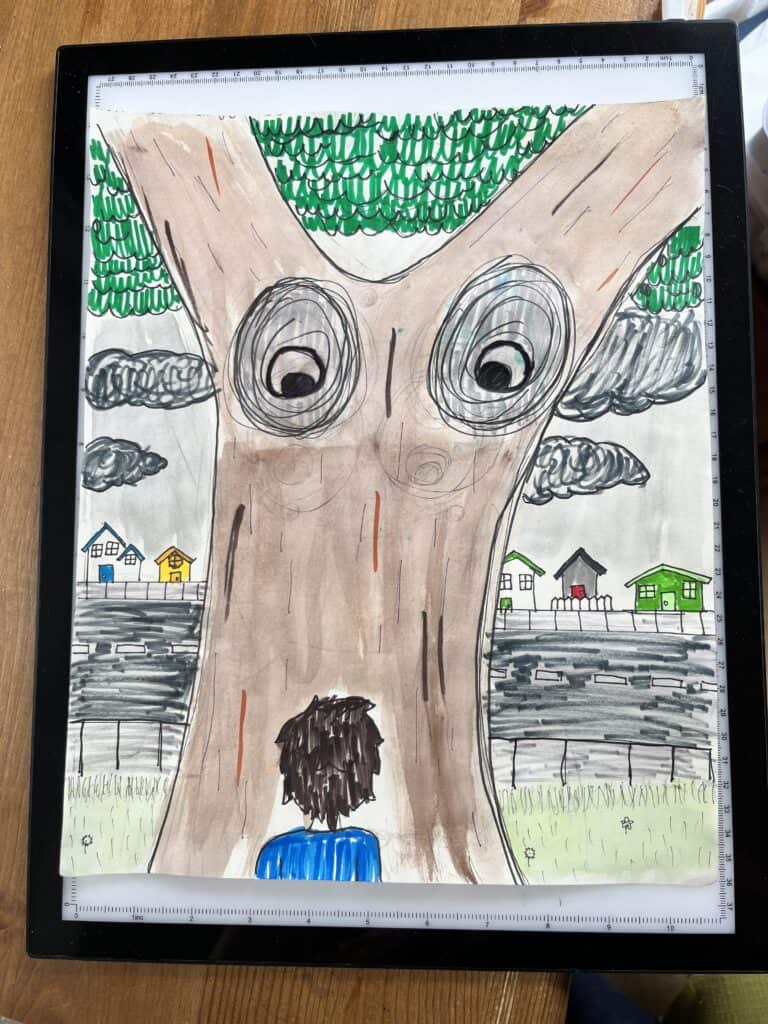
It’s kind of like a volume bar, and the higher the volume bar is, the better you mask. The less you struggle, and the lower the volume bar, the more autistic you are, and the more support you need. And also, the harder it is to mask.
The downside of autism labels and levels
It’s really difficult because there are those who used to be considered the ‘stereotypical autistics’ and ADHDers who require occupational therapy or behavioral therapy to survive life.
There are autistic children and adults who may never be able to manage life on their own simply because they can’t remember to feed themselves, or they struggle with motor skills.
But there’s also this whole demographic of people with ADHD and autism who they look like they’re doing pretty okay with life. However, the internal cost for them is too high.
“But you don’t look autistic”
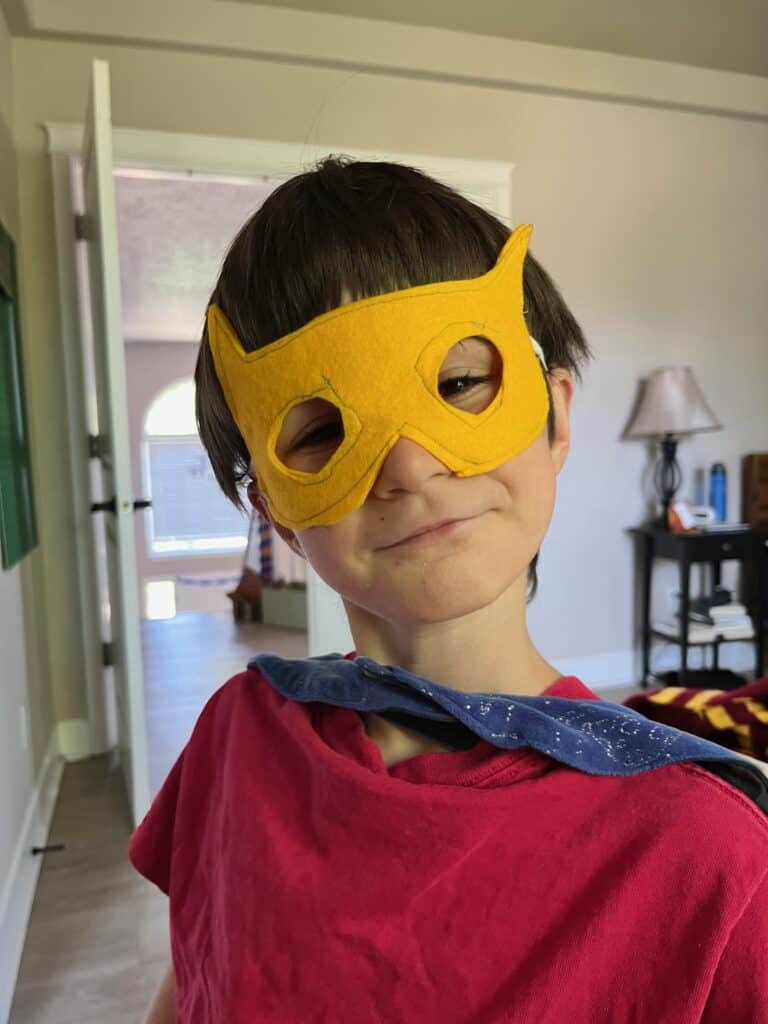
When people say, “You don’t look autistic,” they mean you don’t look one of two ways. Either you’re a Sheldon Cooper, or Donatello from Teenage Mutant Ninja Turtles.
You’re super smart in the math aspect, you’re good with tech, but not really good with emotions and you have no empathy (this was previously called Asperger’s Syndrome). Nobody wants to be seen that way because it’s the stereotypical “genius a**hole!”
A lot of autistics don’t look like that because we’re masking, because we’re supposed to fit in. Either way, (it feels like) society hates us. It just does.
Stereotypical autism is the young, cisgender heterosexual boy who’s running around. But women are socialized totally differently, so it’s not like that.
Signs Someone May Have Both Autism and ADHD
Common AuDHD traits include:
- rapid thoughts and speech
- intense special interests
- difficulty with executive function
- strong need for routine but craving novelty
- sensory overload
- hyperfocus on preferred topics
Struggles with executive function (ADHD)
In my case, I was an 11-year-old girl who couldn’t pay attention for 3 seconds.
I struggled with zoning out, but could remember every last detail of the main character from the How to Train Your Dragon books: Hiccup Horrendous Haddock the Third, The Hope and Heir to Hairy Hooligans.
Mom would ask me to do the laundry, I would leave the room, and it’s gone – I already forgot.

But someone would mention Hiccup and I would spew out that whole, super-long name. I could remember the exact way his hair was described.
Incredible memory for details and special interests
I would have these specific topics that I got so deep into. I remember there was a time I was really into Egyptian mythology and everything Egypt and I would info-dump about that.
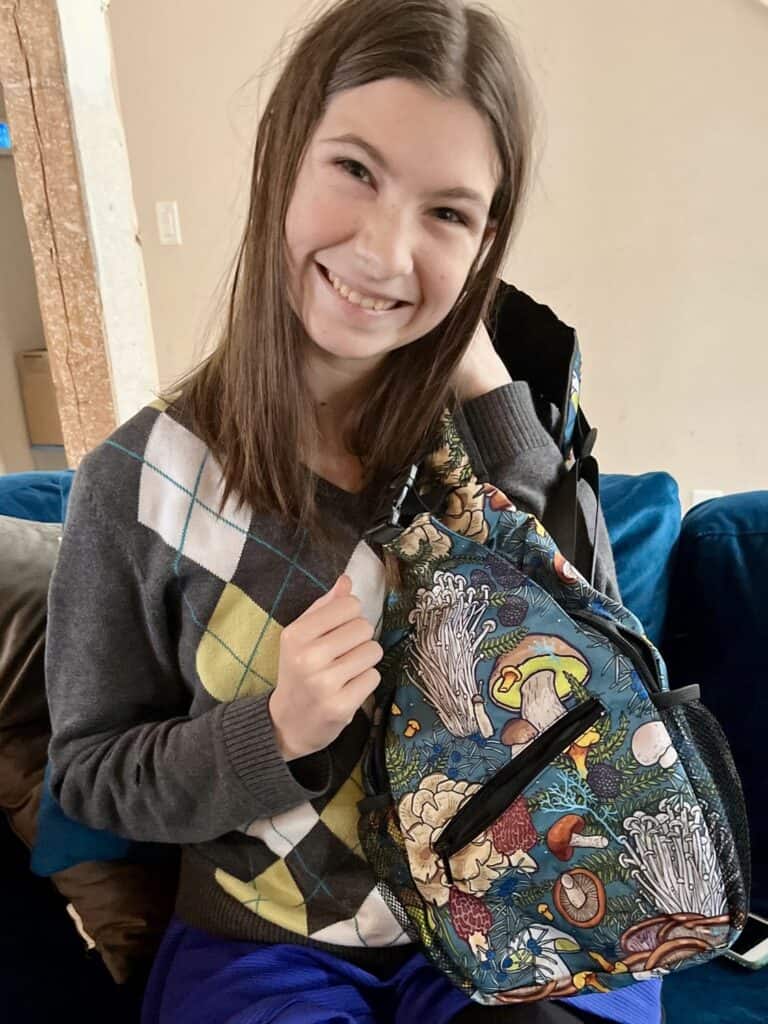
Then I got into mushrooms, and I’ve really gone deep in various areas. Currently it’s “Epic: the musical” which is pretty popular right now and I sing it all the time, I don’t shut up about it. I sing it a lot.
Why Autism and ADHD Are Missed in Girls
First off, they straight up didn’t study girls for a long time (NIH). That’s not unusual in the history of medicine. They didn’t study anyone who wasn’t a young white male for all the first studies on autism and ADHD.
But also, a lot of it is society. There’s a lot of stuff that still hangs around from the 1950s and this is a pet peeve of mine. There are so many negative stereotypes about girls!
When a girl can’t remember anything, it’s stereotyped as “the ditsy female,” – and I was blonde!
AuDHD teen
Social Misogyny
In the 1990s, when my mom (Jenn) was growing up, blonde jokes were a big thing. There was just this assumption that women are somehow ditzy or something like that.
So if a girl showed that kind of symptom, it was more likely to be dismissed as, “she’s female.” Or if she showed what used to be considered “hysterics”.
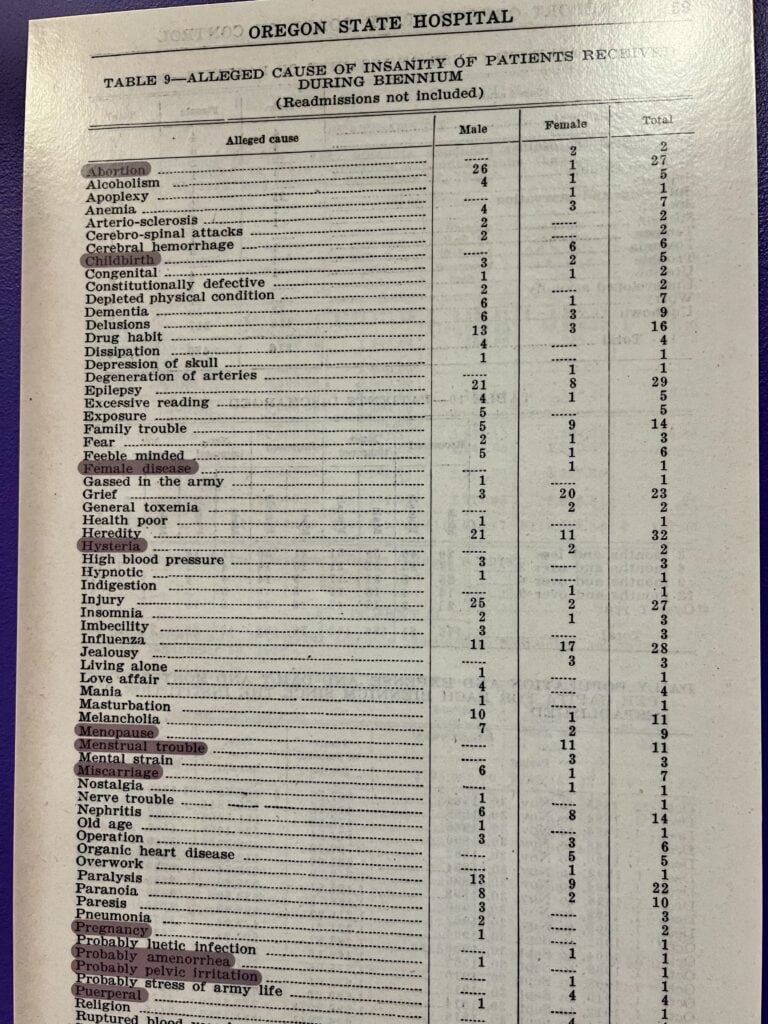
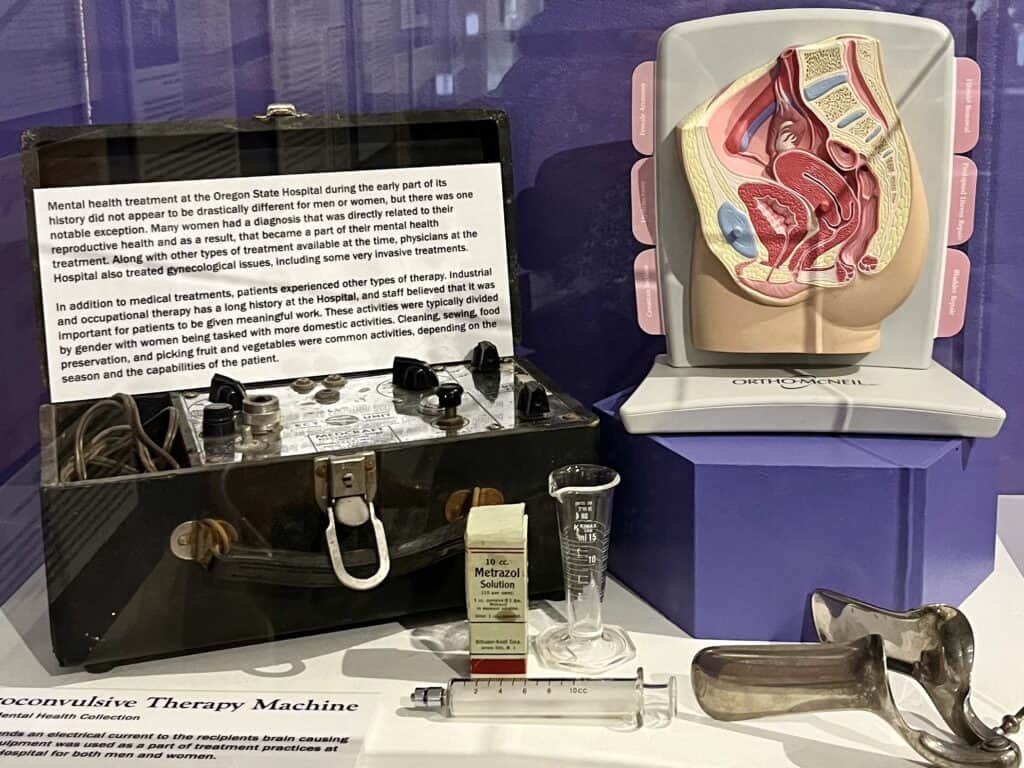
We went to the Museum of Mental Health here in Oregon, and it was angering to see the diagnosis that some of these women were given! They often viewed women’s health issues as mental health issues.
Medical Misogyny
For example, if a woman was pregnant, any emotional issues connected to pregnancy could be considered a mental health problem, and she might be admitted to the mental health hospital.
Many normal behaviors, or neurodevelopmental conditions were pathologized (considered illness), and women were demonized.
So we’re just starting to get ADHD diagnoses and autism diagnoses for women and for girls because so much of that was normalized as “Oh, they’re just female.” Instead of recognizing that this is actually a presentation of a different neurotype.
How ADHD and Autism Symptoms Are Misinterpreted in Girls
| Actual Symptom | How It’s Dismissed in Girls | Reality |
|---|---|---|
| ADHD memory issues | “The ditsy female” stereotype | Executive dysfunction requiring support |
| ADHD hyperactivity | “Girls talk a lot” assumption | Verbal hyperactivity and racing thoughts |
| Autistic emotional responses | “Female hysteria” or being “overly emotional” | Sensory overload and meltdowns |
| Pregnancy-related challenges | Mental illness diagnosis (historically) | Normal or neurodivergent responses |
Neurodivergence presents differently in different people
It looks totally different in boys and girls. We have two boys in our house who have ADHD, and Dad has it as well. We also have two girls in our house with ADHD, and two of us with autism.
ADHD looks different in girls. The ADHD hyperactive-ness in girls can often manifest as chattering, and not just as bouncing around, or as fidgeting.
And that, especially the excessive talking, people would just chalk it up to “Girls talk a lot!” But really there are just as many chattery guys as there are girls! We need to get rid of this stereotype, it’s not cool.
You know that scene from Mulan? The really annoying scene where the guy says, “You should teach your daughter to hold her tongue in a man’s presence?” Society is like that now! So guys are actually talking more than girls.
Why is it that people choose self-diagnosis for autism or for ADHD?
To put it bluntly, a lot of people choose self-diagnosis because they don’t want the doctor to just tell them they’re delusional, or to diagnose them with the wrong thing. Medical gaslighting happens a lot to women or minorities(AHCJ).
Also, many people can’t afford it. The people who do the assessments for autism cost money (and isn’t always covered by insurance). You have to find a doctor.
@dinkumtribe Learning about all the autistic traits that I’ve always masked or was told were “weird” or “imagined” is wild. #actuallyautistic #hyperacusis #adultautism #latediagnosedautistic ♬ original sound – DinkumTribe ADHD family travel
Diagnosis hindered by masking and stereotypes
Even if you do have a child who fits under all the little stereotypes and you’re getting them diagnosed when they’re six, even if you meet all the ideal criteria, it’s still really hard.
You can get an assessment, and then, because you’re masking, they’ll say, “You don’t show enough autistic traits to be counted as autistic.” So there’s the frustration of that.
And then you might have to get another assessment, but you might not have the money to do that.
Political issues with diagnosis
It’s concerning in the current political climate. Many families are starting to wonder if it’s safe to have an official diagnosis. If you have it on paper, is that a liability for you?
Risk of discrimination
Some people discriminate against you if you have an autism diagnosis. There are people who will say, “You don’t get an opinion because you’re autistic, and you struggle with life. Therefore you’re stupid.”
There’s the assumption that an autistic person’s intelligence is lower. In reality, a lot of times, it’s higher. It’s just that you struggle with daily life.
Autistic struggles with language skills
For example, I struggle with finding the words right to put out the intelligent theory that I just had about something. I get this on a daily basis. This struggle to find the words for your emotions is called alexithymia.
It’s interesting too because many autistics are very articulate in writing. If we have time, coming out with the right words really does work. It’s just we can’t always do it in the moment. It takes a lot.
Sometimes I’ll come up with this beautiful artistic description of something, and everyone’s like, “WOW! That was so pretty!” And I’m wondering, “Where did that come from? That’s part of it.

Diagnosis is a difficult process
So some people might choose self-diagnosis because of discrimination. It might be harder to get a job with a documented autism diagnosis. Sadly there are disadvantages to having a diagnosis.
In my family’s case, we just haven’t really had the time to get an official diagnosis, but we recognize that autism makes sense so we’re rolling with it.
But also, nobody wants to be gaslit about their experience. It’s a huge process to have to go through.
You have to accept that you are not like the rest of society and that life is always going to be harder for you than others.
AuDHD teen
Valid Barriers to Official Autism/ADHD Diagnosis
| Barrier Type | Specific Challenges |
|---|---|
| Financial | Assessments are expensive; multiple evaluations may be needed if the first is inconclusive |
| Access | Many doctors won’t diagnose people over certain ages, non-white individuals, or non-cisgender people |
| Masking Issues | Those who mask well don’t show “enough” traits during assessment to qualify for diagnosis |
| Discrimination | Official diagnosis can lead to employment barriers, medical discrimination, and government registries |
| Gaslighting Risk | Professionals may dismiss experiences, misdiagnose, or invalidate self-knowledge |
Grief with an autism diagnosis
So if you’re feeling sad about getting diagnosed and people around you are saying, “But it’s a gift!”… You are allowed to be upset.
You are allowed to mourn the sense of normalcy that you always had that has now been lost.
You are allowed to mourn if you got diagnosed as an adult and you’re realizing, “Wait, I could have been getting accommodations?! I could have been nicer to myself this whole time?! This is what’s going on – there’s not something wrong with me, I’m just different and society is not built for me!”
You are allowed to mourn for how long you struggled. You are very allowed to mourn with that. If you are mad at society, that is valid!
Autistic sense of justice
There’s an injustice aspect of it too. Neurodivergent people (ADHDers, Tourette’s, etc.) often have a very strong moral compass, being against injustice of any kind.
So when you finally realize that that’s what you’ve lived through and then you come to diagnosis…
Life has just been hard, and it will always be hard, but it could have been a little less hard. I could could have gotten medicated earlier. I could have gotten so much help!
AuDHD teen
Nobody wants to be told that their experience isn’t valid. People don’t realize with some of these diagnoses – ADHD, autism, OCD, bipolar – so much of it is based in what you experience, and no one else can tell you what you’re experiencing inside your own head.
Easily misdiagnosed
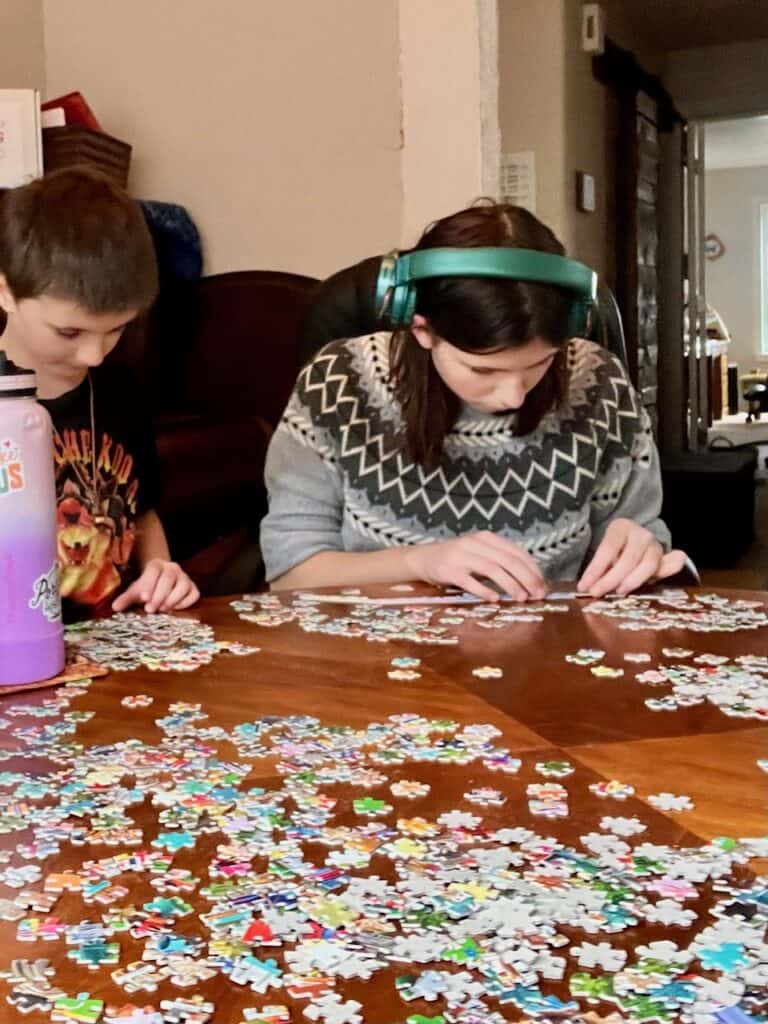
Also you might get misdiagnosed because there is so much overlap in these things. That’s part of why it took so long for us to figure out I’m autistic.
Inattentive-type ADHD, zoning out and getting lost in my brain looks a lot like the autistic response of “I am so overstimulated. Everything is too loud, and the lights are too bright that I just cannot stay present for one second longer or I’m going to implode!”
ADHD and autism interact with each other in ways that we’re still trying to figure out.
Encouragement for those who are self-diagnosed autistic
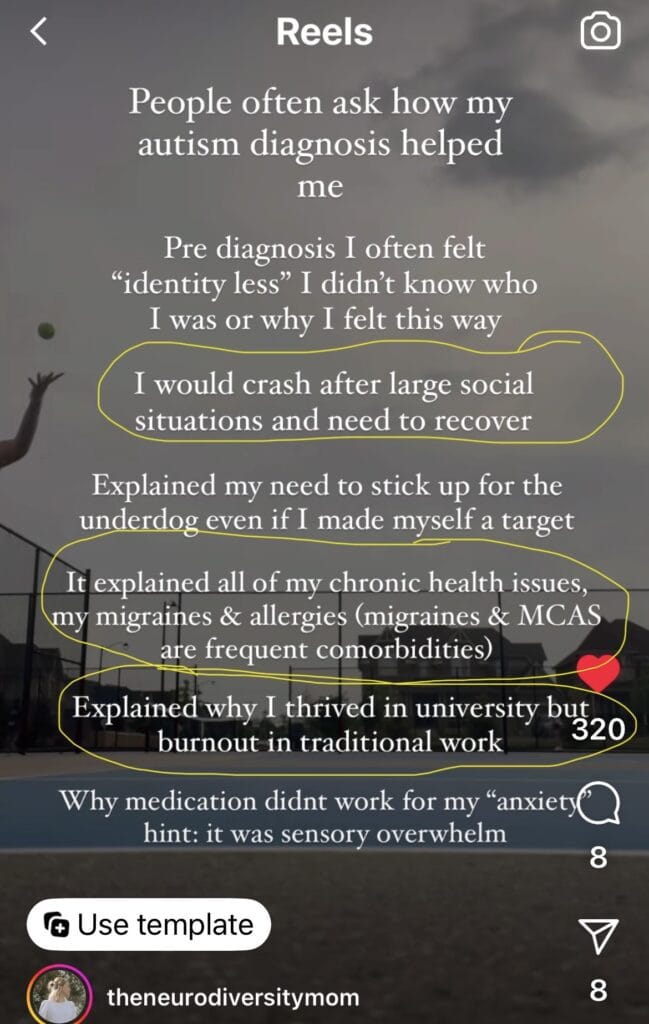
If you decide to opt for self-diagnosis, don’t listen to the people online who will say you are invalid. They often claim that people self-diagnose autism or ADHD for the attention or social clout.
But self-diagnosis doesn’t sound like, “Autism would be a fun thing to claim for attention.”
If I had to fake something, I would fake something less painful and something useful! I want to go to art college but this is not helping! I’ve been dealing with it my whole life.
@dinkumtribe Replying to @elisejohns1 #greenscreen I’m so glad that a couple people mentioned this assessment because I’ve been looking for a starting point. Obviously I’ll be pursuing this further for myself and other family members. #actuallyautistic #autismacceptancemonth #autismmom #cptsdawareness #cptsdvsautism #raadsr #autismscreening @DinkumTribe ADHD family travel @DinkumTribe ADHD family travel @DinkumTribe ADHD family travel ♬ original sound – DinkumTribe ADHD family travel
Validity of self-diagnosis
Self-diagnosis is helpful so that it has a name, and it’s treatable. The majority of the autistic community does believe self-diagnosis is valid.
If you get self diagnosed – that’s okay, you are valid.
If you’re like, “I’m autistic,” and you didn’t get an official diagnosis, I’m not going to say, “You’re not autistic!” I’m going to tell you that I’m glad you figured that out.
Frequently Asked Questions
Can someone have both autism and ADHD at the same time?
Yes, this is called AuDHD, and research shows that 50-70% of autistic individuals also present with ADHD symptoms. The two conditions interact in complex ways, with symptoms sometimes amplifying each other and sometimes masking each other. For example, ADHD’s drive for novelty can conflict with autism’s need for routine, creating internal tension that’s exhausting to manage.
What’s the difference between being “high masking” and having mild autism?
High masking doesn’t mean someone’s autism is “mild”—it means they’re expending enormous energy to hide their struggles and appear neurotypical. Someone who is high masking may actually be dealing with severe sensory issues, social challenges, and anxiety, but they’ve learned to suppress visible signs of these difficulties. The cost is burnout, physical health issues, and mental health deterioration over time.
Why do autistic people struggle to find words in conversation but write beautifully?
Many autistics experience alexithymia—difficulty finding words for emotions and thoughts in real-time. Writing allows processing time that conversation doesn’t provide. The thoughts and language abilities are present, but the brain needs more time to access and articulate them than typical conversation allows. This is why many autistics prefer text-based communication over phone calls or face-to-face conversations.
Is it really valid to self-diagnose autism or ADHD without seeing a professional?
The majority of the autistic community accepts self-diagnosis as valid due to significant barriers to professional diagnosis including cost, discrimination, lack of access to knowledgeable clinicians, and the risk of being gaslit or misdiagnosed. Self-diagnosis typically follows extensive research and recognition of lifelong patterns, not casual speculation. Many people who self-diagnose later receive official confirmation when they’re able to access appropriate assessment.
Why is ADHD in girls often missed or diagnosed later than in boys?
ADHD hyperactivity in girls often manifests as excessive talking rather than physical hyperactivity, and this gets dismissed as “girls talk a lot.” Memory issues are attributed to the “ditsy female” stereotype rather than executive dysfunction. Additionally, girls are socialized to mask more effectively, hiding their struggles to fit in. Early research on ADHD focused exclusively on young white males, so diagnostic criteria was built around how ADHD presents in boys, missing the different presentation patterns in girls.
More posts about the AuDHD experience:
- How to Talk to an Autistic Teen, by an Autistic Teen
- What Does it Feel Like to be Autistic? A Teen’s Autistic Experience
- Best Books About Autism by Autistic Authors
- What is Acquired Neurodivergence? Trauma and Neurodiversity
- My Partner has ADHD?! Processing a New Diagnosis
©️ Copyright Jennifer D. Warren and Kaiju (Burro) Dinkum Tribe 2025. Updated March 6, 2026.