As a parent of six children in a neurodivergent family, I know that understanding what your child needs can take time. Figuring out how to explain those needs to a school adds another layer of challenge—and then come all the acronyms!
If you’re getting ready for your first IEP meeting, you may be wondering what an IEP actually does, what questions to ask, and how much say you have in the process. You don’t need to know every special education term before you participate, but knowing the basics can help you prepare.
This guide answers common questions about the IEP process for parents, with practical suggestions for making your child’s needs part of the conversation. I remember how overwhelmed I felt in my first IEP meeting for my child, so my goal in this post is to help reduce some of that overwhelm for fellow parents.
This guide covers the U.S. public school system and federal IDEA requirements. State rules may provide additional protections; check your state’s procedural safeguards for details.
Table of Contents
What is an IEP?
An IEP is an Individualized Education Program: a written plan describing the special education, goals, services, and supports an eligible student with a disability needs. People often call it an Individualized Education Plan, but “Program” is the term used in federal law.
An IEP includes your child’s current academic and functional performance, measurable annual goals, how progress will be measured, and the services and supports the school will provide. It also specifies when services begin and their frequency, location, and duration.
An IEP is more than a list of suggestions. It establishes responsibilities for providing your child’s education under the Individuals with Disabilities Education Act, or IDEA.
Source: Federal IEP requirements.
Who qualifies for an IEP?
A child generally qualifies when an evaluation identifies a disability covered by IDEA and shows that the child needs special education because of that disability. A diagnosis alone does not automatically establish eligibility.
IDEA includes 13 disability categories, including autism, specific learning disabilities, speech or language impairments, and other health impairments. ADHD may qualify under other health impairment when the eligibility requirements are met. States may also use developmental delay for certain younger children.
For parents, the useful question is: “How is my child’s disability affecting their education, and do they need specially designed instruction?”
Source: IDEA disability definitions.
What benefits do students with an IEP receive?

An IEP provides individualized special education and the related services and supports the student needs. The services depend on the child; every student does not receive the same package.
Examples may include instruction in reading or writing, speech-language therapy, occupational therapy, assistive technology, movement breaks, or testing accommodations. One-on-one support may be included when needed, but it is not automatic.
School-based therapy addresses educational needs. An IEP does not automatically qualify your child for private therapy, insurance coverage, or services outside school.
When reviewing proposed supports, ask: “What will this look like during an ordinary school day?” That question can help turn a broad description into something you can understand and follow up on.
Source: U.S. Department of Education’s IDEA overview.
What is the difference between an IEP and a 504 plan?
An IEP provides special education under IDEA. A 504 plan addresses disability-related educational access under Section 504, which has a broader eligibility standard.
| Question | IEP | Section 504 plan |
|---|---|---|
| Which law applies? | Individuals with Disabilities Education Act | Section 504 of the Rehabilitation Act |
| Who qualifies? | Students meeting IDEA disability and special education eligibility requirements | Students with a physical or mental impairment substantially limiting a major life activity |
| What can it provide? | Specially designed instruction, related services, and individualized supports | Accommodations, related aids and services, and special education when needed |
| Does it include measurable annual goals? | Yes | IDEA-style annual goals are not required |
A student does need a qualifying disability for a 504 plan. However, Section 504 eligibility is not limited to IDEA’s disability categories. Also, a 504 plan can include services such as occupational therapy or speech-language therapy when required; it is not limited to classroom accommodations.
Sources: Section 504 FAPE FAQs and disability discrimination FAQs.
How long does an IEP meeting last?
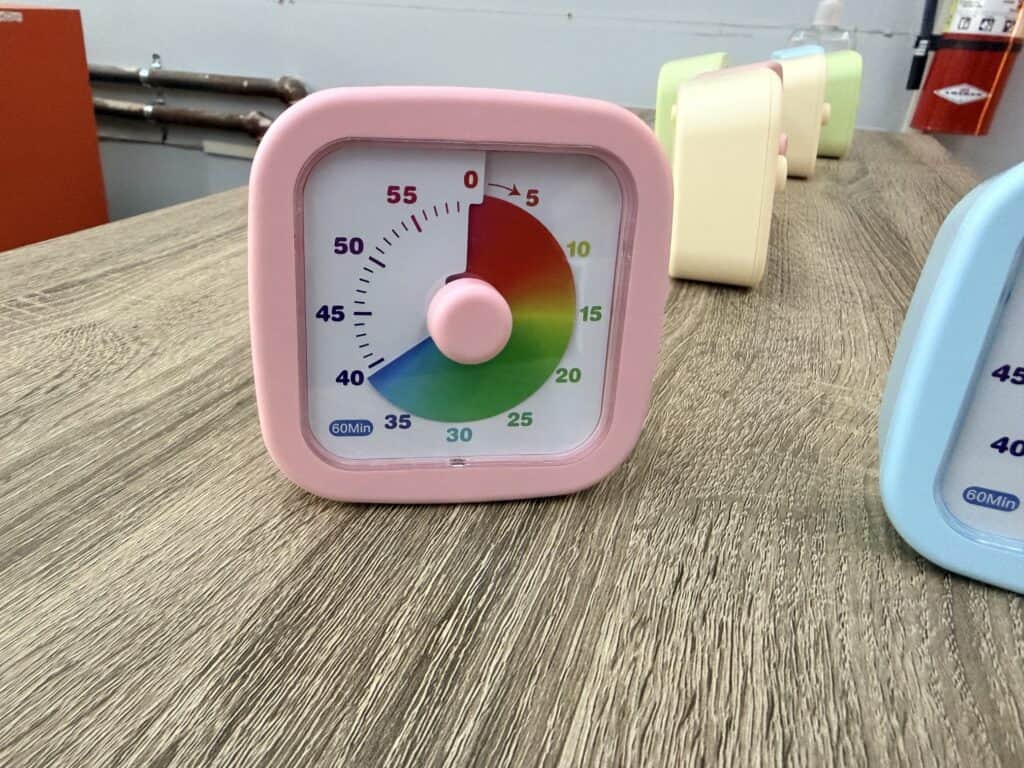
There is no standard federally required meeting length. For scheduling, 30–90 minutes can be a starting estimate, but an initial meeting or a complicated discussion may take longer.
Ask the organizer how much time is reserved and what the team plans to discuss. If you have several concerns, send them ahead of time so the team can plan for them.
You can also ask for a break or another meeting if the conversation needs more time. It helps to leave with a clear understanding of what was decided and what still needs follow-up.
What are parents’ rights in the IEP process?

Parents have the right to meaningful participation in decisions about their child’s special education. Schools must notify parents early enough to participate and schedule IEP meetings at a mutually agreed time and place. If parents cannot attend, the school must use other methods to support participation.
You can invite someone with knowledge or special expertise about your child, such as an advocate or therapist. You also have rights to inspect educational records, receive procedural safeguards, and receive prior written notice explaining certain proposed or refused school actions.
Prior written notice is particularly useful when you request a change and the school refuses. It should explain the decision, its basis, and the options considered.
Sources: Parent participation requirements, IDEA procedural safeguards, and prior written notice.
Why is parent participation so important?

Your child’s teachers see what happens at school. You see what happens before school, after school, and when your child has used up their energy for the day.
That difference in perspective matters. A student who finishes assignments may still need hours of support at home. A child who seems quiet in class may come home overwhelmed. Sharing specific examples and home life gives the team more information to work with.
Bring observations about strengths, interests, difficult transitions, and strategies that help. Your child’s perspective matters too: which supports feel useful, comfortable, or embarrassing to them?
IDEA requires the team to consider the child’s strengths and the parents’ concerns when developing the IEP.
Source: IEP development and review requirements.
Do parents have the final say in an IEP?

Parents have important consent rights, but they do not have an unlimited veto over every IEP decision. Federal law requires informed parental consent before the initial evaluation and before special education services first begin. Consent for an evaluation is separate from consent for services.
Reevaluations have their own consent rules and exceptions. Federal law does not require fresh parental consent for every annual IEP review or every later change, although state rules may add requirements.
Before signing, ask what your signature means: attendance, receipt of a document, or consent. If you disagree, explain your concerns in writing and ask about the applicable dispute procedures. Simply declining to sign a later IEP may not stop implementation.
Source: Federal parental consent requirements.
What questions should parents ask at an IEP meeting?
You don’t need to ask every question below. Choose the ones that make sense for your child’s needs and situation.
- What are my child’s strengths, and how will the plan build on them?
- What do the evaluation results tell us about their needs?
- How will each goal be measured?
- Who will provide each service, and how often?
- Where will services happen, and what classroom time will my child miss?
- How will teachers know which accommodations to provide?
- What support will be available during transitions or overwhelming moments?
- How will my child participate in activities with peers?
- When will I receive progress updates?
- What should I do if a support is not working?
- Who is my main contact for questions?
If you hear an unfamiliar term, ask someone to explain it. You can say, “Could you give me an example of what that means for my child?”
What are some examples of IEP violations?

Possible violations include failing to provide required services or accommodations and denying meaningful parent participation. Examples could include repeatedly missing scheduled instruction or failing to provide a testing accommodation specified in the IEP.
A meeting without a parent is not automatically a violation: federal rules allow it in certain circumstances after documented attempts to arrange participation. Likewise, a draft IEP is not automatically improper, but the team must genuinely consider parent input.
If you believe the plan is not being followed, document the dates and details, identify the relevant IEP provision, and contact the case manager in writing. Ask what happened and how the school will address it. Whether a violation occurred and what remedy is appropriate depends on the facts.
Sources: Federal IEP requirements and parent participation rules.
What can parents do if they disagree with an IEP?

Parents have several options; they are not limited to three required steps. Start by identifying the disagreement and requesting a team discussion or written explanation.
Depending on the issue, formal options include voluntary mediation, a state complaint, or a due process complaint. Mediation does not have to fail before a parent can request a due process hearing. These procedures address different issues and have different deadlines.
If you disagree with a school’s evaluation, you may request an independent educational evaluation, or IEE, at public expense. The school must, without unnecessary delay, either fund the IEE or request a hearing to defend its evaluation. An IEE is an evaluation-related right, rather than a general appeal of every IEP decision.
Your state’s Parent Training and Information Center can help you understand the available procedures.
Sources: IDEA procedural safeguards and independent educational evaluations.
Is there a downside to having an IEP?
Some families worry that an IEP will make their child feel different. That concern is worth addressing in a conversation with the IEP team, especially if your child feels uncomfortable using a visible support.
Ask how services will be delivered, how privacy will be protected, and how the school will respond to teasing or exclusion. Include your child in discussions about what helps them.
An IEP should support learning and participation while respecting your child’s dignity. Explain it to your child as a tool for getting the support they need.
How to prepare for your child’s IEP meeting

Before the meeting, gather the current IEP, evaluations, work samples, and relevant school messages. Request documents you want to review beforehand and write down your top concerns.
Bring a short list of your child’s strengths, examples of difficulties, and questions. During the meeting, take notes or bring someone who can help you do that. Before leaving, confirm the next steps and who is responsible for them.
You don’t have to become an expert overnight. Start with what you know about your child, ask for explanations, and keep the conversation focused on the support they need to learn and participate.
©️ Copyright Jennifer D. Warren, 2026.